English
 Deutsch
 Español
 Français
 Italiano
 日本語
日本語 Русский
 中文
中文
Exploring the Fascinating World of Metal 3D Printing: Types and Processes
- Published November 06 2025 - Updated August 24 2026
Let’s explore the types and processes of SLM/DMLS 3D printing.
Metal 3D printing has revolutionized the traditional manufacturing industry. This technology enables the manufacturing of complex metal parts with unprecedented precision. This pioneering technology has made significant progresses in recent years. Nowadays, it offers a variety of 3D metal printing methods for parts serving different purposes. In this blog, we will discover the various metallic 3D printing processes and explain how each one works.
| Technology | Build Size mm | Supported Material | Tolerance | Production Cost | Roughness |
| PBF(SLM) | 500x500x500 | Copper, 316Lsteel, AL, Ti, Maraging steel, 17-4PH, Inconel, Copper | +/-0.2mm | $$ | Ra7 |
| Directed Energy Deposition (DED) | 600x450x500 | titanium and its alloys, inconel, tantalum, tungsten, niobium, stainless steel, aluminum, nickel, cobalt, tin, copper | +/-0.5 or higher | $$ | Very rough |
| Binder Jetting | 490x380x260 | Silver,metals, ceramics, stainless steel, bronze, aluminum, titanium, zirconia | +/-0.2mm or higher | $$$$ | Ra15 |
| Metal Extrusion | 200x200x200 | Aluminum, 316L stainless steel | +/-0.3mm or higher | $ | Ra14-Ra25 |
- Remark: The printing size is set by stable, proven printing methods most manufacturers can meet in 2023. However, this size may not show the technology’s full ability to make larger prints. The cost takes into account all the expenses associated with post-processing and secondary manufacturing processes.
- Tolerance: Based on length less than 100mm
- Related article: Directed energy deposition investigation
1. POWDER BED FUSION (SELECTIVE LASER MELTING)
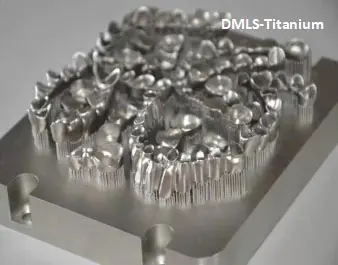
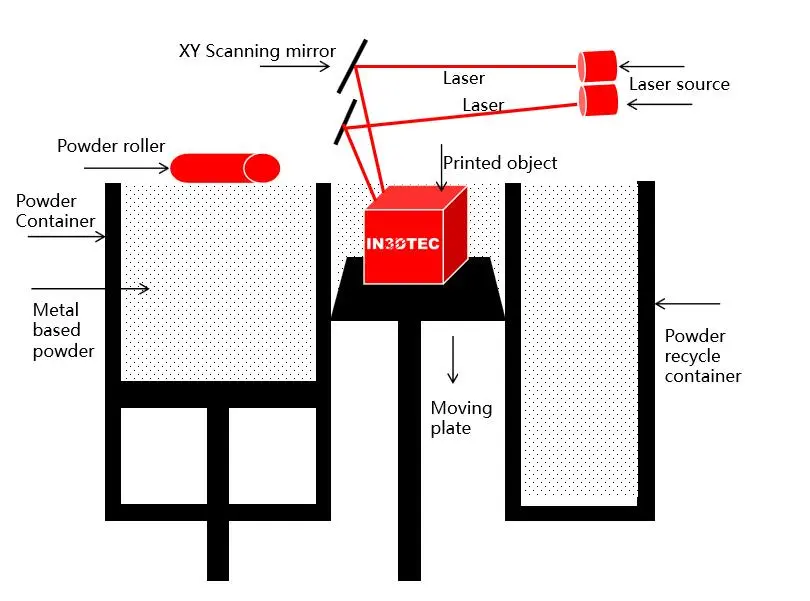
Powder Bed Fusion (PBF), also known as Selective Laser Melting SLM or Direct Metal Laser Sintering DMLS, is one of the most widely used methods in metal 3D printing. The process begins by spreading a thin layer of metal powder onto the build platform. Then a high-power laser is used to selectively melt the powder particles layer by layer, in accordance with the specifications of the 3D model.
As each layer cures, the build platform descends layer by layer, depositing a new layer of powder on top. This process is repeated continuously until the entire part has been printed. PBF/SLM printing technology offers excellent resolution and is capable of manufacturing complex geometries. It can print titanium, aluminium and stainless steel.
DMLS 3D printing offers the benefits of high precision, rich detail, high density of printed parts and excellent mechanical properties. However, it is subject to build size limitations, and equipment and material costs may be relatively high.
2. DIRECTED ENERGY DEPOSITION (DED)
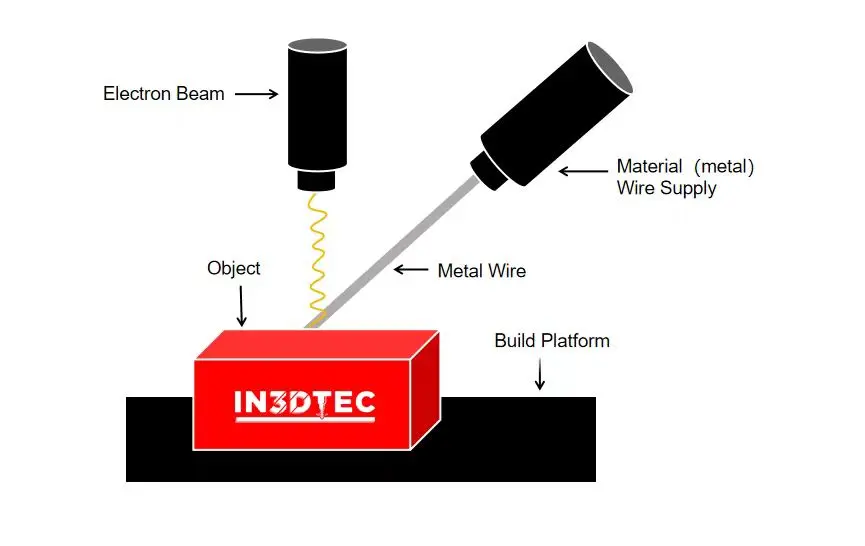
Directed Energy Deposition DED is a 3D metal printing technology that works by depositing molten metal onto a substrate using a nozzle or similar device. The metal material (in the form of filament or powder) is guided through the nozzle and melted by a laser, electron beam or plasma arc.
The molten material is then precisely deposited layer by layer to manufacture the required metal component. DED printing technology offers high deposition rates. It is great for the large-scale manufacture, repair and modification of existing components. This technology is commonly used with metallic materials such as titanium, steel and nickel alloys.
DED printing technology is fast, capable of producing large components, and offers high material deposition rates. However, compared to other methods, it has lower precision, limited detail resolution and produces printed parts with higher porosity.
3. BINDER JETTING
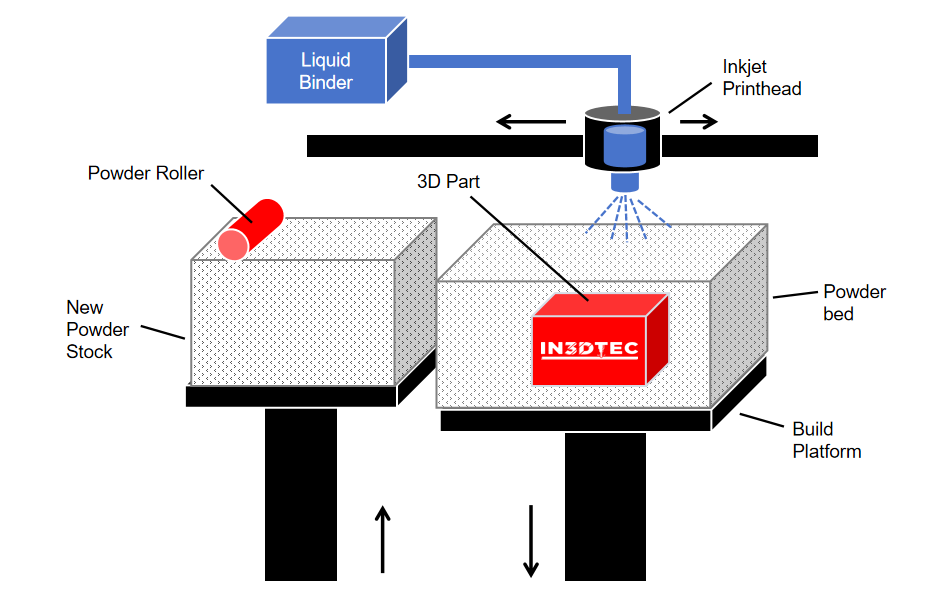
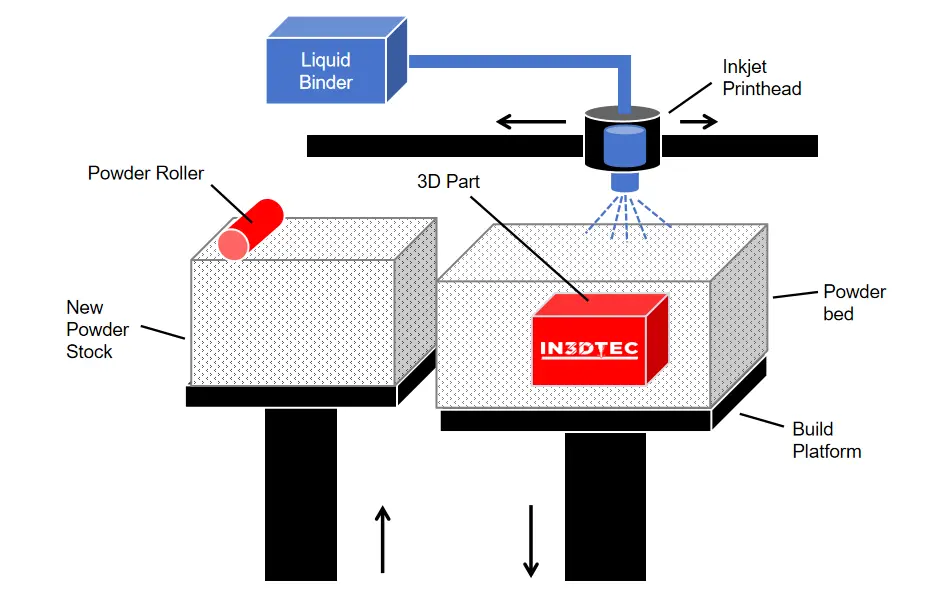
Binder Jetting is a metallic 3D printing technology that utilizes metal powder materials and liquid binder to manufacture components. The process begins by selectively depositing liquid binder onto thin layers of metal powder. The binder acts as an adhesive, bonding the metal particles together. This process is repeated layer by layer until the entire component has been manufactured.
Once printing is complete, the workpiece usually demands a debinding process to remove excess binder, followed by a sintering process to fuse the metal particles together. Binder Jetting Printing is renowned for its speed, cost-effectiveness and ability to print a wide range of metal alloys.
3D Binder Jet Printing offers high printing speeds. It is suitable for a wide range of materials, and involves lower equipment costs compared to other methods. However, compared to some other methods, the printed parts have lower strength, limited detail resolution, and require post-processing such as sintering or bonding.
4. METAL EXTRUSION
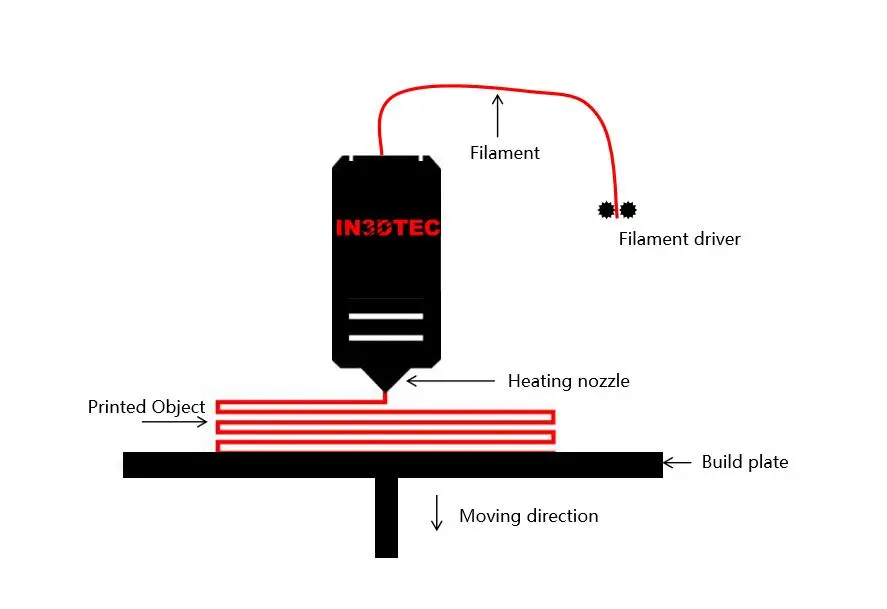
Metal extrusion, also known as material extrusion or fused filament fabrication (FFF), is a metal 3D printing process. It is like fused deposition modelling (FDM), a common method of plastic 3D printing. During the printing process, metal filament or metal-filled polymer filament is heated and extruded through a nozzle. The molten material is then precisely deposited layer by layer to form the final metal part. Although metal extrusion is less common than other metal 3D printing methods, it offers benefits such as low cost and ease of operation. It is capable of printing with copper, bronze and stainless steel.
Metal extrusion offers fast printing speeds and lower equipment costs compared to other methods. However, compared to some other methods, the parts produced have lower strength, limited detail resolution and require post-processing such as sintering or bonding.
CONCLUSION
3D metal printing has created new chances for the manufacturing industry. It enables the manufacturing of complex, high-performance metal components. Various types of metallic 3D printing technologies each offer their own unique advantages and are suited to different applications.
As metal printing technology continues to develop, we can look forward to further exciting developments in the field of this technology. In the coming years, it will transform the way we design and manufacture metal components.