English
 Deutsch
 Español
 Français
 Italiano
 日本語
日本語 Русский
 中文
中文
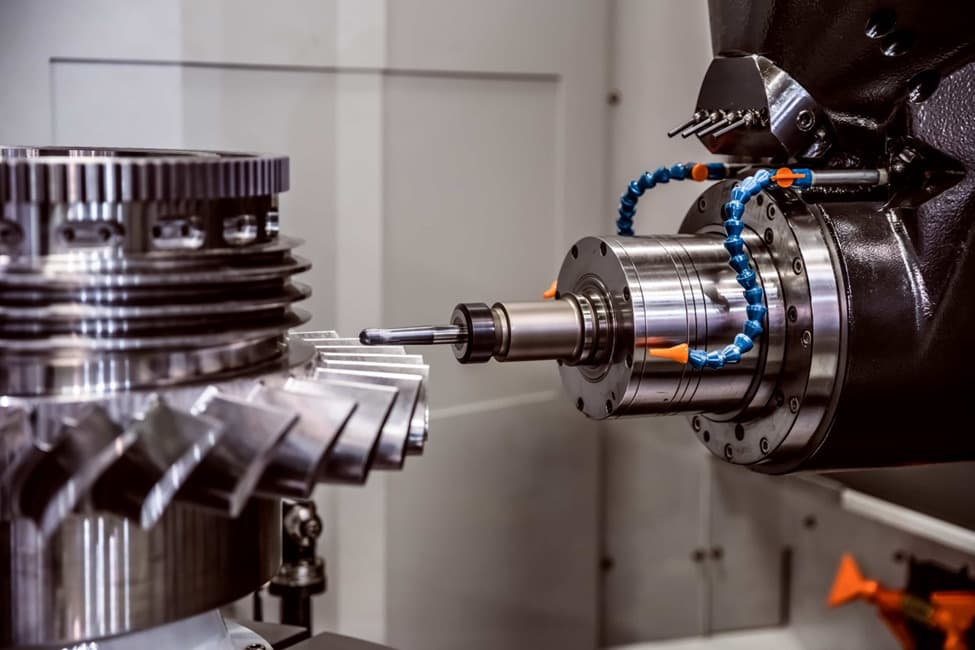
How to choose the best precision machine provider?
- Published November 07 2025 - Updated August 27 2026
A comparison of CNC machining capabilities, quality, lead time and costs to compare suppliers of precision machined parts.
In contrast, precision machining is the use of specific methods and machines to precisely create parts and products to exact dimensions and tolerances. Many industries rely heavily on precision machining including the aerospace, defense, medical and the electronics industries. The products made in these industries require precise dimensions and close quality control to function properly.
Below are several of the common methods and processes that are used for precision machining. There are many others as well.
CNC Machining: Using specialized equipment such as Computer Numerical Control (CNC) machines in conjunction with CAD software to manufacture a wide array of products. By utilizing a variety of techniques, products can be created in numerous materials to meet specific dimensions and tolerance requirements.
The EDM (electrical discharge machining) process is used for removing material from a workpiece by means of electrical discharges. As the process is very accurate complex components can be produced as required.
Grinding – This process utilizes an abrasive grinding wheel to cut or “grind” away material from the workpiece in order to produce the specified dimensions and finish.
The turning process is another important part of the broad spectrum of machining jobs. In this process a workpiece that is cylindrical in shape is turned using a cutting tool. This can be either horizontally or vertically.
Many different techniques can be used in precision machining, including CNC machining, EDM (electrical discharge machining), grinding, turning, milling, and others. Because each of these techniques requires a high amount of skill, knowledge, and specialized equipment, typically all are performed in a single facility to ensure that accurate parts and quality products can be repeatedly produced for a variety of applications.
WHAT DO CNC MACHINING SERVICE PROVIDERS DO?
A CNC machining service provider uses computer-controlled machine tools to produce high-precision parts and products. These parts and products are manufactured using a variety of different machine tools such as turning machines, milling machines, drilling machines, grinders, and even laser cutters. These machines are then controlled and programmed by a computer using software, which enables the accurate and repeatable manufacture of a part to precise dimensions and tolerances.
CNC machining service providers can work with a variety of different materials including metals such as aluminum, steel and brass and also with plastics and a variety of different composite materials. These providers can produce individual high precision parts and also be able to complete a variety of different kinds of surface finishes such as anodizing of aluminum, paint and even electroplating to complete a variety of different kind of surfaces for their customers. They are also able to complete the assembly and testing of prototypes for their customers. In addition to working with prototypes, many of these types of providers work in the Aerospace and Defense Industries, Medical Devices as well as the Electronics Industry and other industries that require precision engineering and the production of very high quality parts.
Additionally, there are many different services that a CNC manufacturing service can offer, from part finishing to prototyping and from assembly and testing to production for aerospace and defense industries, for medical products, and for many other markets and applications. These parts can be machined from a variety of metals and from plastic and composite materials, and can be finished with anodizing, with painting, with plating, and with a host of other processes.
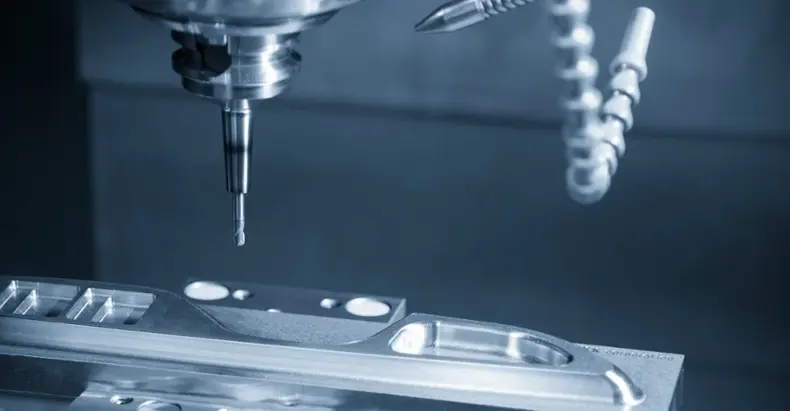
CONSIDERING THE FOLLOWING WHEN TO CHOOSE A PRECISION MACHINE PROVIDER
Choosing a precision machine provider for your manufacturing needs can be a daunting task, but with the right considerations you can find the best company to create the parts or products you need.
1. Quality: This will be one of the key factors to ensure that the parts will turn out right. Ask for references to previous work, or for case studies of previous projects. Also check for testimonials on their website.
2. Capabilities: Consider the specific capabilities you need from a precision machine provider. Do they have the necessary equipment and expertise to produce the needed parts or products?
3. Price: It is also wise to get a price for a part from several different precision machine providers. The lowest price for a part is not always the best value. There may be situations where the lowest price results in lower quality parts and reduced capabilities.
4. Lead time: If you are in a hurry for a provider to complete an order, the lead time is an important consideration. The lead time is the amount of time it will take from the time that an order is placed until the time that the order is completed and ready to be shipped.
5. Location: Your precision machine provider should be close to your company. It is valuable to be able to go to your provider and see their machines and their shop. If you are planning to frequently send and receive parts and products then it is also wise to choose a precision machine provider near to you.
6. Customer service: It is not enough that the machine shop is willing to answer your phone calls and return your emails. Ideally the company would have a customer service focused culture that will work hard with you to meet your exacting needs and deliver a quality product on time.
7. Are the offered precision services certified (e.g. ISO 9001) and meet the corresponding quality standards in their day to day work.
STEP-BY-STEP PRECISION MACHINING PROCESS
The precision machining process consists of the following steps:
1. Design: A design for the part or product is created. This could be a 3D CAD model for example, or even a physical prototype for the part.
2. Programming: Once the design of the part or product has been completed, the next step in the precision machining process is to program the part for the machine tools that will be used to produce it. This process is typically completed using computer-aided manufacturing (CAM) software that interprets the 3D CAD model of the part and creates a detailed machining plan for the part.
3. Setting up the machine: This step includes the setup of tools and work holding to complete the part. The setup of cutting tools and work holding, as well as the calibration of the machine when required.
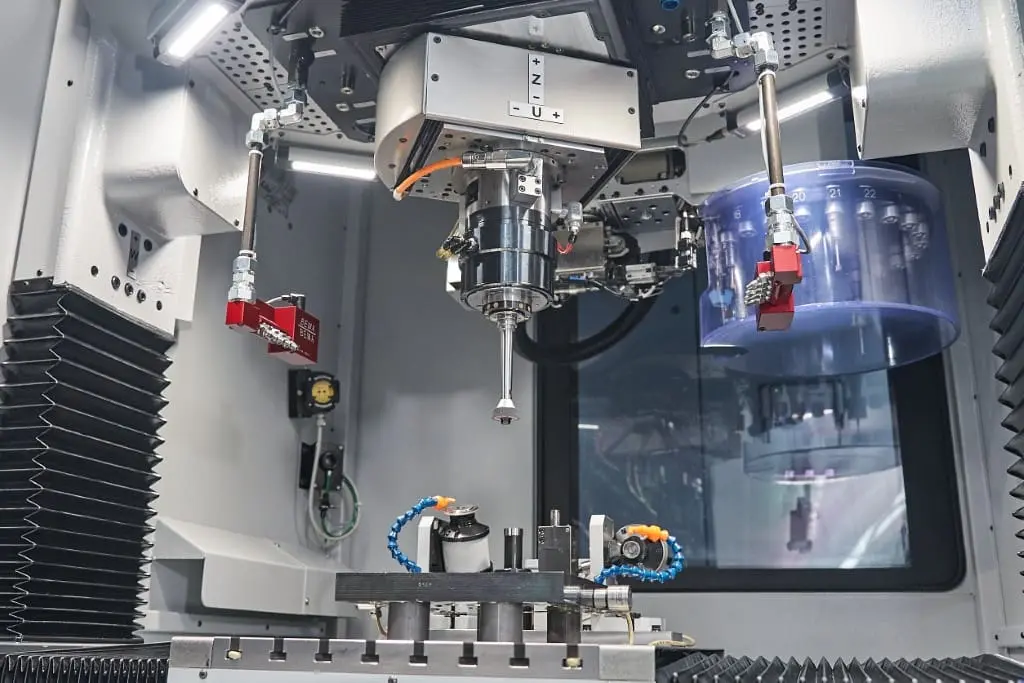
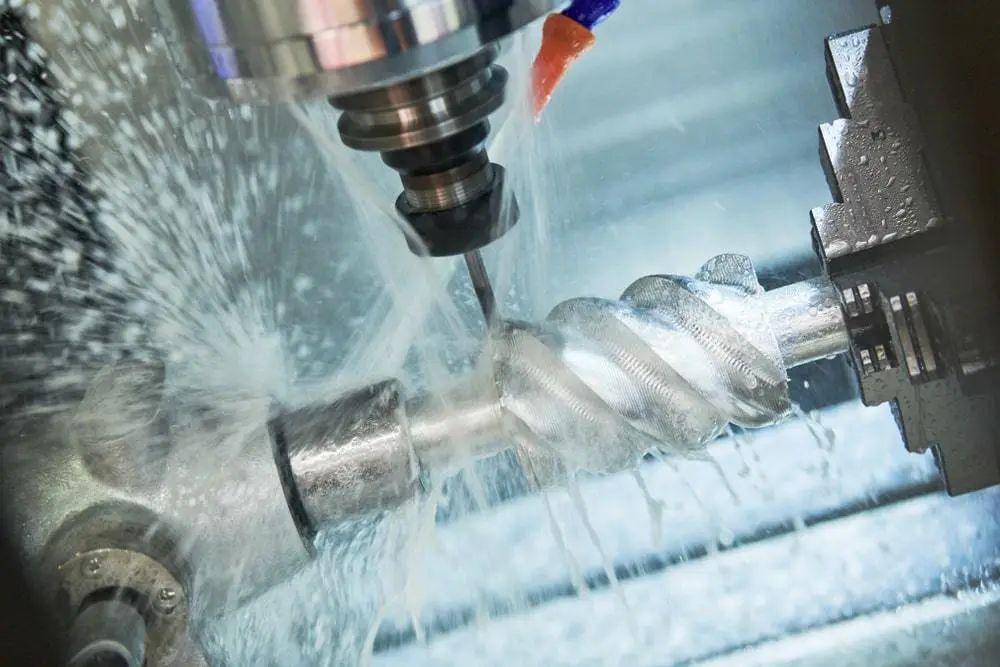
4. Machining: This is the actual part manufacturing. The part is made on a CNC machine (Computer Numerical Control machine) by following a Program which was created in the Programming step before. The CNC machine then uses cutting tools to remove material from the Workpiece in processes such as turning, milling, drilling, boring etc.
5. Inspection: Parts that have gone through precision machining are inspected to check for accuracy and overall quality to ensure that they meet the specifications regarding their tolerance.
6. Finishing: Your product may need additional processes to complete it, like anodizing, painting or plating. We have the right equipment for that as well.
7. Assembly: The individual parts or components are assembled together to form the final product.
8. Testing: In the final stage of the precision machining process the end product is tested for all the characteristics specified in the design phase to check that they have been met.
BENEFITS OF A PRECISION MACHINE PROVIDER
Benefits Of Using A Precision Machine Provider.
1. High Quality Products: As precision machining uses specialized equipment to fabricate parts, they can produce parts of the highest quality using strict processes to keep to tight tolerance limits for high quality products.
2. Long-term cost-effectiveness: Although precision machining can initially be more expensive than some other production methods, in the long run, it can be even more cost-effective, because high quality parts of high precision and repeat accuracy are produced.
3. Customization: By providing precision machine parts and products, a precision machine provider can be creating custom made parts for their clients. This means that they can be making the best products to fulfill all of a client’s needs.
4. Fast Production: Most machinists and precision machine providers are able to complete production of your parts in a relatively short period of time.
5. Versatility: With many precision machine providers being able to offer a wide variety of different materials to be machined as well as a variety of finishing options to create a final product for a number of different applications, there is little that cannot be completed.
6. Years of experience: If a supplier has many years of experience in the precision machining field, then this is clearly a big advantage to a client with little knowledge of the machining process.
APPLICATIONS OF PRECISION MACHINING
Precision machining has a multitude of applications within many different industries. Below are a few examples of parts that have been precision machined.
1. Aerospace: As mentioned earlier the aerospace industry requires the highest degree of precision to ensure safe travel and optimal performance of the aircraft. Many of the parts are machined to hold tolerances within thousandths of an inch. Precision machining is the only process that can achieve results of this nature and can produce the various components that are needed for the aircraft such as control surfaces, engines, and other fittings for the interior and exterior of the aircraft. Some aerospace components are even used for space travel and need to withstand the extreme temperatures that are found in space.
2. Defense: Precision machining is also often used in the production of military parts, including those for tanks, guns, missiles and other military equipment that is designed to be used in vehicles.
3. Medical devices: There are many medical devices that can be created using precision machining, including things like implants, prosthetics and a variety of different types of surgical instruments.
4. Electronics: In many cases, precision machined parts are used in order to produce electronic devices such as Smartphones, Laptops, computer components. But also many Medical devices are produced with the help of precision machining.
5. Automotive: Most of the parts for cars are made by means of precision machining. These can include the various engine parts like the cylinder block and cylinder head, the parts for the drivetrain, like the transmission and the clutch, as well as parts for the suspension.
6. Industrial machinery: Precision machining is also used to make a wide variety of parts for many different types of industrial machinery. These can be for things such as the components of pumps, the parts for valves, and the components for air compressors. There are many other applications as well.
7. Consumer products: Precision machining also produces parts and components for many of the many different kinds of consumer products. Examples of these are the parts for all different kinds of appliances, many of the different power tools, and the many different parts for all the different kinds of sporting goods and outdoor recreational equipment.