English
 Deutsch
 Español
 Français
 Italiano
 日本語
日本語 Русский
 中文
中文
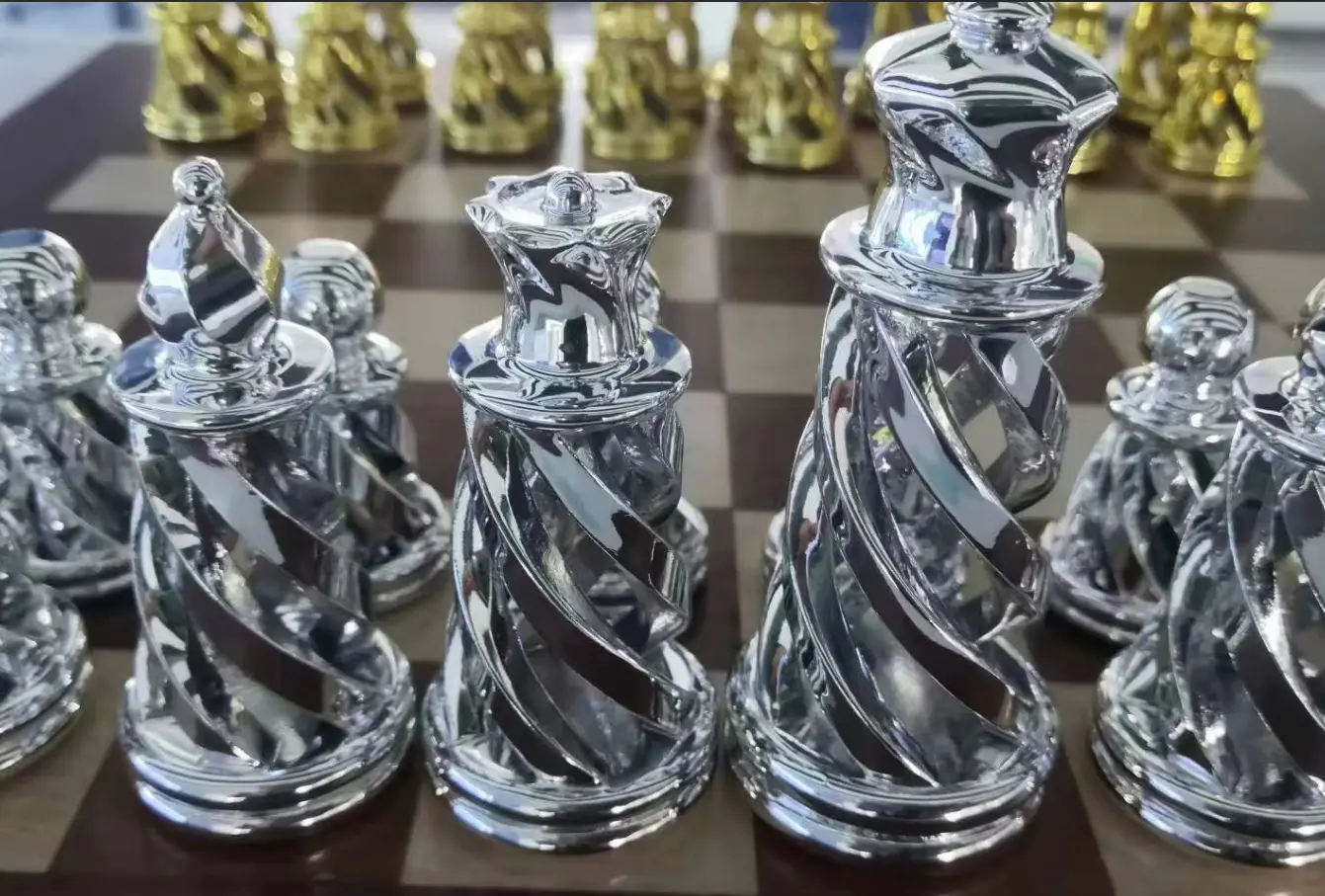
Introduction to 3D Printing Surface Finishing Technologies
- Published May 18 2026 - Updated October 14 2026
Let’s discover the different surface finishing technologies in 3D printing.
3D printing is no longer a foreign concept to most people. We have gradually become accustomed to using it for prototype validation before product development, but the majority of engineers remain skeptical about its use in mass production, primarily due to numerous surface defects in printed parts, such as visible layer lines and a rough texture. This article introduces several mainstream surface finishing techniques, with the aim of helping lectures understand that, with appropriate post-processing, 3D-printed parts are fully capable of being used in mass production.
Surface finishing processes for 3D-printed parts fall into two main categories: Mechanical Finishing and Chemical Smoothing.
1. MECHANICAL FINISHING
Hand Sanding
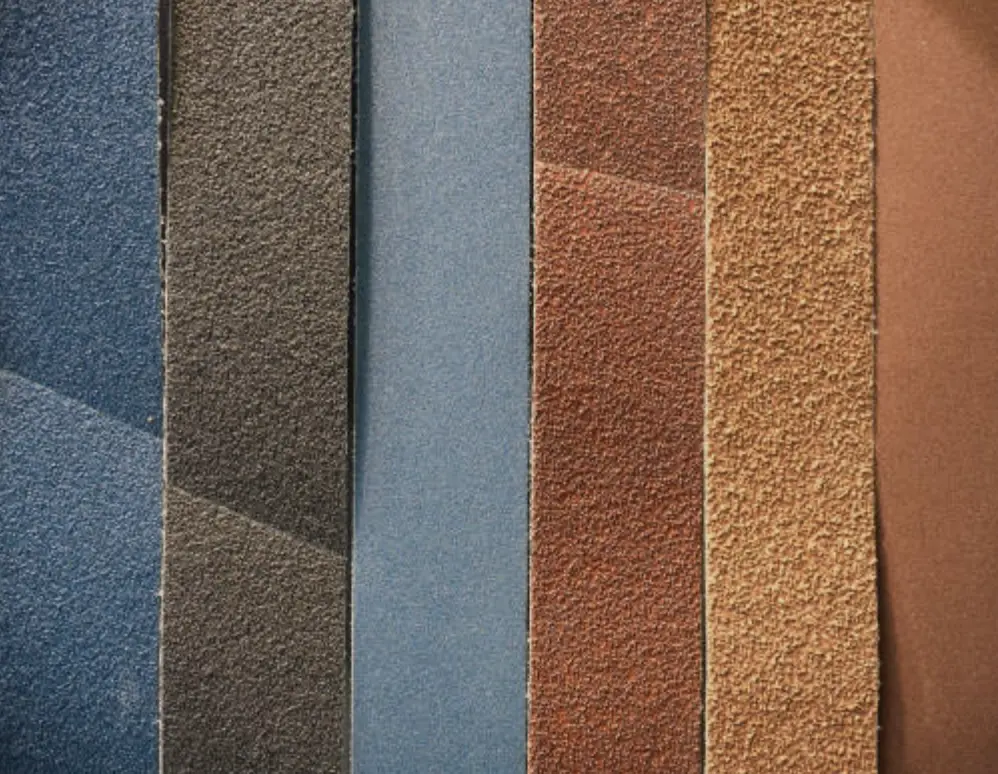
Metal surface finish samples produced by hand sanding, demonstrating a range of textures and roughness levels achieved with different abrasive grits before polishing, coating, or other finishing processes.
Taking SLA printed parts as an example, they are typically sanded in stages using 400–1000-grit sandpaper to prepare them for painting or electroplating.
This process has a high degree of adaptability and permits the exact finishing of complex details, making it ideal for high-value, one-off parts. The disadvantages are that it is time-consuming and labor-intensive, and the dust generated during sanding is harmful to human health. Furthermore, the final finish depends on the operator’s experience.
Sandblasting
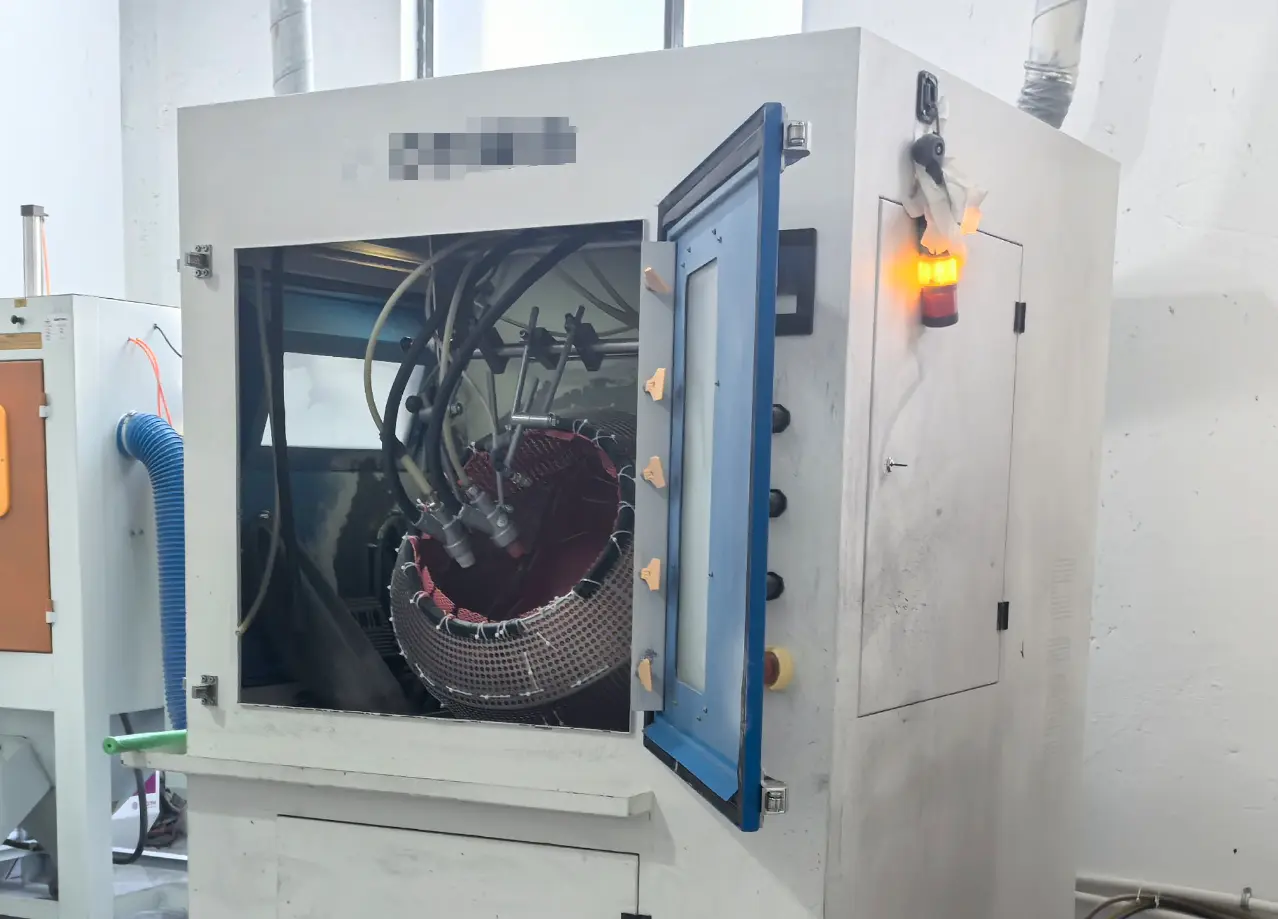
An industrial sandblasting system used to clean, deburr, and texture metal components, creating a uniform matte surface finish that improves coating adhesion and prepares parts for painting, anodizing, or other post-processing treatments.
This process use compressed air to propel abrasive materials (such as quartz sand or glass beads) at high speed onto the surface of the workpiece. The impact of these particles removes surface striations and burrs, resulting in a uniform matt finish. This method is suitable for SLA 3D Printing and FDM Fused Deposition Modeling (PLA, ABS) prints, but is less effective on nylon-based printed parts.
This process offers rapid sanding (a few minutes per batch), produces a uniform surface finish, and can reach recessed areas. However, the force applied during sanding is difficult to control, making it easy to damage fine details on the parts. The process is also heavily depend on the operator’s experience and requires dust extraction measures.
Media Tumbling
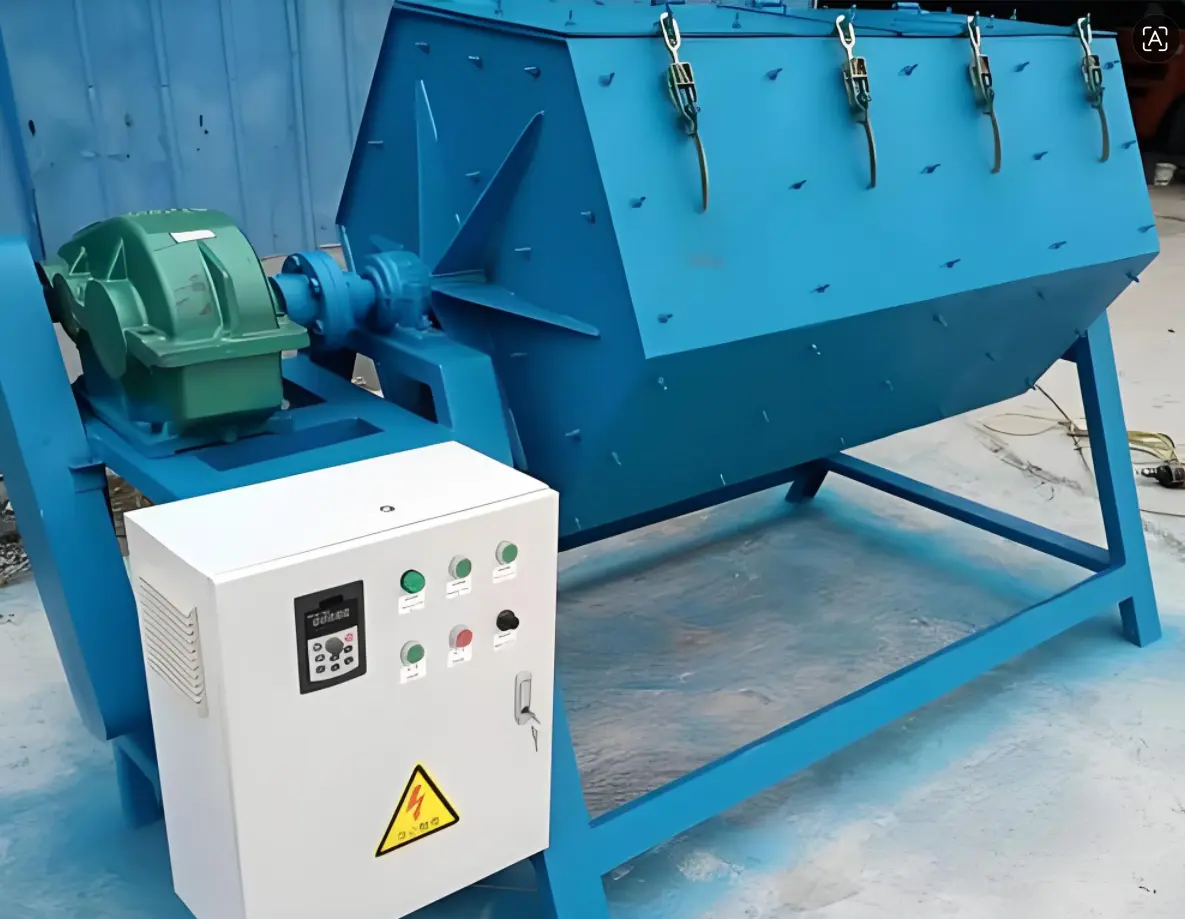
An industrial media tumbling machine used to deburr, smooth, and polish metal components, improving surface quality, removing sharp edges, and preparing parts for coating, plating, or assembly.
Media Tumbling is a batch processing technique. The rotation of the tumbler causes the workpieces to rub against and roll over the abrasive media, thereby finishing the surface. This process is suitable for high-strength plastic parts (such as ABS and nylon) and SLM printed metal parts.
Media Tumbling can polish dozens to hundreds of parts simultaneously, producing a uniform and consistent finish. By using different abrasives, it can achieve both coarse grinding and fine polishing. However, if the printed parts have thin walls, this can easily lead to deformation. Furthermore, choosing the suitable abrasive requires a certain amount of experience, and the process cannot be used to treat deep holes or internal cavities.
2. CHEMICAL SMOOTHING
Chemical smoothing is a non-contact treatment method. It involves briefly dissolving the material’s surface using an organic solvent, causing the layer lines to ‘melt’ and level out.
Acetone Vapor Smoothing
By exposing materials such as ABS, HIPS, ASA and PC to acetone vapour or liquid, surface protrusions and layer lines are rapidly dissolved. Once the solvent has evaporated, the material re-solidifies to form a smooth, glossy finish. This process effectively eliminates the layer lines produced during the FDM printing process, yielding a finish that closely resembles the quality of injection-molded parts. The method is divided into vapor polishing (which produces a uniform finish) and immersion polishing (which is faster but easy to leaving traces).
This process is simple to operate, low-cost and fast (taking from a few seconds to a few minutes), making it ideal for complex shapes and batch processing. However, as acetone is highly flammable and toxic, the workshop must be well-ventilated, and operators must wear protective equipment. Furthermore, the process requires precise time control, as over-treatment can blur fine details.
Dichloromethane (DCM) Smoothing
The principle is similar to acetone polishing and is primarily used for materials such as PLA, PC and PMMA that cannot be treated with acetone. Research has shown that dichloromethane vapour polishing can reduce the surface roughness of PLA from 11.42 µm to 0.67 µm, yielding significant results.
This process is highly effective at removing layer lines from PLA, producing a finish as smooth as a mirror. So it is suitable for display pieces with high aesthetic requirements. However, dichloromethane is highly toxic and is classified as a precursor chemical. The treatment process is extremely brief (immersion for just 1–5 seconds). So, this process is difficult to perform. Furthermore, it is easy damaging the thin wall and fine details of the parts.
VaporFuse Smoothing
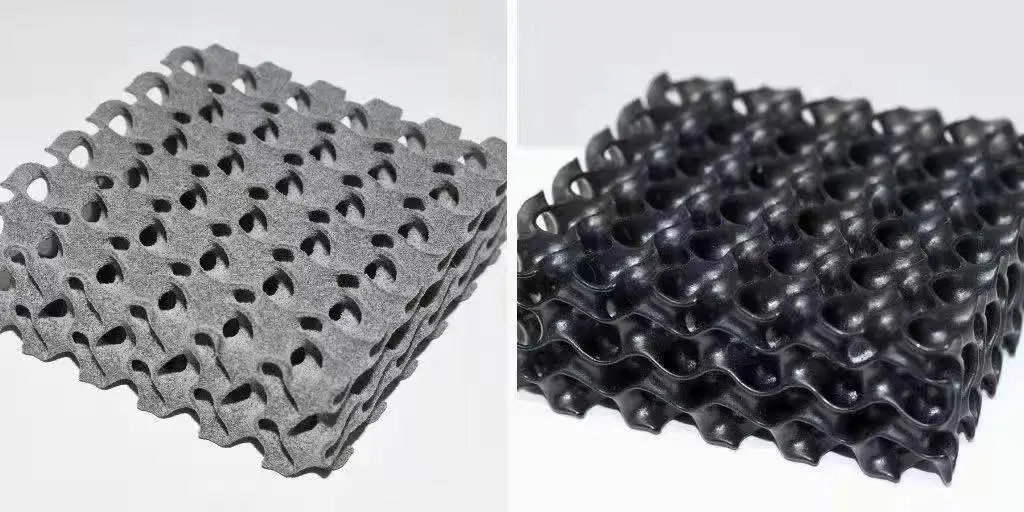
A comparison of SLS 3D printed nylon lattice parts before and after VaporFuse smoothing. The VaporFuse-treated part features a smoother, sealed, and semi-gloss surface, improving appearance, cleanability, and overall part performance while preserving complex geometries.
An industrial-grade chemical vapor post-processing technology developed by the German company DyeMansion, made especially for SLS/MJF-printed nylon and TPU materials. The principle behind this technology is placing the cooled parts in a sealed chamber, where a specialized solvent (VF47 Eco Fluid) is heated to form vapor. This vapor condenses on the surface of the parts and dissolves the top layer to a depth of approximately 1–2 micrometers. The solvent is then extracted, allowing the dissolved polymer to reflow and solidify, thereby forming a smooth, sealed surface layer. It transforms the typical ‘chalky’ rough surface of SLS/MJF printed parts into an injection-molding-grade, high-gloss, sealed surface, whilst maintaining the part’s dimensional accuracy and mechanical properties.
The advantage of VaporFuse Smoothing post-processing technology lies in its ability to manufacture a high-gloss, fully sealed surface. It can uniformly treat complex internal cavities and deep holes, which is not achievable through physical polishing. The treated surface is hydrophobic, fingerprint-resistant and easy to clean. The solvent used in the process is FDA-approved and complies with food contact safety standards. The process takes place in a fully enclosed, closed-loop system, making it safe and environmentally friendly. The process is highly standardized and suitable for mass production.
However, the price of the treatment equipment is high. So, it is not suitable for home use or small workshops. The treatment cycle is relatively long (30–60 minutes). The range of applicable materials is limited to validated polymers (PA11, PA12, TPU, PP, etc.). It may cause delamination in FDM-printed parts.
CONCLUSION
The surface finish of 3D-printed parts was once a barrier preventing additive manufacturing technology from moving towards mass production, but with the maturation of post-processing technologies, this barrier is now being overcome.
From manual polishing to sandblasting and tumbling, and from polishing with acetone and dichloromethane to industrial-grade VaporFuse Smoothing. Physical finishing processes are suitable for small-batch parts requiring a high level of detail. Chemical polishing processes deliver efficient, uniform and glossy surface finishes, whilst VaporFuse Smoothing enables nylon-printed parts to achieve an injection-moulding-grade, seamless finish, meeting the requirements of high-end applications such as food contact.
By choosing the suitable post-processing techniques, 3D-printed parts can achieve a surface finish virtually identical to that of injection-molded components. This signifies that 3D printing is evolving from ‘prototyping’ towards ‘direct manufacturing’, offering viable solutions for mass production in areas such as small-batch customization, the manufacturing of complex structural components, medical devices and consumer goods.