English
 Deutsch
 Español
 Français
 Italiano
 日本語
日本語 Русский
 中文
中文
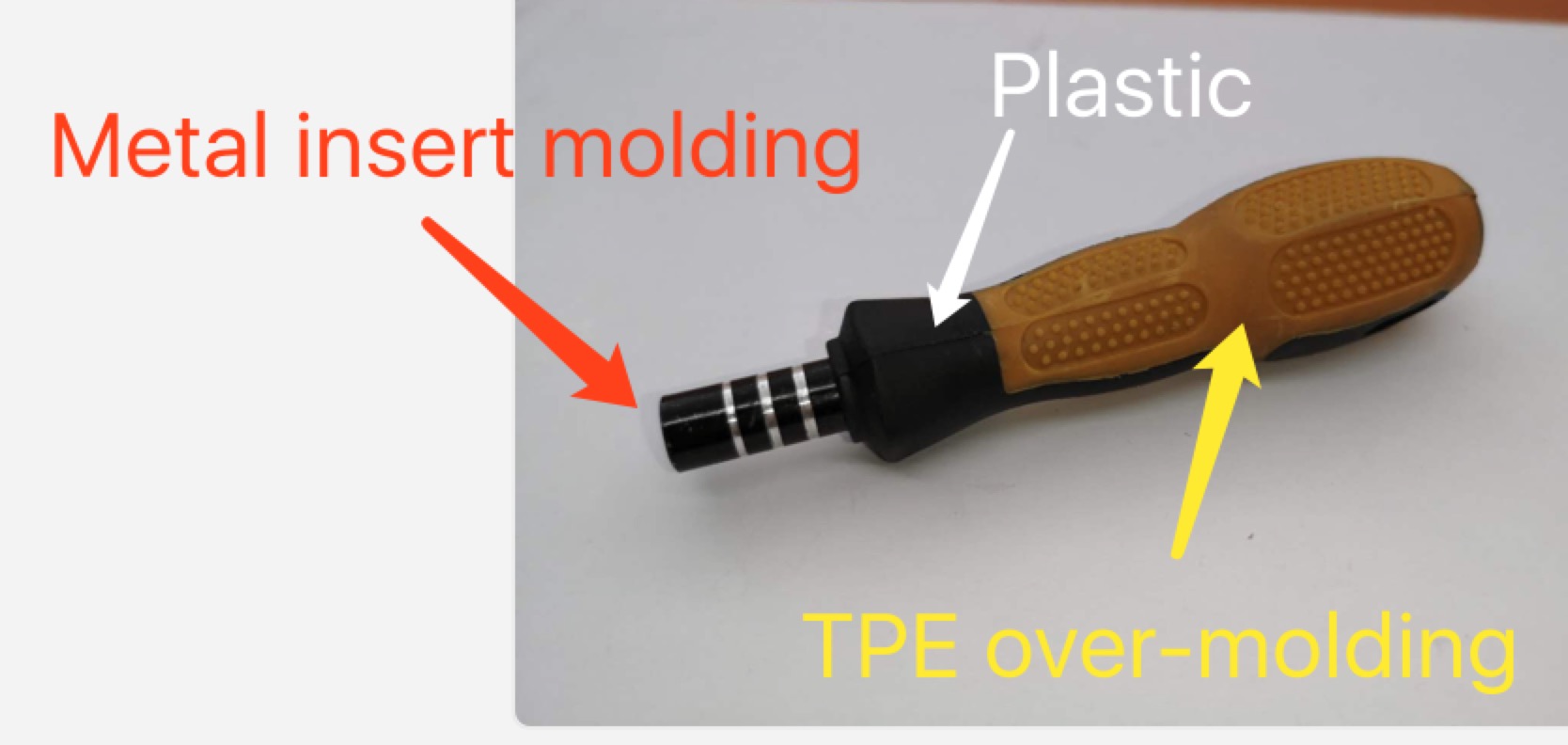
Overmolding vs. Insert Molding What’s the difference?
- Published November 06 2025 - Updated September 16 2026
Learn the difference between overmolding and insert molding, including process flow, advantages, applications, and cost considerations in plastic manufacturing.
In modern manufacturing, a common challenge is balancing complex design requirements with production costs. High material waste and expensive mold costs often hinder the efficient time-to-market for high-quality designs.
To address this issue, Overmolding and Insert Molding offer two different ways. One focuses on high-volume, high-precision, and high-speed production, while the other provides a cost-effective solution for robust, simple-shaped components made from specialized materials. This guide compares these two technologies to help you determine the most efficient manufacturing strategy for your projects.
1. UNDERSTANDING OVERMOLDING: THE MULTI-STEP PROCESS
What Is Overmolding Injection Molding?
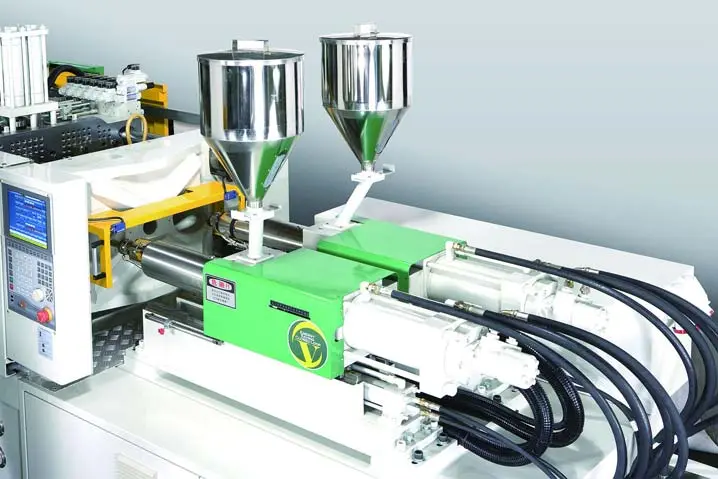
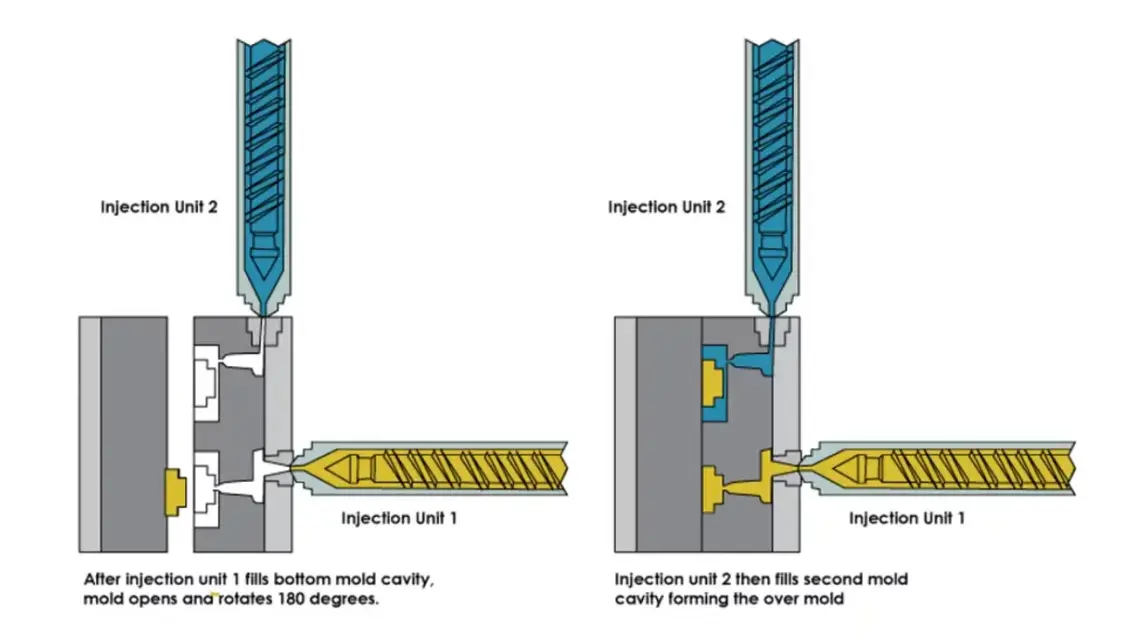
overmolding is a multi-step injection molding method that includes layering two or more components to form the final product. Because the process is divided into two steps, injection overmolding is sometimes also called two-shot molding.
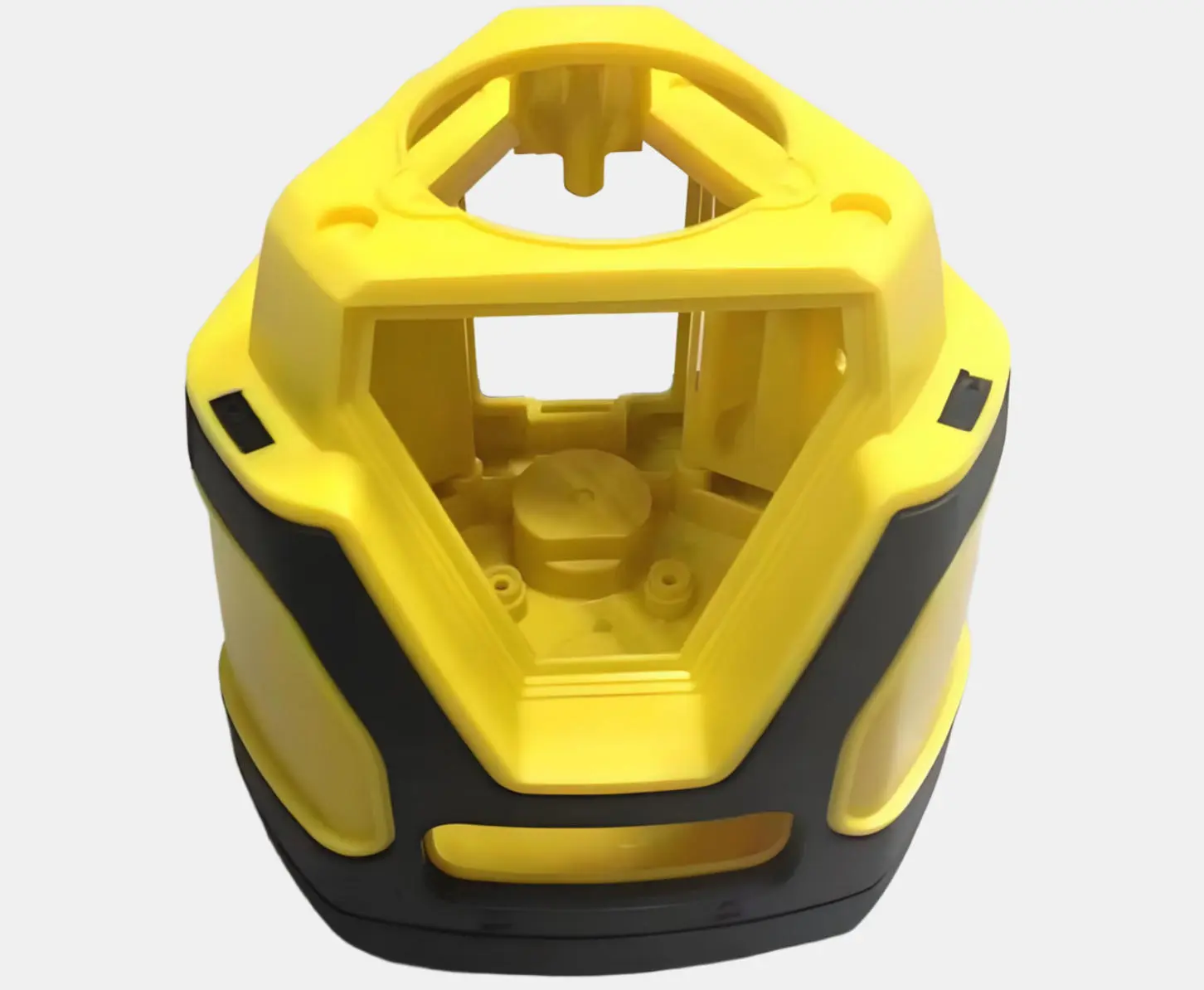
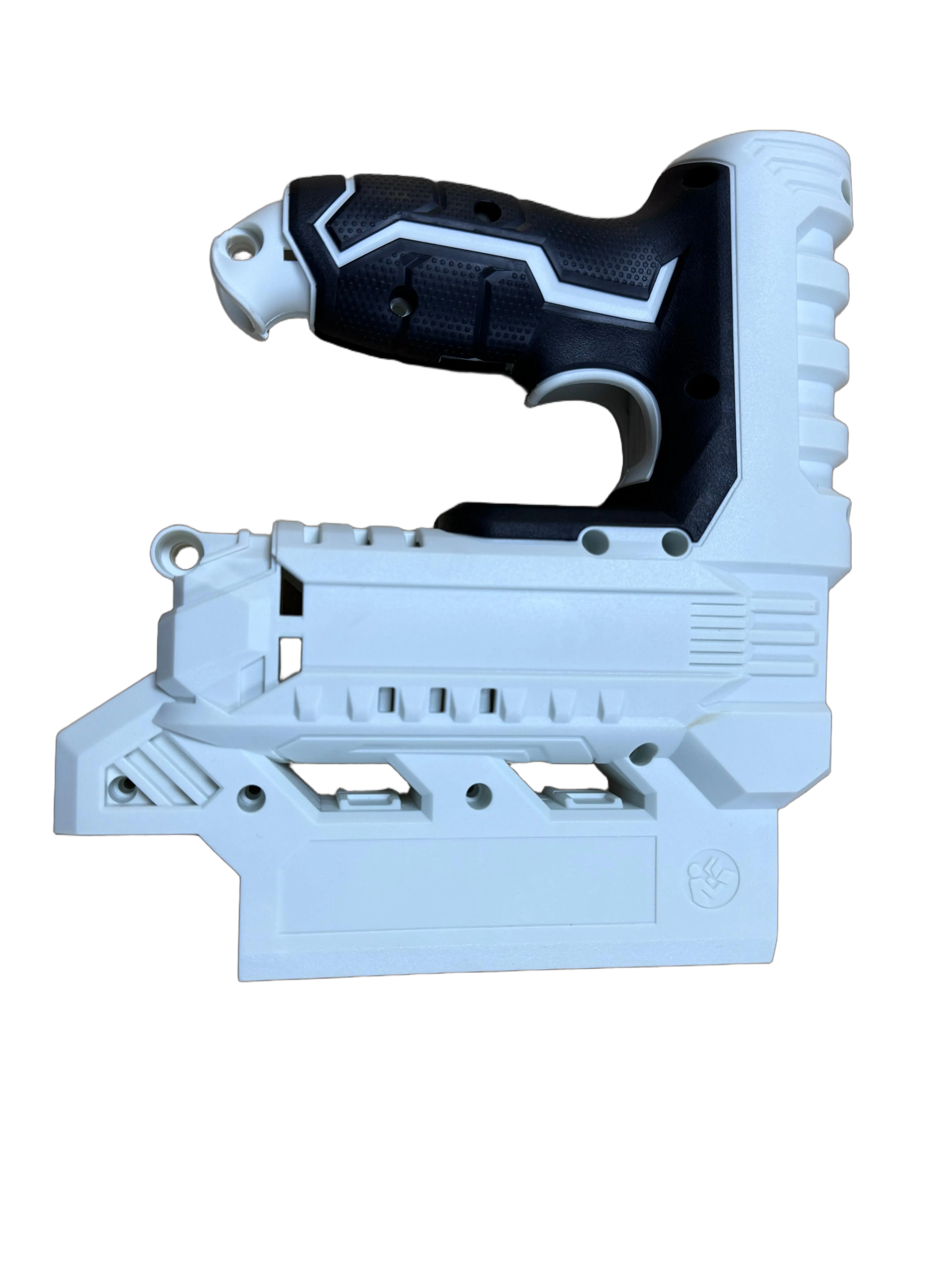
First, the base component (also called the substrate) is molded and cured. The substrate for overmolding is typically made of plastic. Then, a second layer is molded directly over the first layer, forming a single, solid component. Overmolding injection molding is commonly used to manufacture plastic parts with rubber handles. Taking toothbrush overmolding injection as an example, the two-shot molding process means molding a base layer of plastic handle and a rubber outer layer (to reduce slippage when gripping the toothbrush).
Why Choose Overmolding Injection?
Overmolding is a versatile process that allows designers to leverage the benefits of multiple materials to create complex parts with varying properties, enhancing looks or adding tactile texture.
Overmolding fuses different materials together in a mold, cutting out the need for glues or other permanent bonding methods. This improves the overall durability of the part and reduces assembly costs.
Overmolding can directly mold soft seals into parts. For example, in the case of electronic device housings requiring IP protection ratings. Typically, this part would have a recessed groove for subsequent O-ring installation. However, permanently molding the seal as a single, integral component is not only more cost-effective but also more robust and durable.
2. UNDERSTANDING INSERT MOLDING: INTEGRATING PRE-FABRICATED PARTS
What Is Insert Molding Injection?
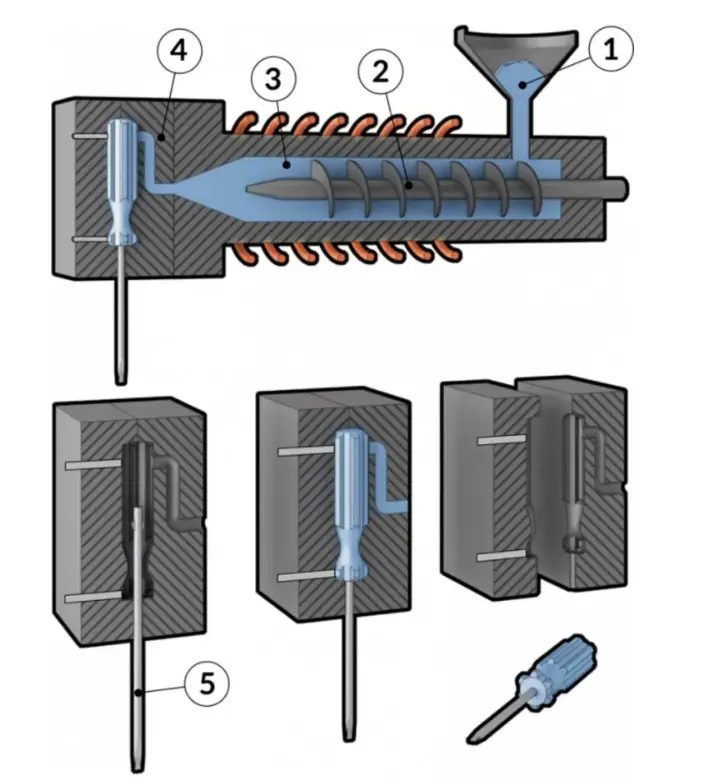
Insert molding is a form of injection molding characterized by molding a secondary component onto a substrate. The difference between insert molding and overmolding is that insert molding is based on an existing substrate (base or internal component). A prefabricated part (usually manufactured in a completely different factory or sourced from another company) is inserted into a mold, and then a layer of secondary material is molded around it.
Insert molding is commonly used to incorporate a layer of plastic over a metal layer, such as adding a plastic handle to a metal screwdriver. Furthermore, insert molding can be used to manufacture insulated pipes, wires, and other similar products, or to embed electronic components within plastic.
Why Choose Insert Molding?
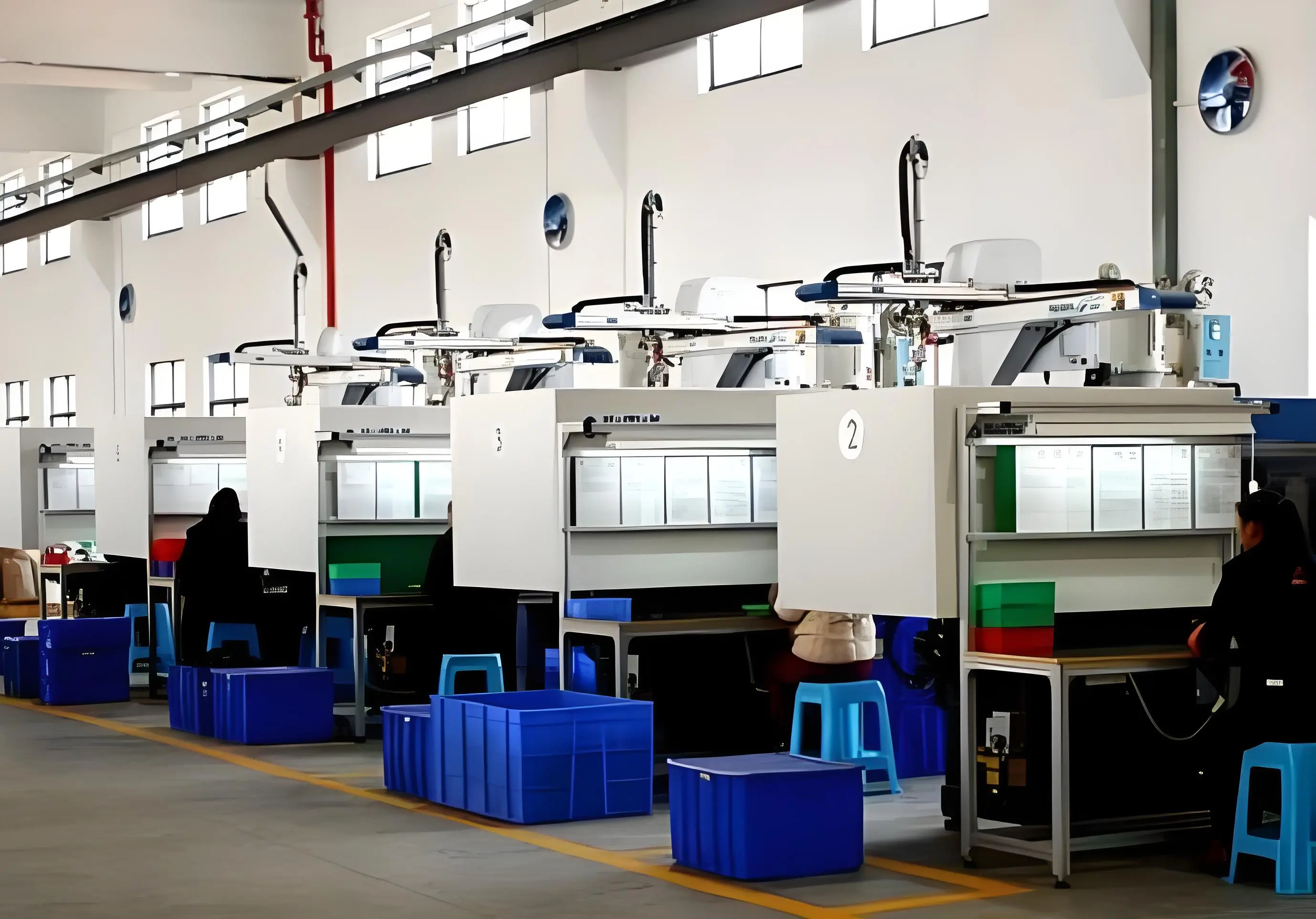
Insert molding is a versatile process. A single injection molding machine can produce thousands of parts each day. This can significantly reduce the cost of each part. In typical CNC machined, sheet metal, or additive manufacturing parts, any necessary assembly can become a bottleneck. Insert molding eliminates assembly, thereby maximizing cost savings.
Generally, plastic parts are not as strong as metal parts. However, plastics provide benefits such as low cost, design flexibility, and light weight. Combining metal and plastic materials into a single part allows for the advantages of both. Metal inserts can be used where strength and rigidity are required, while the rest of the part can be made of plastic to reduce weight. Furthermore, plastic parts are less resistant to wear, while metal inserts enhance the part's durability, enabling it to withstand any type of cyclic load.
SUMMARY AND NEXT STEPS
If you want to know more about the two technologies or need to choose the best one for your parts, welcome to visit our injection molding service page.