English
 Deutsch
 Español
 Français
 Italiano
 日本語
日本語 Русский
 中文
中文
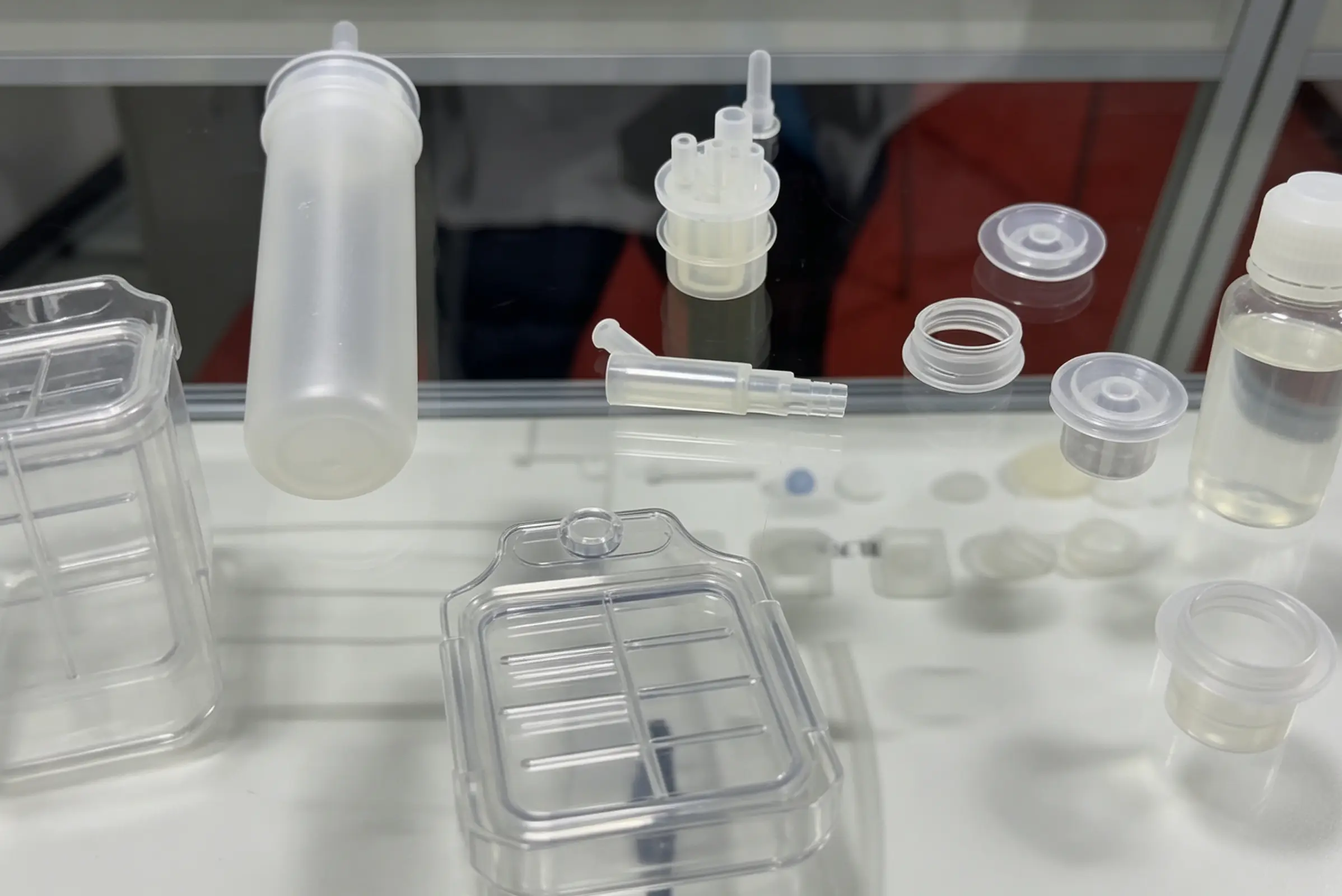
Silicone Manufacturing Terminology Series 01: Common Material Terms Explained
- Published September 10 2026 - Updated September 17 2026
Understanding the key terms used to describe silicone materials.
There’re lots of terms in silicone manufacturing, and some of them are easily mixed up, which can lead to misunderstandings — that’s why we created this silicone manufacturing terminology series. This article focuses on common material terms, such as silicone rubber, silicone elastomer, LSR, HCR/HTV, RTV-1, and RTV-2. Besides the basic explanations, we will also answer some common questions to clarify the differences and relationships between these terms.
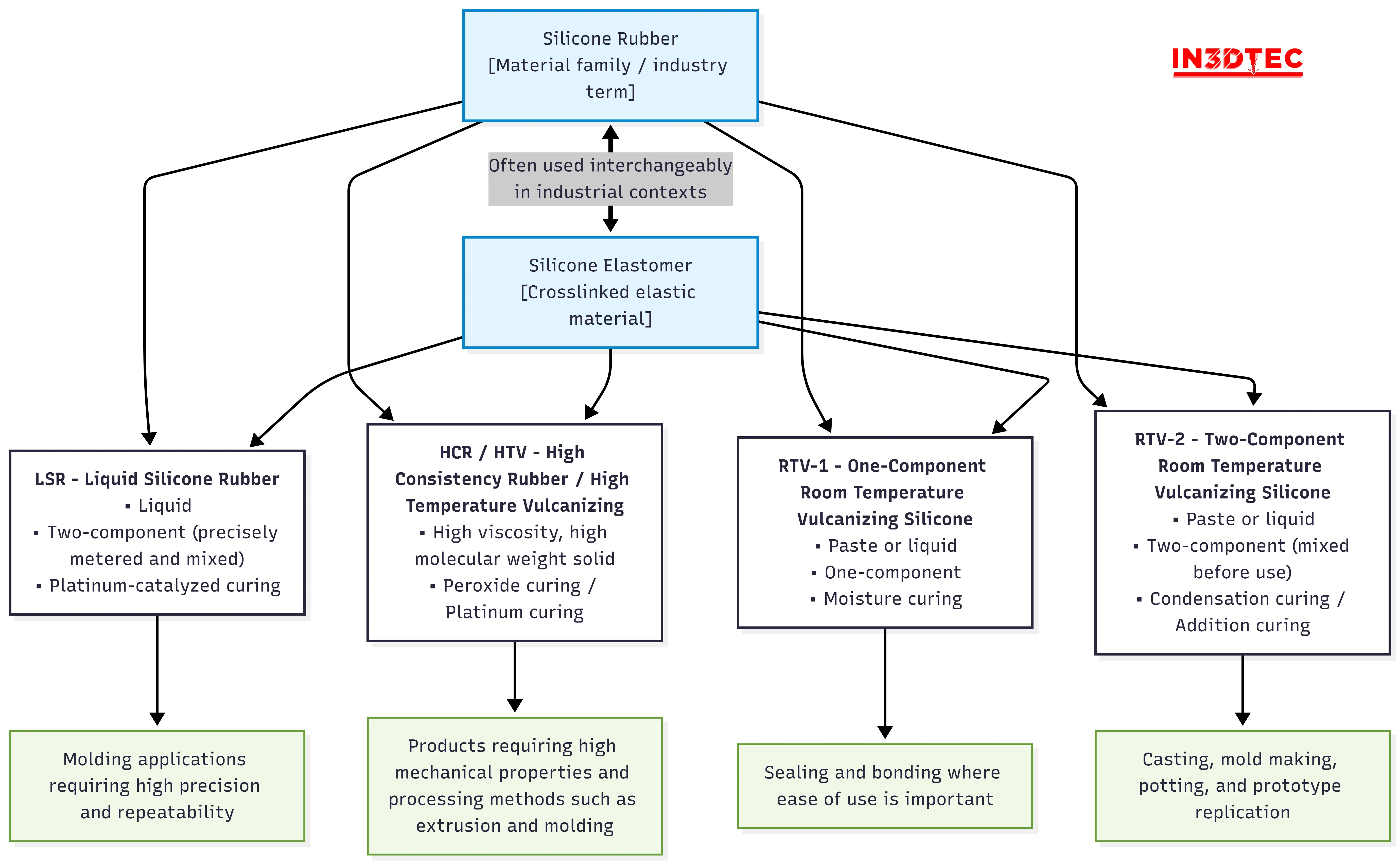
Common Silicone Material Terms Explained
Image Source: IN3DTEC Technical Team
SILICONE RUBBER
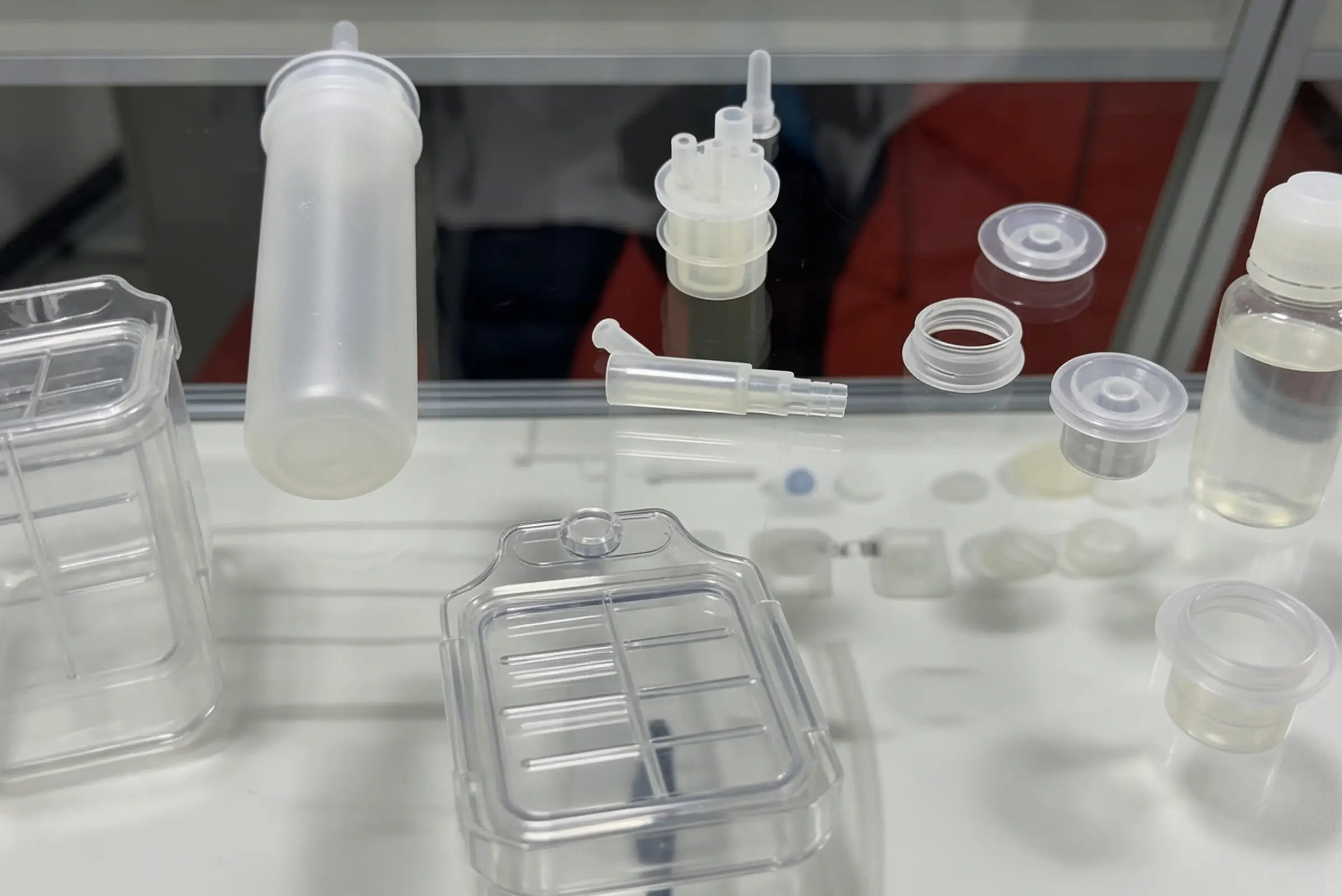
Medical Silicone Parts
Image Source: Photo by IN3DTEC Technical Team at Medtec China 2026
It is a type of synthetic rubber based primarily on siloxane polymers. Its backbone consists of alternating silicon and oxygen atoms, with organic groups attached. In its uncured state, silicone rubber formulations can exist as a liquid, a paste, or a highly viscous material. Upon the addition of a suitable curing system, a cross-linking reaction occurs, forming a three-dimensional cross-linked network and ultimately an elastomer.
Because of differences in material form, component configuration, curing system, etc., silicone rubber can have different material systems.We can usually see systems such as liquid silicone rubber (LSR), high consistency rubber (HCR), and room-temperature-vulcanizing silicone (RTV).
The core advantages of silicone rubber include its softness, elasticity, temperature resistance, and aging resistance, while maintaining stable performance. It is widely used in automotive, electronics, medical, industrial equipment, and consumer applications.
SILICONE ELASTOMER
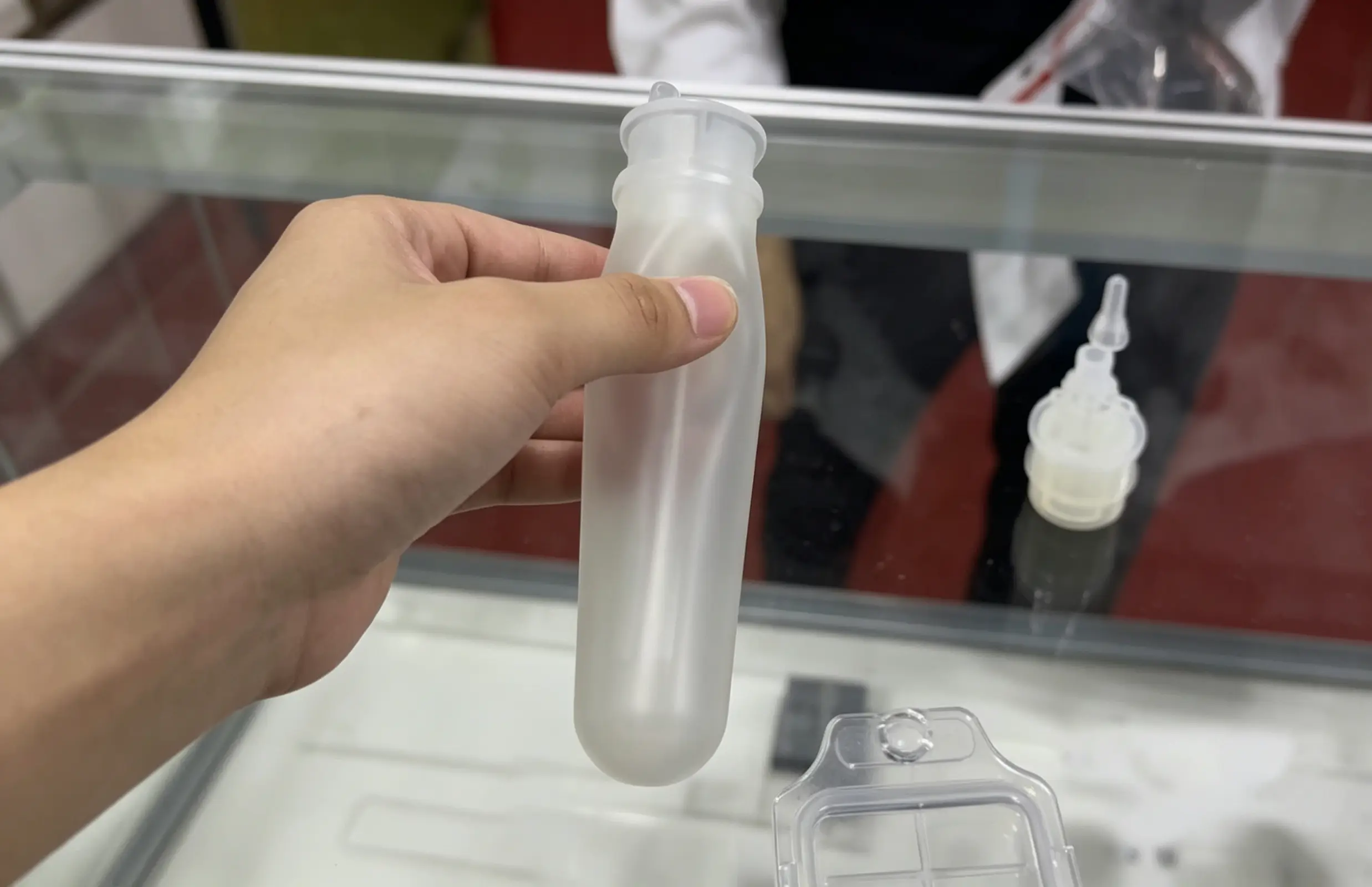
A semi-transparent silicone component.
Image Source: Photo by IN3DTEC Technical Team at Medtec China 2026
It refers to a class of elastic materials formed through the cross-linking of silicon-based polymers, capable of undergoing significant deformation under stress and recovering their original shape.
It does not refer to one specific material name, but describes the elastic material formed after cross-linking. It means that the material can form a stable cross-linked network, so reversible deformation can occur upon stretching, compression, or bending, and the material will not flow like a liquid.
In silicone manufacturing, silicone elastomer refers to silicone-based elastic materials that have been cured. For example, LSR, HCR, and RTV, after curing, can all form a silicone elastomer.
Silicone rubber and silicone elastomer usually have similar meanings in some industry contexts.
LSR — LIQUID SILICONE RUBBER
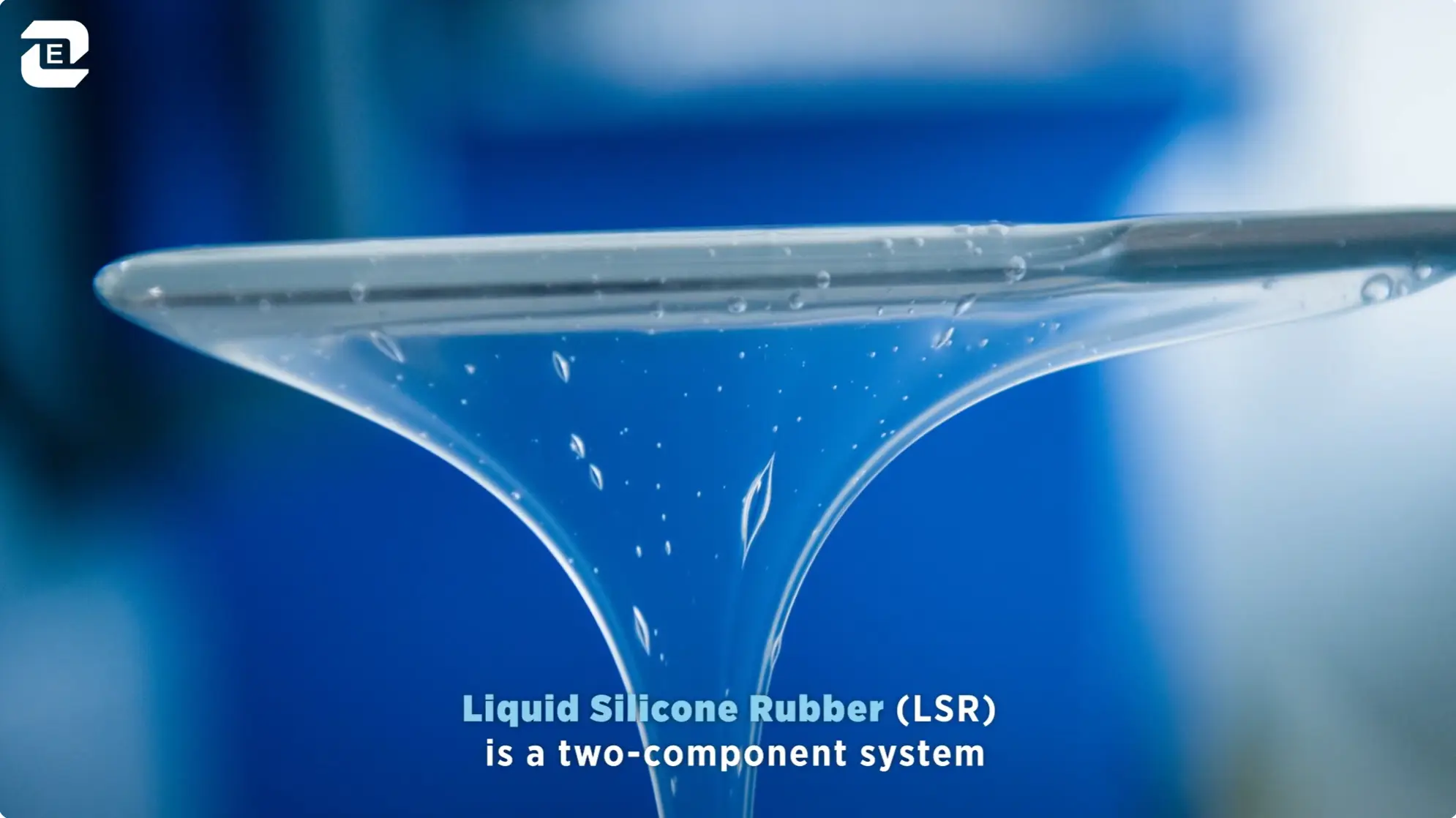
Liquid Silicone Rubber (LSR)
Image Source: Bluestar Silicones — “What is a Liquid Silicone Rubber?” via YouTube
It’s a kind of silicone rubber. It has a relatively low viscosity, and it can be pumped and injected like a liquid. It is usually supplied as A/B two liquid components. When they enter the injection molding equipment, they are mixed at a specified ratio, and in the end form resilient silicone rubber parts. LSR usually uses a platinum-catalyzed addition-cure system, and uses Liquid Injection Molding (LIM) for molding. Components A and B are precisely metered and mixed by the equipment, then injected into the mold. It cures rapidly upon heating, making it better suited for high-precision, high-efficiency silicone rubber injection molding and mass production.
HCR / HTV — HIGH CONSISTENCY RUBBER / HIGH TEMPERATURE VULCANIZING
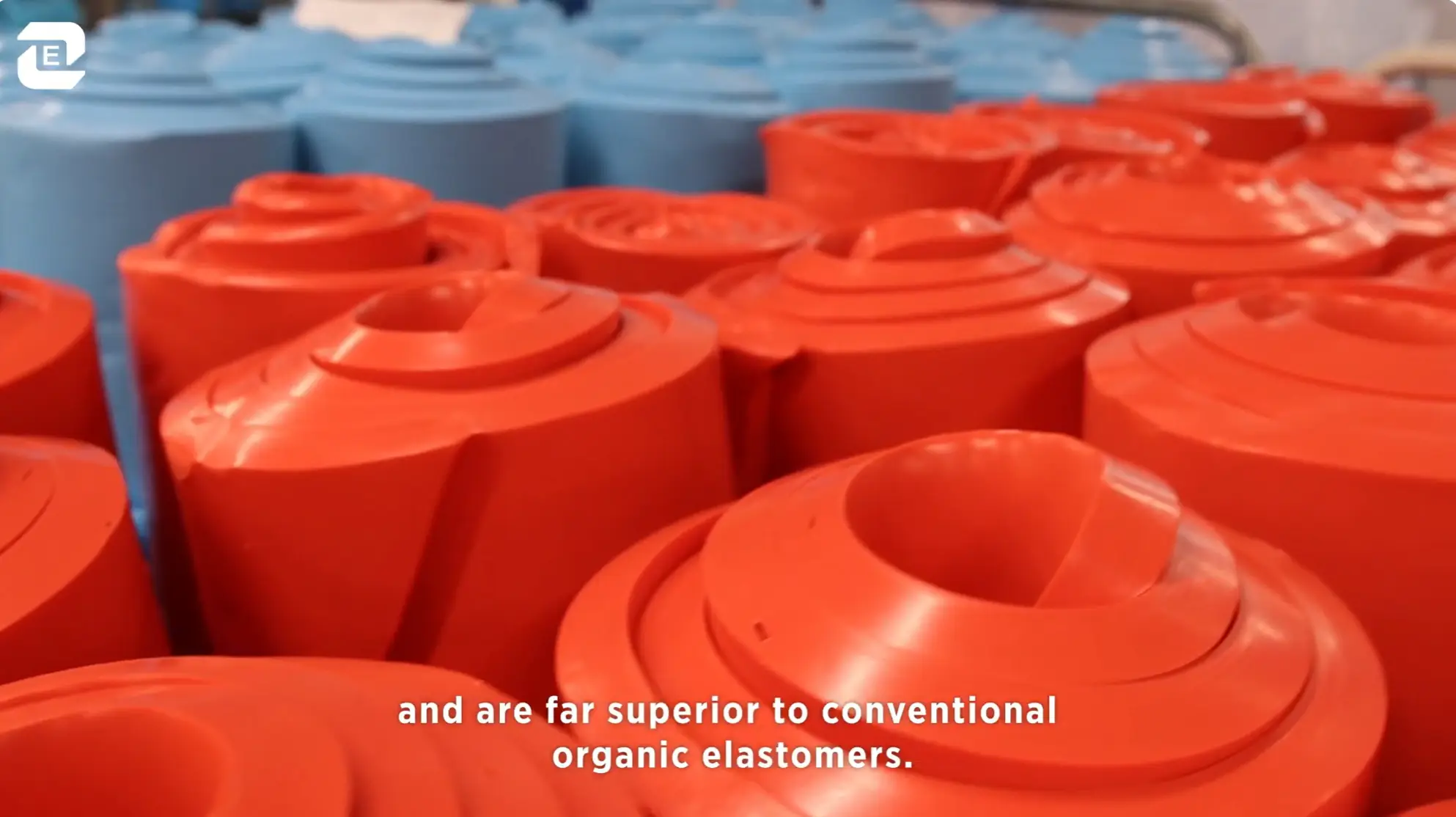
High Consistency Rubber (HCR) Silicone
Image Source: Bluestar Silicones — “What are HCR silicones?” via YouTube
It’s a kind of silicone rubber. It exists in the form of a high-viscosity, high-consistency, gum-like material. Typically, processes such as compounding, preforming, and compression molding are required. Vulcanization and cross-linking are achieved through heating, using a peroxide- or platinum-based curing system, depending on the formulation. HCR emphasizes the high-viscosity state of the material. HTV emphasizes that the material is cured via high-temperature vulcanization. This material is widely used to manufacture seals, silicone tubing, industrial profiles, and other rubber products. HCR is particularly common for products requiring continuous extrusion, large cross-sections, or specific mechanical properties.
RTV-1 — ONE-COMPONENT ROOM TEMPERATURE VULCANIZING SILICONE
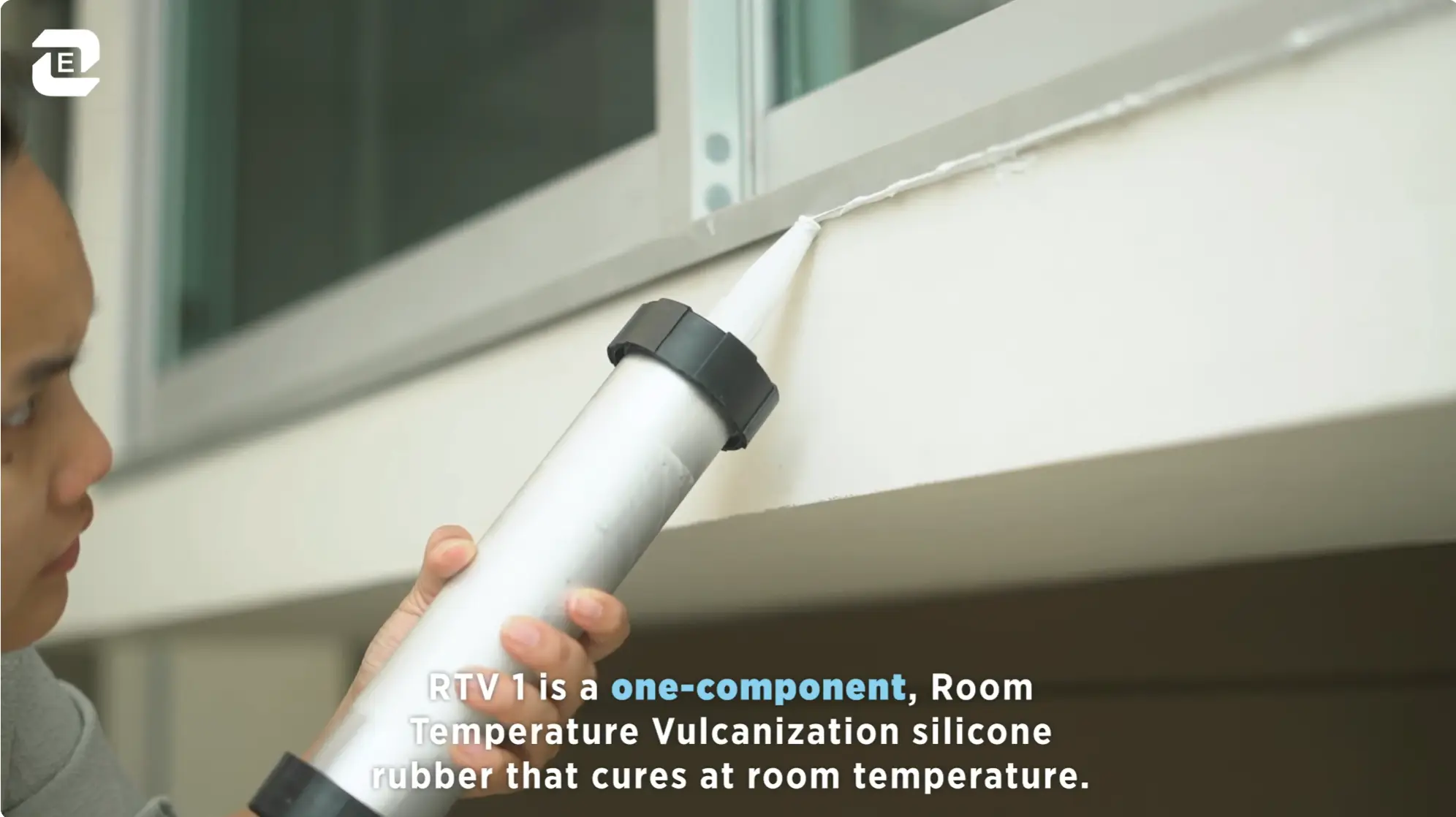
RTV-1 Silicone
Image Source: Bluestar Silicones — “What are RTV-1 silicones?” via YouTube
It is a type of Room-Temperature Vulcanizing (RTV) silicone rubber material. RTV, more precisely, it describes a silicone system capable of curing at room temperature. RTV-1 is a one-component silicone rubber material. Typically, paste-like or high-viscosity materials are packaged directly into tubes, cartridges, or other containers. No mixing with other components is required during use. It reacts with moisture in the air. It gradually cross-links and cures at room temperature through a moisture-curing mechanism. The greatest advantage of RTV-1 is its ease of use. Commonly found in applications such as sealing, bonding, and coating.
RTV-2 — TWO-COMPONENT ROOM TEMPERATURE VULCANIZING SILICONE
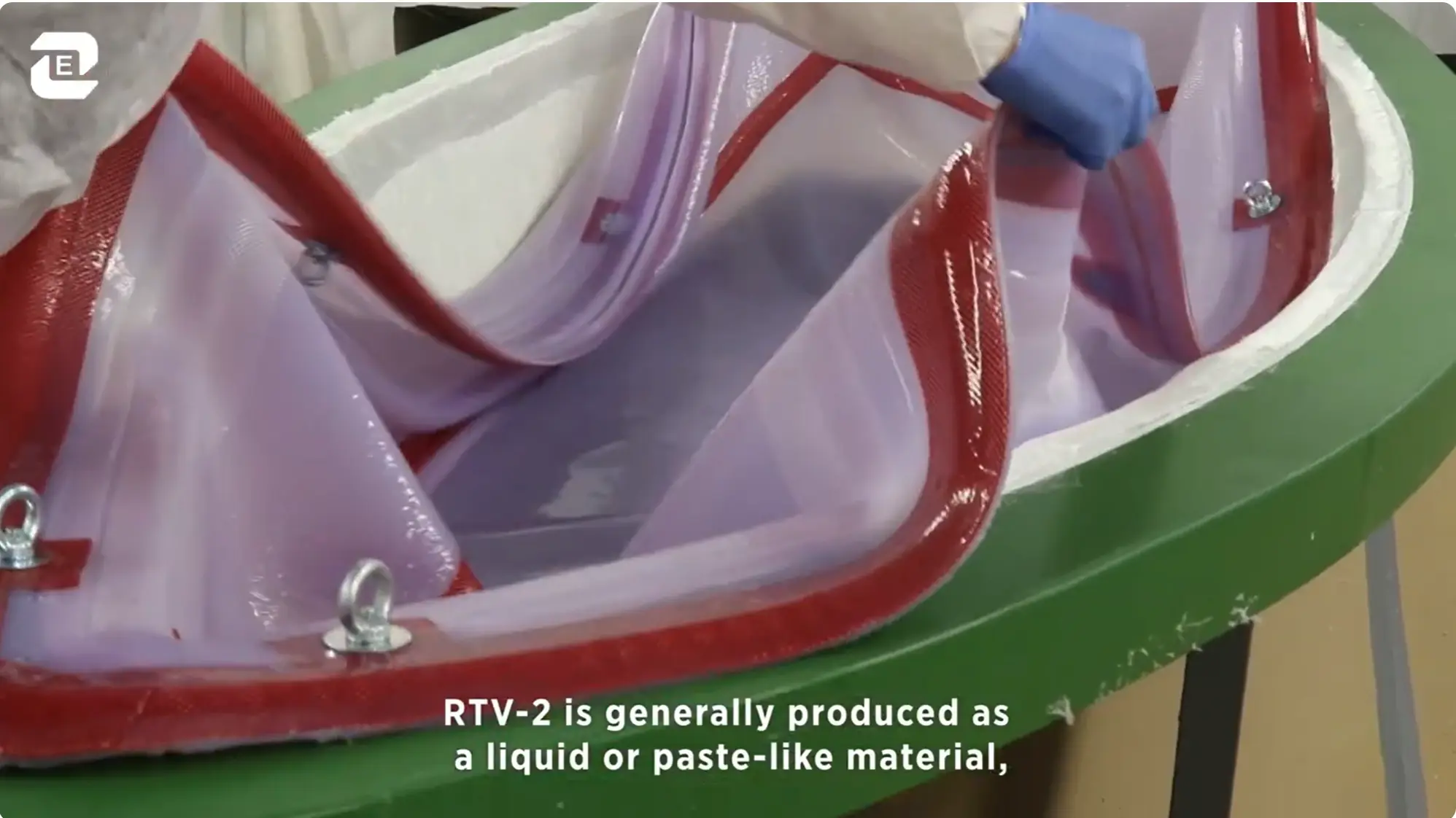
RTV-2 Silicone
Image Source: Bluestar Silicones — “What are RTV-2 silicones?” via YouTube>
It is also a type of RTV silicone rubber material. RTV-2 is a silicone rubber material composed of two components, A and B. It is typically in liquid or paste form, depending on the formulation. They must be mixed according to the specified ratio before use. After mixing, it gradually cures at room temperature via a chemical cross-linking reaction to form an elastomer.
- RTV-1 and RTV-2 share common application areas. However, due to differences in curing mechanisms, different systems are selected based on specific dimensions, thickness, curing speed, material properties, and process requirements.
- Both RTV-2 and LSR are two-component silicone rubbers, but they are typically designed for different processing systems and applications. RTV-2 is suitable for applications such as mold making, potting, sealing, and prototype replication.
WHY IS LSR MACHINE-MIXED WHILE RTV-2 IS USUALLY MIXED MANUALLY?
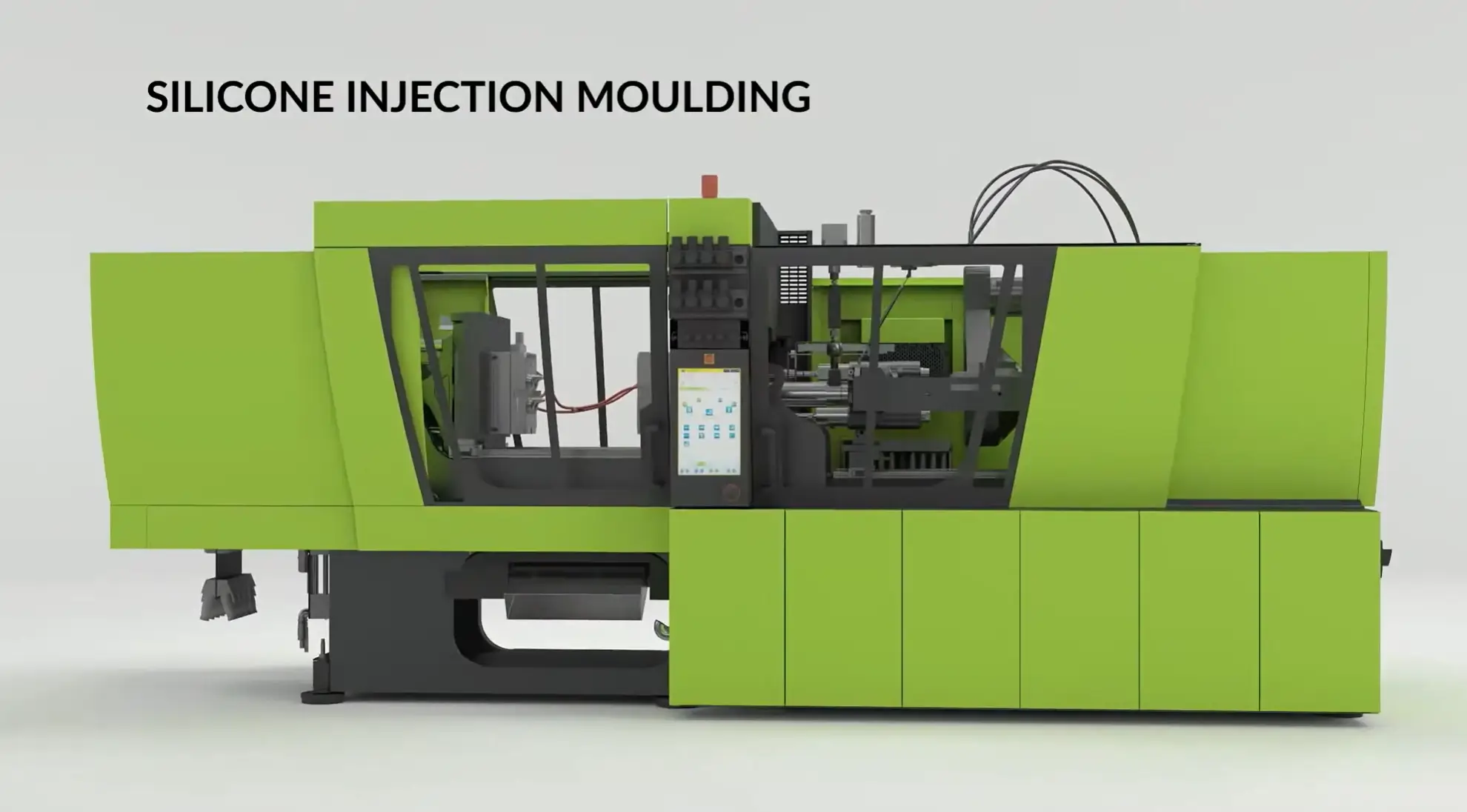
Silicone Injection Molding
Image Source: Greiner Assistec — “Liquid Injection Molding - How it works” via YouTube
Although both LSR and RTV-2 can utilize A/B two-component systems, the two differ in their material design and usage.
In terms of material design:
- LSR formulations typically center on precise metering and mixing. They are designed for rapid mixing and controllable curing.
- RTV-2, on the other hand, typically places greater emphasis on the working time after mixing and on flexibility of use.
In terms of usage:
- LSR typically stores components A and B separately. During operation, the equipment automatically meters the materials according to the specified ratio and completes the mixing before the material enters the mold. Then, molding and curing are carried out immediately. In other words, the continuous process of "metering → mixing → injection" for LSR components A and B is typically carried out by the equipment. This method is suitable for injection molding applications requiring stable and repeatable production.
- RTV-2 is also composed of two components, A and B. However, the two components usually need to be mixed in the specified proportions before use. The mixed material retains a certain amount of working time. It then gradually cures. Therefore, RTV-2 is more commonly used for applications such as casting, potting, mold making, and prototype replication that require manipulation prior to curing.
It is important to note that the difference here is not that LSR must be machine-mixed while RTV-2 must be mixed by hand. RTV-2 can also be used with automatic mixing equipment. The real difference lies in the fact that the two typically employ different material handling and processing systems.
WHY ARE THERE SO MANY DIFFERENT SILICONE RUBBER SYSTEMS, SUCH AS LSR, HCR/HTV, RTV-1, AND RTV-2?
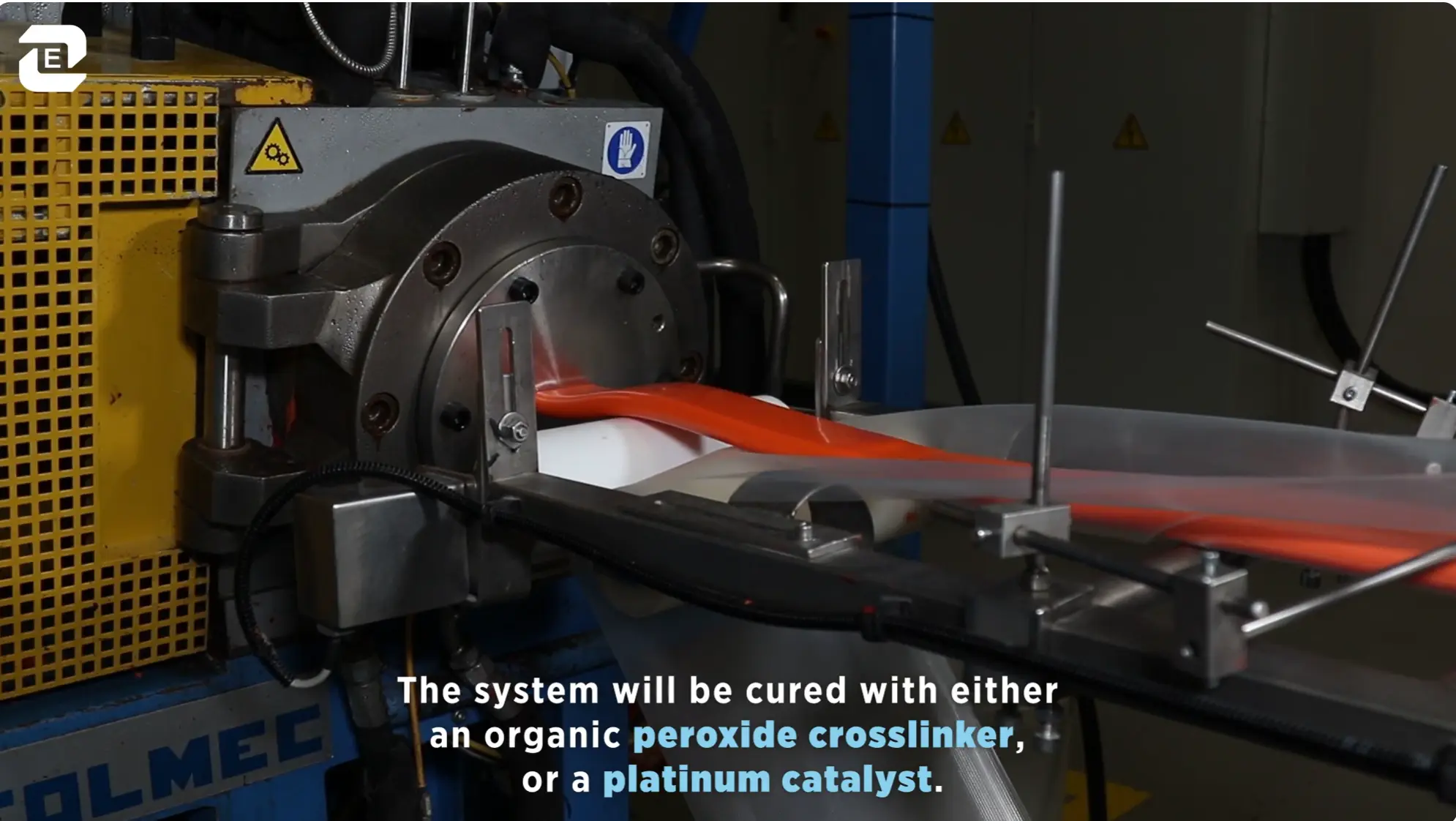
High Consistency Rubber (HCR) Silicone
Image Source: Bluestar Silicones — “What are HCR silicones?” via YouTube
This is because different applications have varying requirements regarding the state, viscosity, component form, curing characteristics, and processing methods of silicone materials.
- LSR: Manufacturers design LSR as a low-viscosity liquid material. This allows it to be precisely metered, mixed, and rapidly cured. It is suitable for molding applications requiring high precision and repeatability.
- HCR / HTV: Manufacturers maintain HCR/HTV in a high-viscosity, rubber-compound form. It is suitable for products requiring high mechanical properties and processing methods such as extrusion and molding.
- RTV-1: Manufacturers design RTV-1 as a single-component, ready-to-use material that requires no mixing before application. It is mainly used for applications such as sealing and bonding, where ease of use is important.
- RTV-2: Manufacturers design RTV-2 as a two-component material that cures after mixing. It provides a controllable curing process with minimal equipment requirements, making it commonly used for casting, mold making, potting, and prototype replication.
It should be noted that these four categories are not mutually exclusive chemical classifications. For example, different material systems may use the same or similar curing chemistries. Therefore, LSR, HCR/HTV, RTV-1, and RTV-2 cannot simply be mapped to specific curing mechanisms.
Need Silicone Parts for Your Project? Talk to our team about the right material and manufacturing process for your application.Or you can just send your project detail to sales@in3dtec.com.