English
 Deutsch
 Español
 Français
 Italiano
 日本語
日本語 Русский
 中文
中文
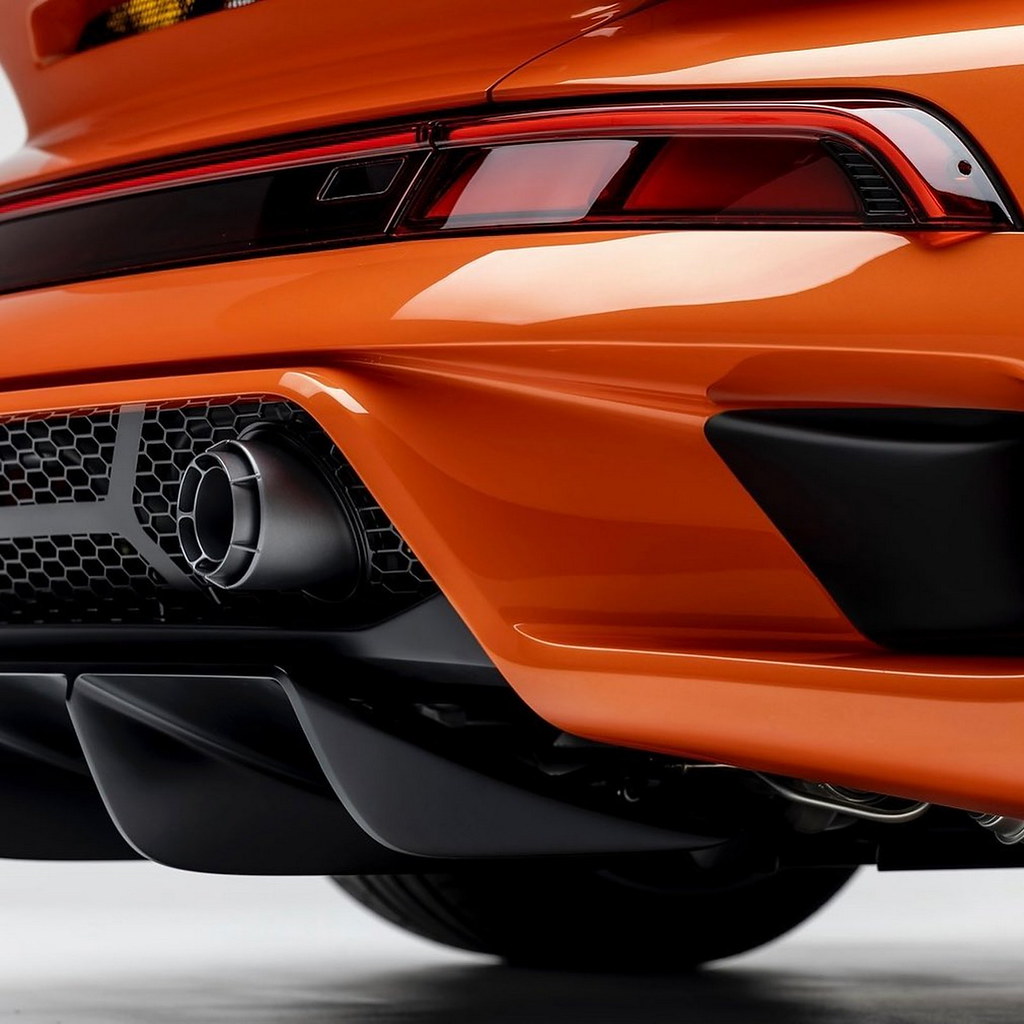
Surface Finishes for CNC Machined Parts
- Published November 06 2025 - Updated September 28 2026
A technical guide to enhancing aesthetics, corrosion resistance, and functional performance through advanced post-processing treatments.
The first impression of any CNC-machined part depends on its appearance and visual presentation to the observer. This essential determinant has driven modern industry and manufacturers to prioritize both aesthetics and functionality in their products.
To achieve the desired aesthetic effect, manufacturers perform surface treatments on CNC-machined parts. Surface treatment is a comprehensive and effective process that removes residues, scratches, thread marks, blurry areas, and any other imperfections from the product's surface.
By using surface finishing techniques, manufacturers can significantly make the overall quality better and attractiveness of CNC-machined parts. These treatments not only eliminate imperfections but also offer other benefits such as increased durability, enhanced corrosion resistance, and improved performance.
This article intends to deliver an overview of common surface finishing processes applicable to CNC-machined parts.
1. VARIETIES OF CNC MACHINING SURFACE FINISHES
Some manufacturers need extreme surface finishing, and the rest require very little. Keeping this point in mind, there are three categories of surface finishing for CNC-machined parts. Find out which one is suitable for your expectations and appeals to your customers.
2. AS MACHINED SURFACE FINISHES
Machining finishing is a very affordable option for manufacturers because it does not incur any extra cost due to being done by a CNC machine.
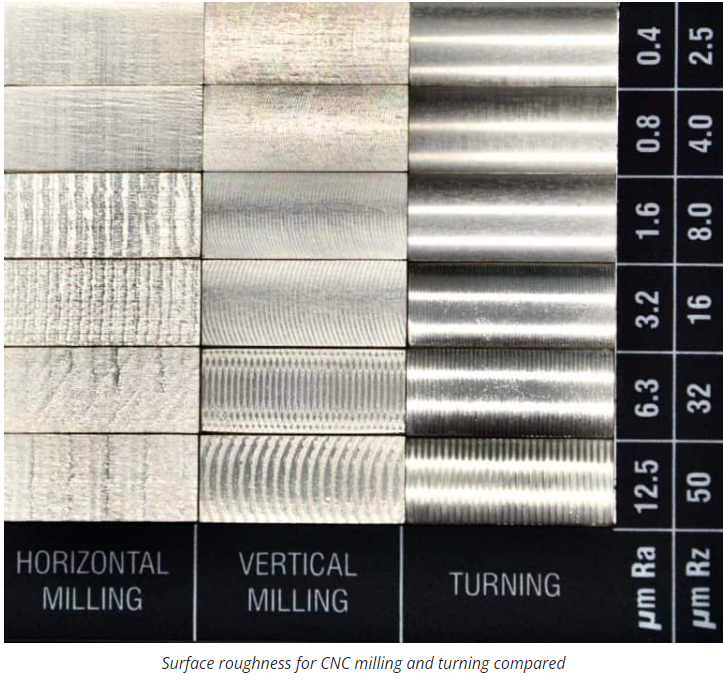
This surface finish is counted in terms of the Ra factor, which is the surface roughness that is defined as the deviation of a machined profile from the ideal surface.
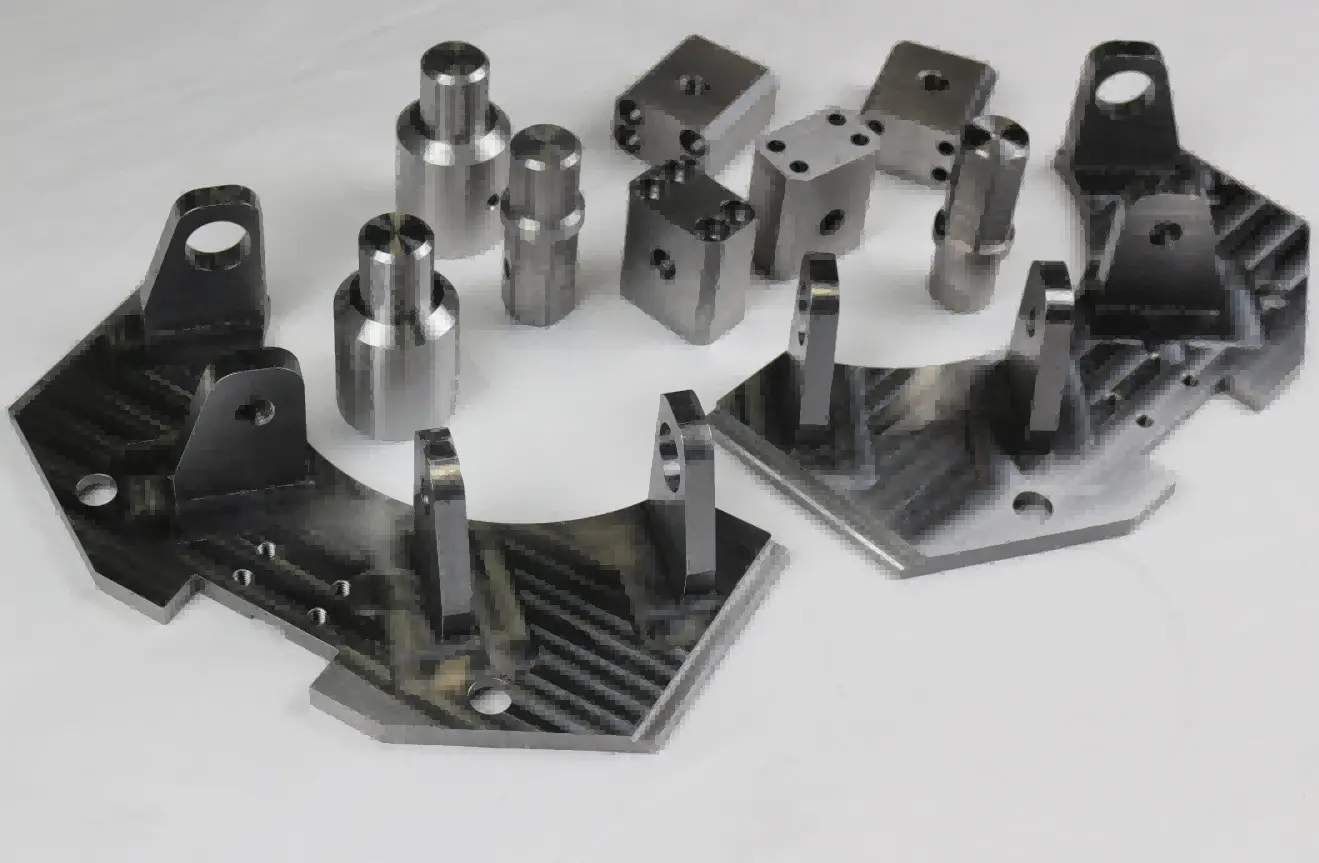
Precision CNC machined metal parts with detailed features, holes, and mounting surfaces.
Ra is the foundation of the calculation of surface finish, surface integrity, waviness, and flatness. Some ideal values of Ra are 3.2, 1.6, 1.8, and 0.8 micrometers. The lower the value of Ra, the higher the dimensional accuracy or tolerances.
Machining finishing is the best for those who have a tighter budget. However, it keeps the surface of CNC-machined parts filled with tool marks. In this way, it is not perfect for high-value projects.
3. CHEMICAL SURFACE FINISHES
Coating the surface of CNC-machined parts with another material is termed “chemical finishing. We can say that it is an extra layer of protection against abrasion, corrosion, and external factors.
Chemical finishing offers an aesthetic appeal to the parts because of the addition of their colour, shine, and other similar attributes. Discuss some of its types.
Anodizing
Anodizing is a phenomenon in which the immersion of a part in an electrolyte solution results in the formation of a protective sheath of oxide on the surface. Anodizing sheaths fall into two categories on the basis of applications.
Type I anodizing (up to 25 microns) is perfect for decorative and aesthetic purposes. While Type II anodizing (25 to 150 microns) is great for providing resistance against corrosion and abrasion to the material due to its thick oxide layering.
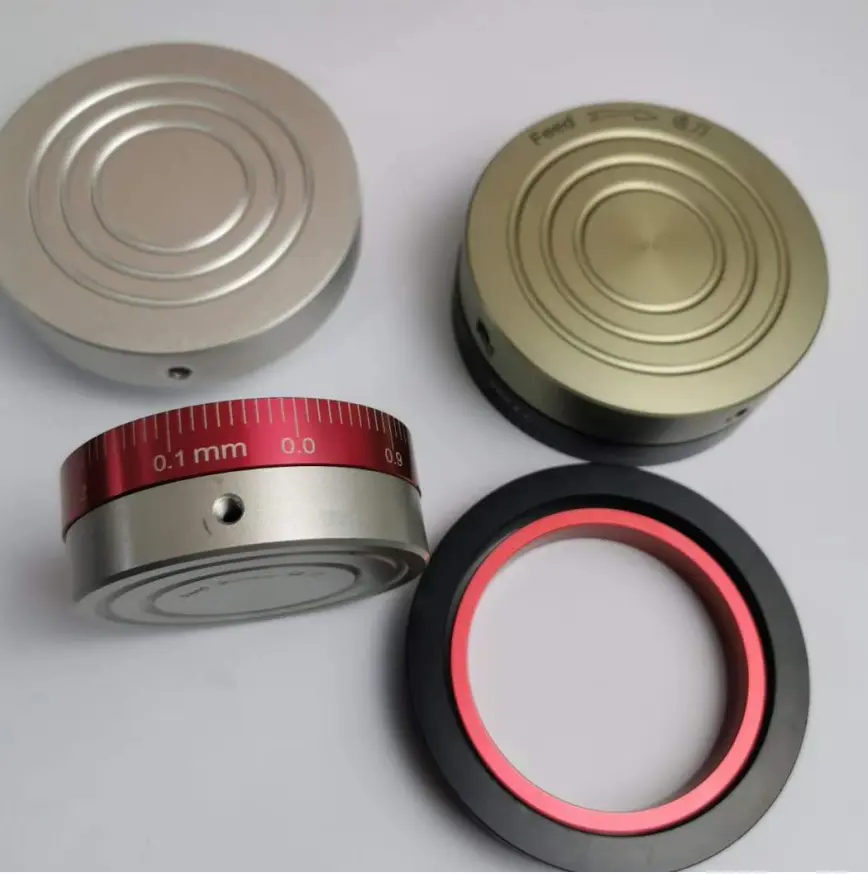
Precision-machined metal components featuring concentric grooves, fine adjustment markings, and a sealing ring.
Alodine Coating
Alodine means a chromate layer, and alodine coating implies the implementation of a chromate thin coating on the CNC machined parts’ surface to boost their capability against corrosion, heat, and adhesion, resulting in an improvement in their longevity and durability. It works very well for aluminum and non-ferrous components.
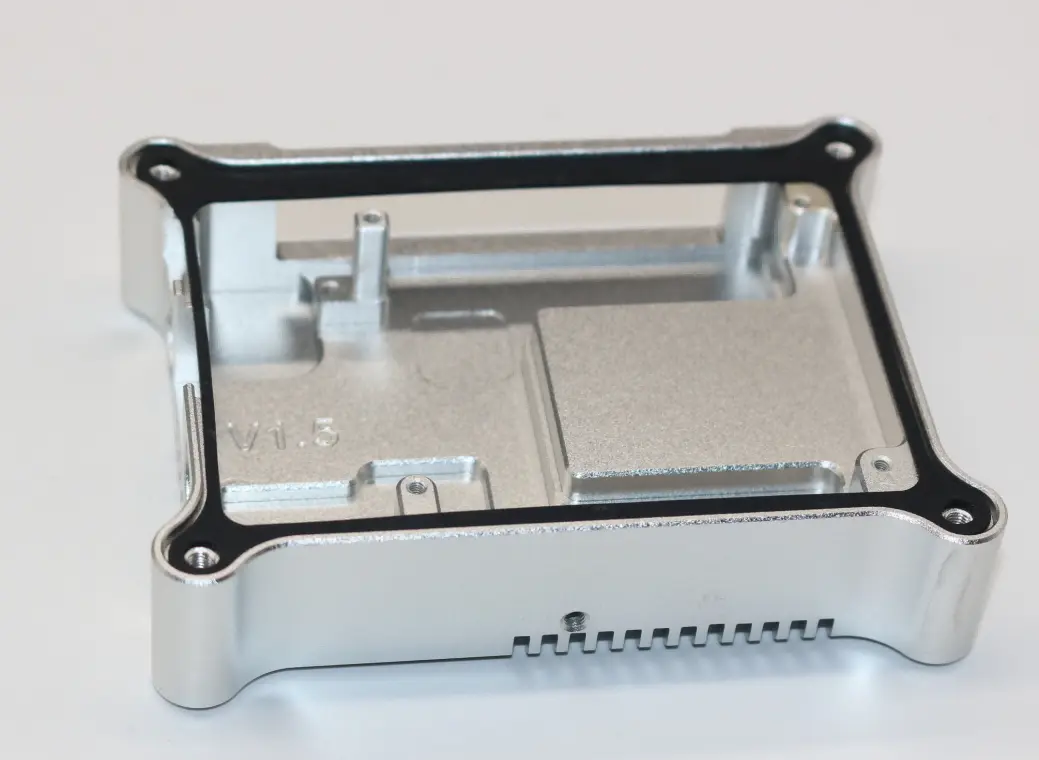
Alodine-coated aluminum enclosure with precision-machined mounting features and ventilation slots.
Black Oxide Coating
Black oxide coating is a surface finishing process in which a black oxide coating is applied to the surface of CNC machined parts throughout for shielding against different contaminants and physical damages.
It improves the capacity to battle corrosion, offers wear resistance, and offers high lubricity. This surface finishing is the best option for steel, copper, and other alloys that form well-bonded bonds with oxygen molecules.
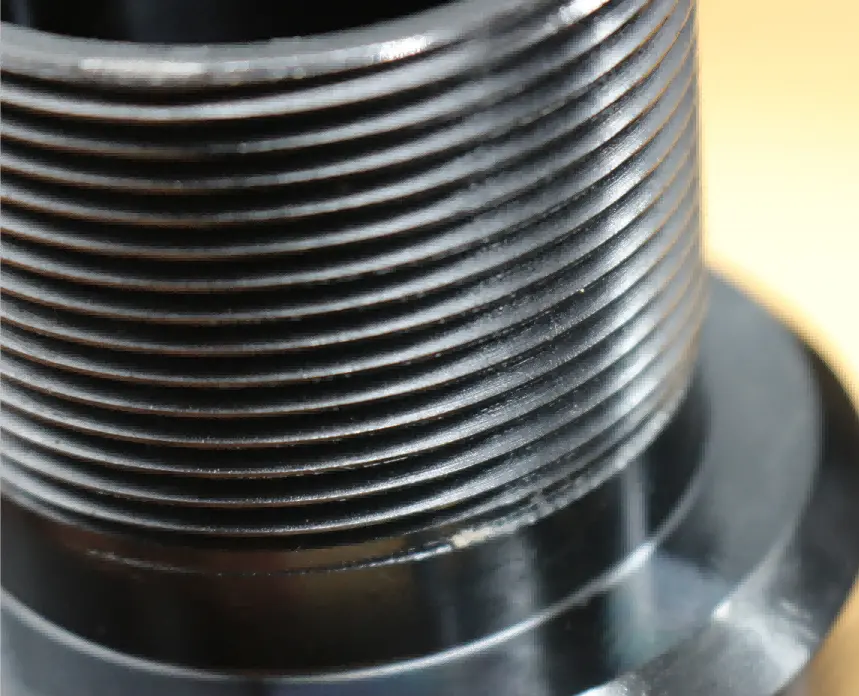
Black-coated CNC machined metal component featuring precision threads and a smooth surface finish.
Electroplating Surface Finishes
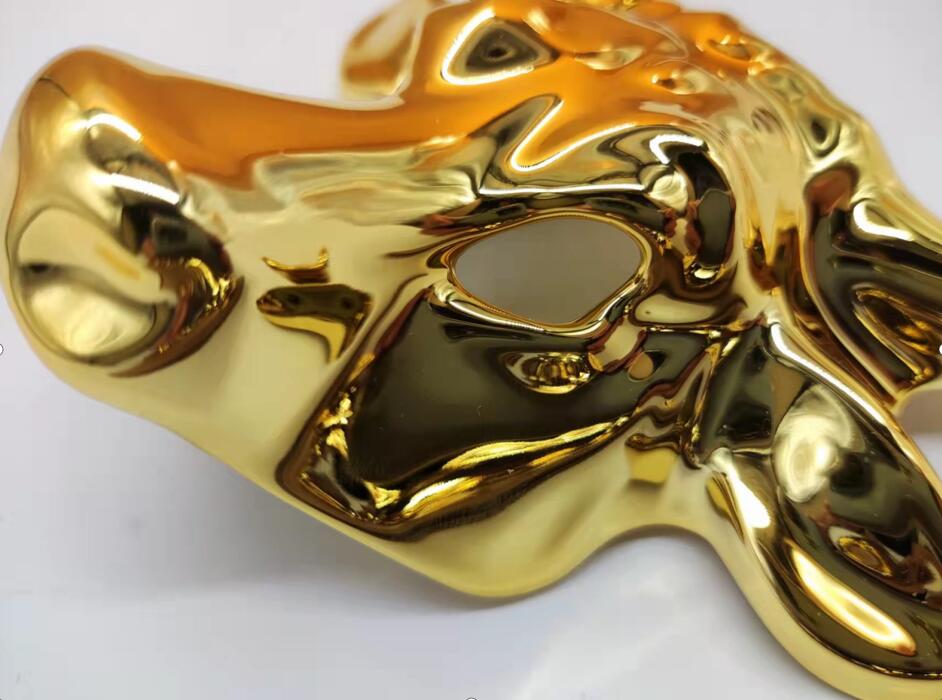
Electroplating consists of two words: electric and plating. It involves the deposition of a metallic sheath throughout the surface of a part with the help of passing electricity to reach its melting temperature.
Electroplating is a very effective protection for the workpiece and protects the inner components from all kinds of contaminants and corrosive impacts.
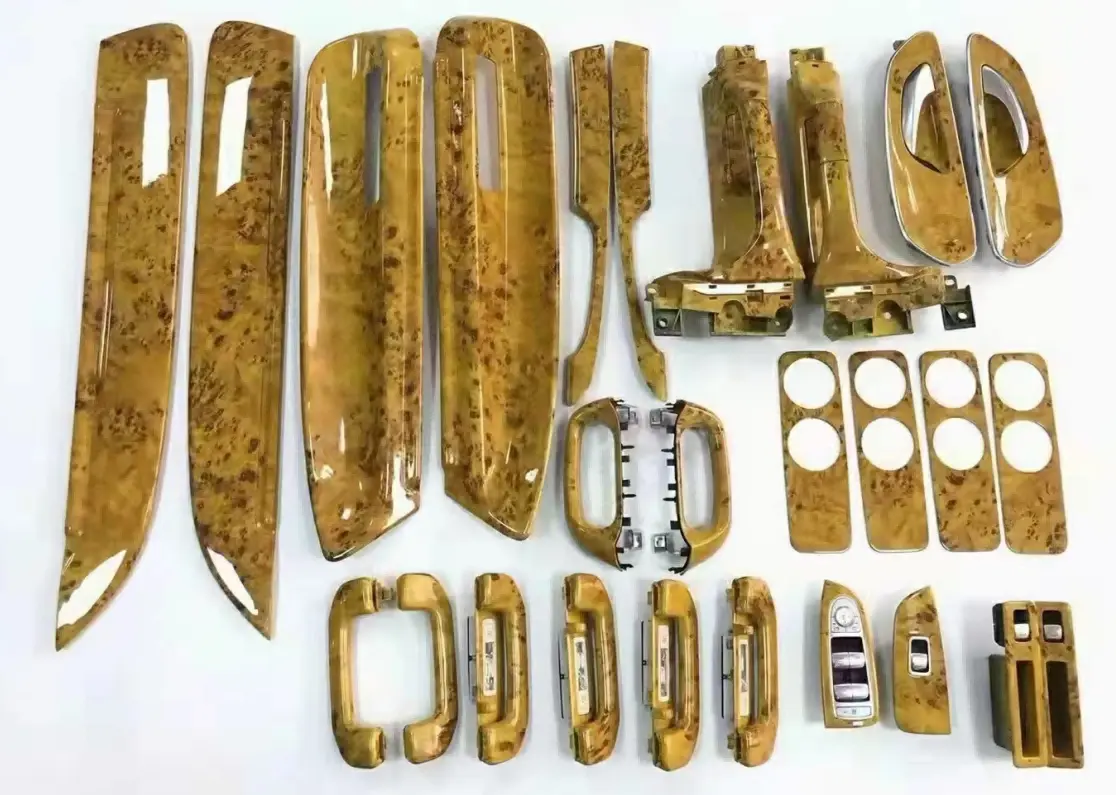
Electroplated automotive interior components featuring a durable, decorative gold-colored surface finish.
4. MECHANICAL SURFACE FINISHES
Under mechanical finishes, workpiece undergo multiple cycles of stresses and abrasions with corresponding treatments to obtain a smooth surface on the final products. See its types below.
Bead Blasting
Bead blasting is a process in which spherical beads made of glass or ceramic are sprayed onto the surface of CNC machined parts to achieve a textured matte surface effect, eliminate imperfections, and make the appearance uniform.
Powder Coating
Try coating the surface of the part with a layer of waxy powder to enhance its durability and maximize its versatility. This type of powder coating resists scratches and peeling and does not age over time.
Brushing
It is a kind of surface treatment, rather than surface finishing. It harnesses a metal-wired brush or an abrasive pad to clean the surface and physically throw out all contaminants or particles on the surface of the parts.
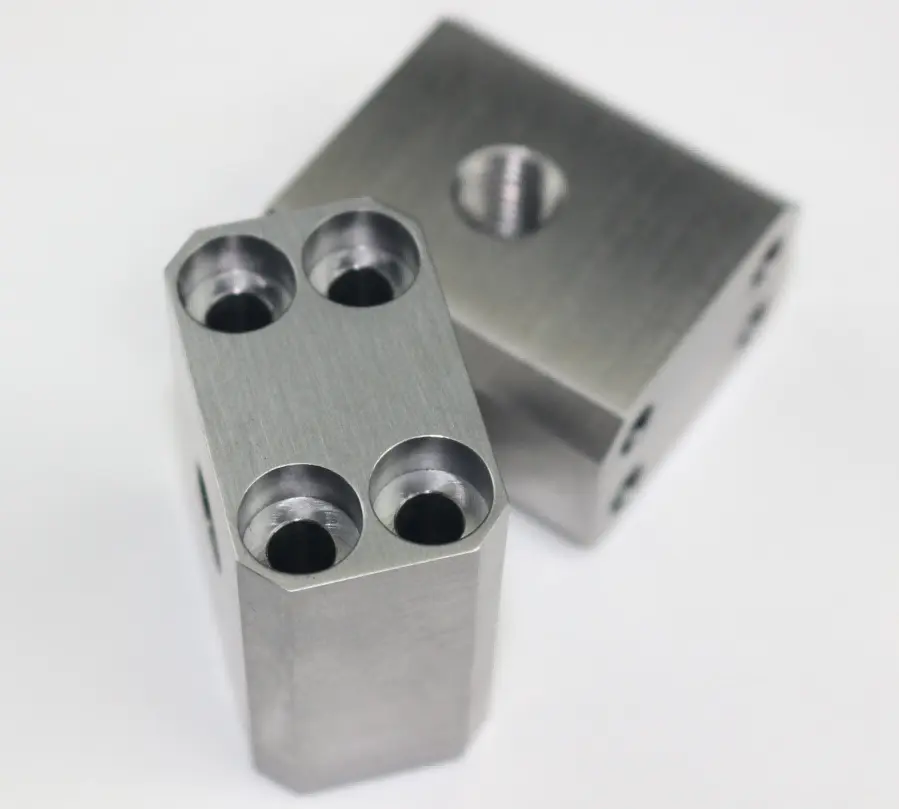
CNC machined aluminum components featuring a uniform brushed surface finish and precision countersunk holes.
Painting
The use of lacquer and polyurethane in their liquid form to apply over the surface of CNC machined parts to protect the surface from exposure to water, contaminants, dirt, and atmospheric irregularities is known as painting.Painting CNC surface finishing is a great option to improve the lifespan by keeping corrosion and abrasion at bay by covering the whole external body of a part.
CONCLUSION
In conclusion, surface treatment of CNC machined parts is crucial for achieving the desired quality, functionality, and aesthetics. By using appropriate surface treatment techniques, manufacturers can enhance the performance, durability, and overall value of their CNC machined components.