English
 Deutsch
 Español
 Français
 Italiano
 日本語
日本語 Русский
 中文
中文
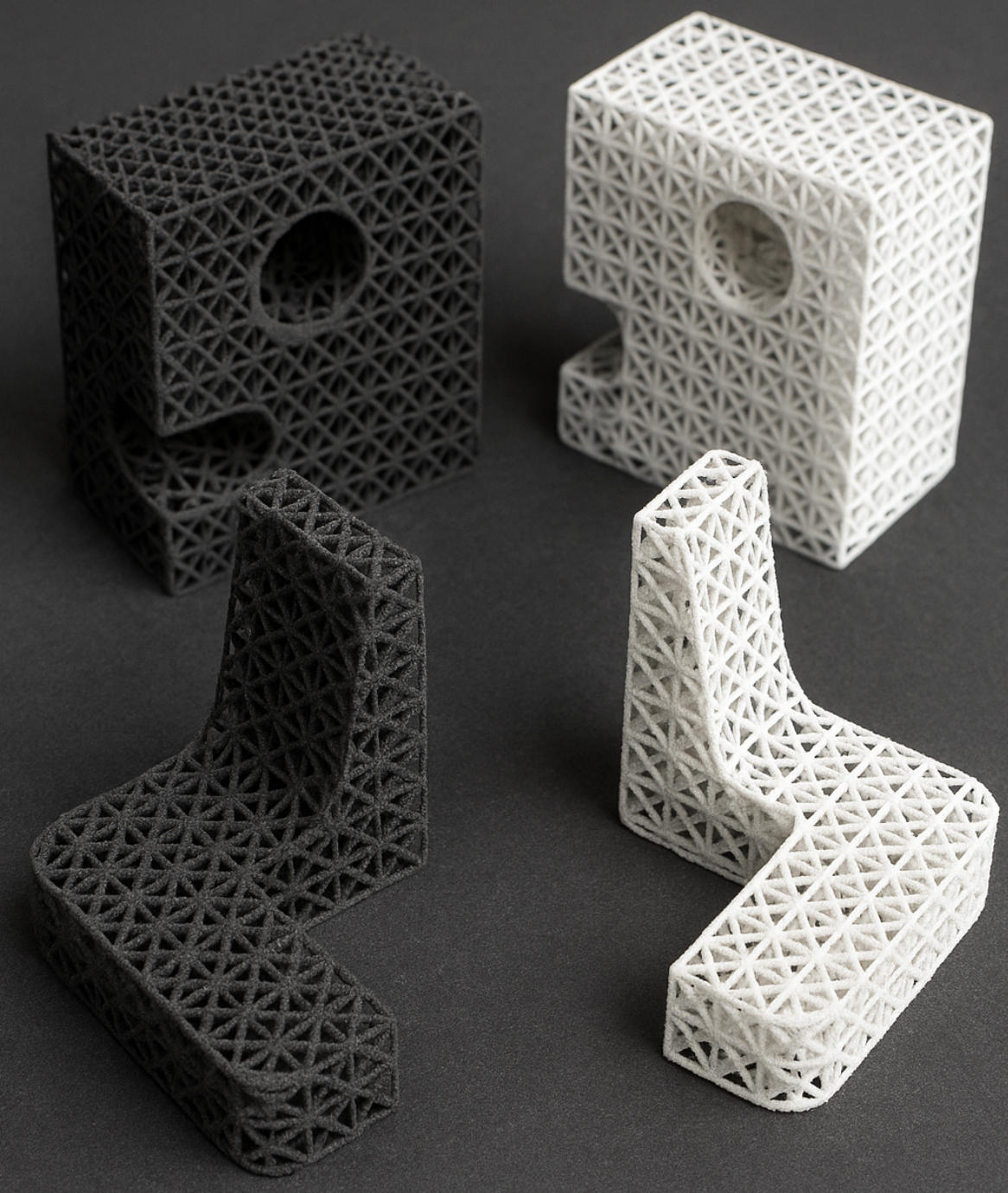
Selective Laser Sintering (SLS): The Smart Choice for Prototyping and Low Volume
- Published November 06 2025 - Updated October 14 2026
Let’s explore the selective laser sintering SLS technology of 3D Printing.
Nowadays, Selective Laser Sintering SLS 3D Printing is one of the most widely used and reliable additive manufacturing technologie. As this technology enables the manufacturing of robust, functional parts without the need for support structures during the printing process, SLS selective laser sintering has become an indispensable technology in industries such as automotive, aerospace, medical and consumer goods.
Whether you are prototyping or transitioning to full-scale manufacturing, selective laser sintering 3D printing technology enables the production of rapidly iterated, durable and reliable finished products, as well as highly complex geometries.
WHAT IS SLS 3D PRINTING?
SLS printing technology utilizes high-power lasers to fuse powdered material (typically nylon-based polymers) layer by layer, ultimately producing solid parts. As the unused powder acts as a natural support during the printing process, selective laser sintering SLS technology does not require the construction of additional support structures. So this technology can creat highly complex and nested designs.
HOW DOES SLS SELECTIVE LASER SINTERING WORK?
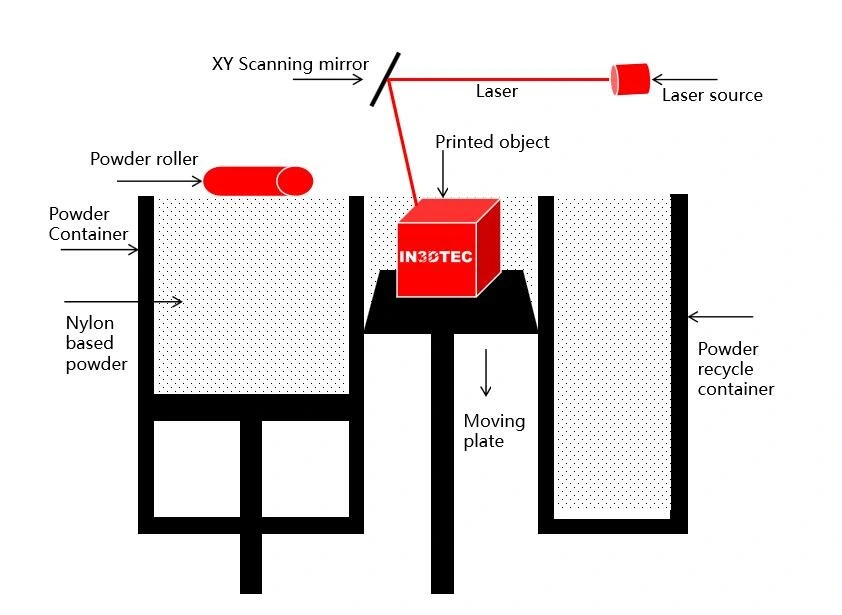
First, we use a roller to spread a thin layer of powder across the build platform. Next, we use a laser to selectively fuse the powder according to the cross-section of the 3D model. The build platform then lowers to deposit a new layer of powder, which is subsequently sintered. Finally, once printing is complete, the part must be cooled and cleaned and may be dyed or surface-finished as required.
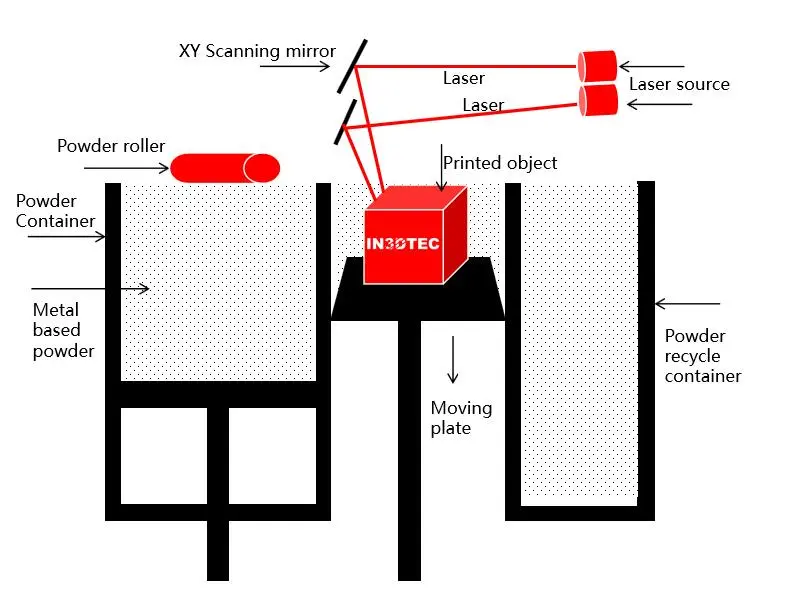
A schematic of the Selective Laser Melting (SLM) process showing how a laser selectively melts metal powder layer by layer to build a dense metal part, with powder feed, build platform, and powder recycling system.
The SLS printing process utilizes a high-power laser to selectively fuse powdered material layer by layer, thereby producing robust 3D printed parts with exquisite detail.
ADVANTAGES OF SLS 3D PRINTING TECHNOLOGY
The SLS printing process does not require the construction of additional support structures. Components produced by this technology are highly robust and durable, which makes them good for functional testing and end-use applications. Components with complex geometries can be printed. Unused powder can be recycled, minimizing waste and reducing costs. Production speeds are fast, making the process suitable for small to medium-volume production runs.
POPULAR MATERIALS FOR SLS MANUFACTURING AT IN3DTEC
• PA12 (Nylon 12) — This material is highly versatile and offers high strength.
• PA12 GF (Glass-filled Nylon) — This material offers greater stiffness and improved dimensional stability.
• PA12 CF ( Carbon fiber filled nylon) — This material is lightweight, high-strength and durable.
• TPU (Thermoplastic Polyurethane) — This is a material with good flexibility and impact resistance.
• PP (Polypropylene) — This material is lightweight and chemically resistant, making it good for functional components.
• PA11 — This material is a bio-based alternative with excellent toughness.
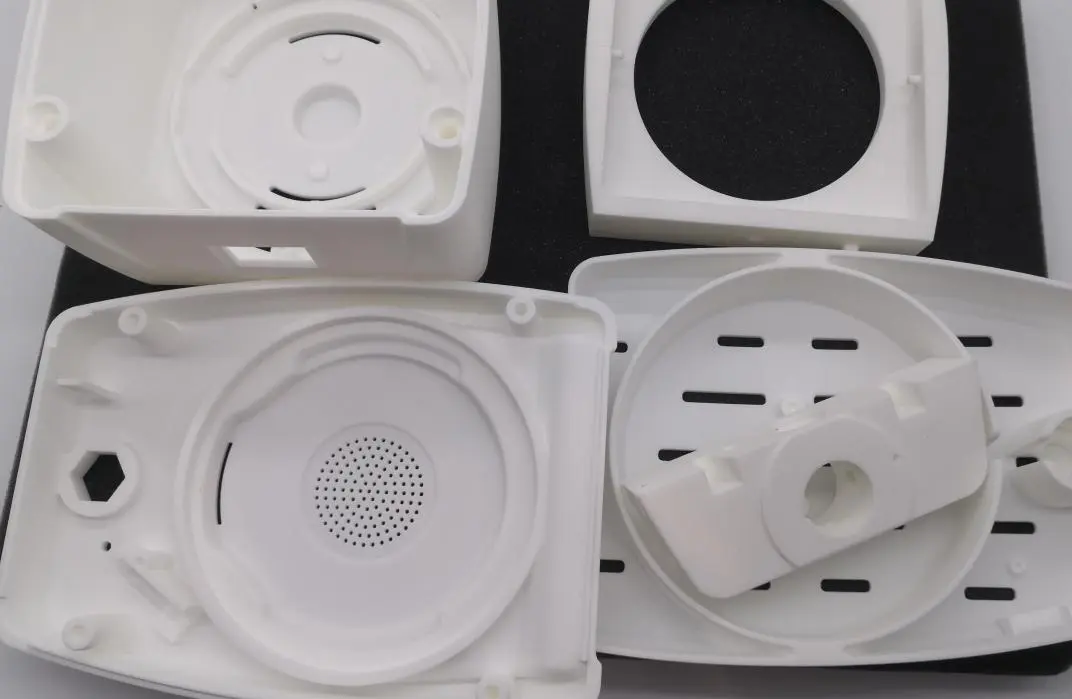
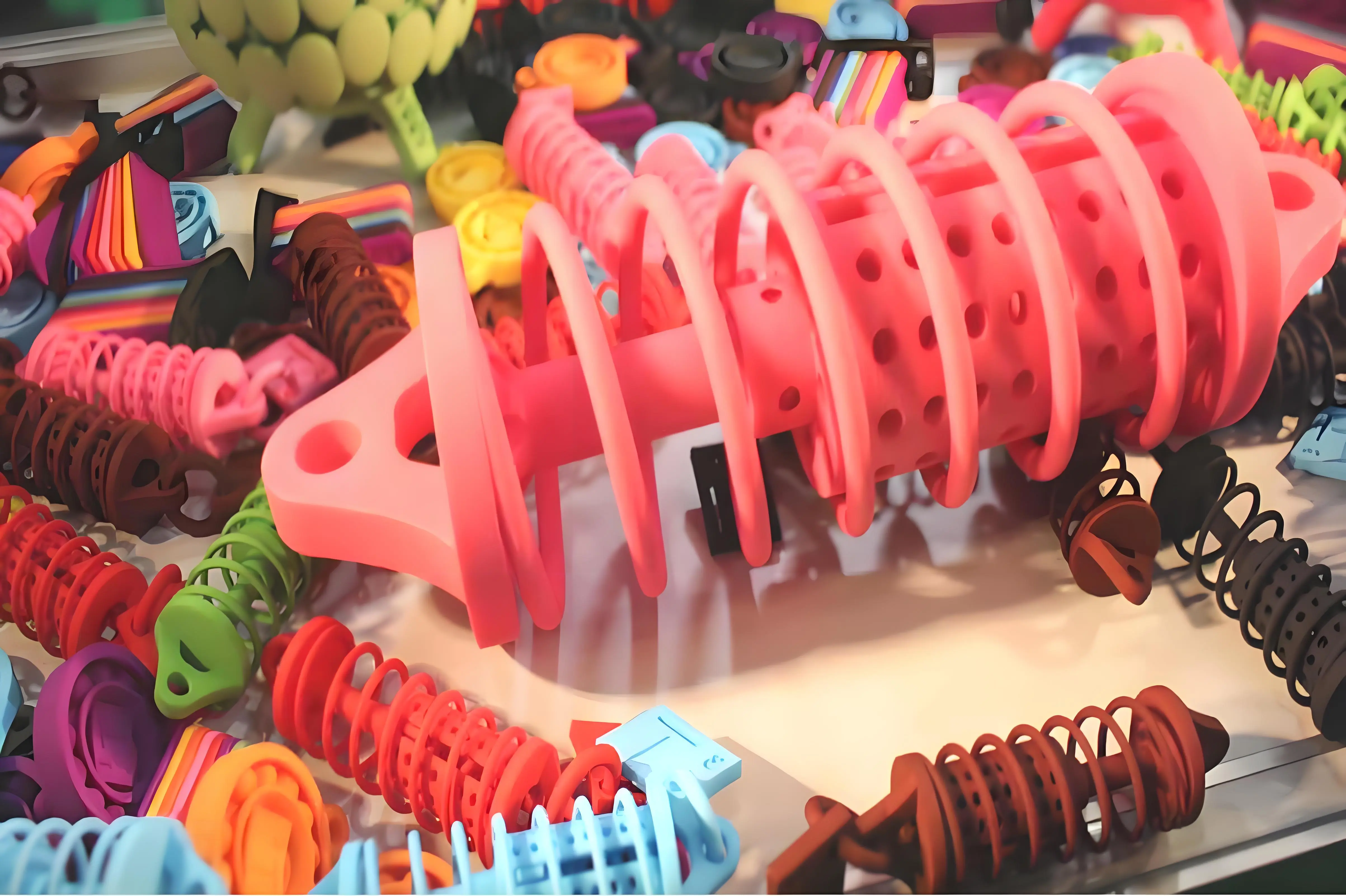
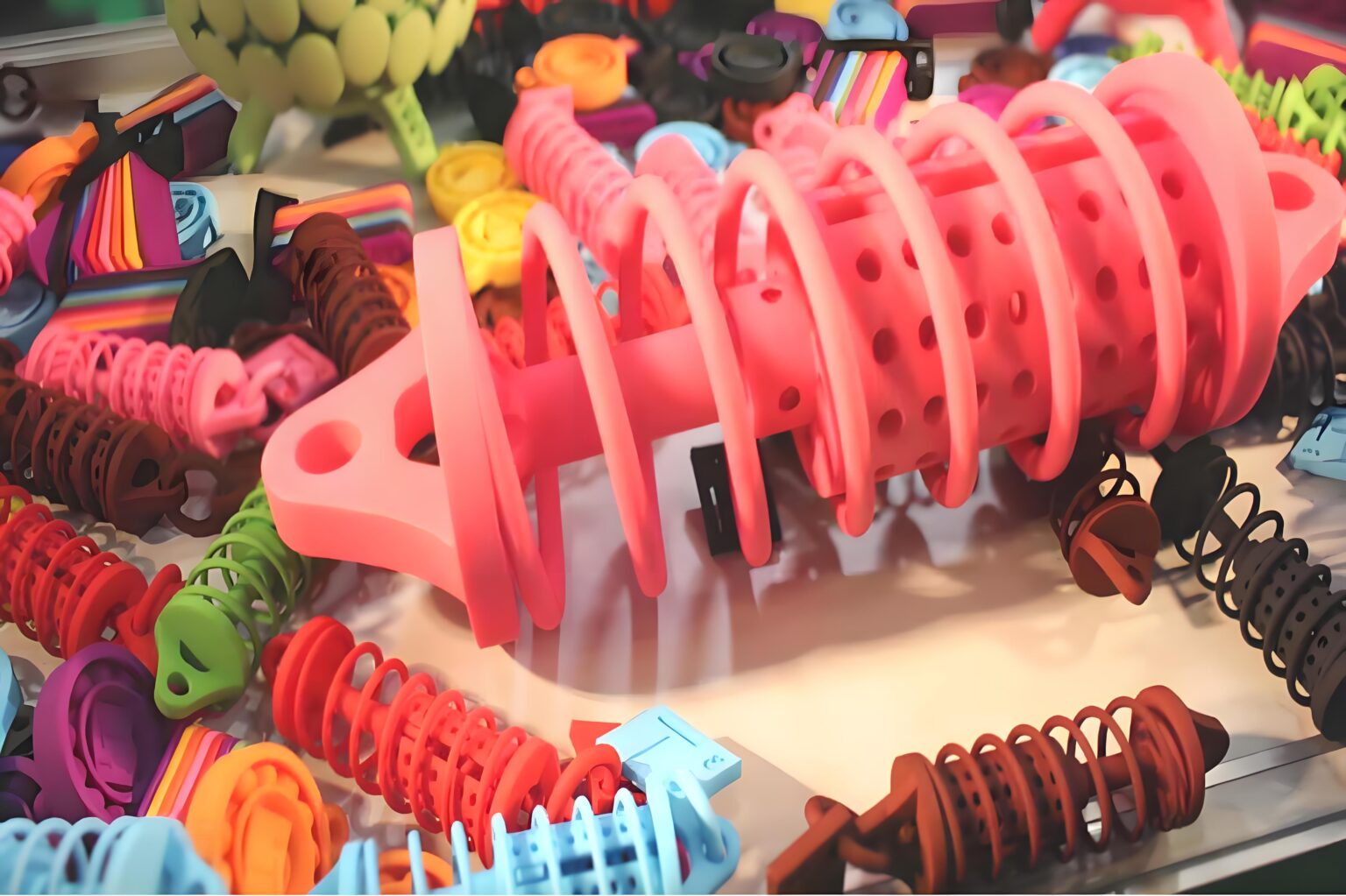
SLS 3D printed plastic parts and enclosures featuring complex geometries and functional details.
PA12 components printed by SLS manufacturing technology can be used for food-grade equipment housings. They offer high precision and comply with food contact standards.
SLS printing technology is one of the few additive printing technologies capable of effectively processing flexible materials such as TPU, as well as engineering plastics such as PP.
SELECTIVE LASER SINTERING 3D PRINTING FOR LOW VOLUME PRODUCTION
Selective Laser Sintering SLS technology is often used as a cost-effective and efficient alternative to injection molding. It is well-suited to small-batch production. It avoids the high costs and long lead times associated with mold manufacturing, rendering it optimal for market validation, bridge production, on-demand spare parts and product customization.
This technology is particularly useful for start-ups, R&D teams or companies planning to test functional components before committing to high-volume mold production.
IN3DTEC SLS 3D PRINTING CAPABILITIES
- Maximum Build Size: 670 x 500 x 450 mm
- Post-processing Options: Sandblasting, dyeing, and VaporFuse smoothingfor improved surface finish
- Batch Production: Multiple parts can be nested and printed in a single run
- Material Range: From rigid PA12 to elastic TPU and lightweight PP
SLS DESIGN GUIDELINES
To ensure optimal results, follow these SLS design principles:
| Feature | Recommendation |
| Minimum hole diameter | > 0.8 mm |
| Minimum wall thickness | > 0.8 mm |
| Large thin-walled parts | Use reinforcing ribs for stability |
| Surface finish | Slightly grainy (can be improved with VaporFuse smoothing) |
Tip: Components treated with the VaporFuse smoothing process produce a smooth, glossy finish that enhances both the durability and aesthetic appeal of the parts, which makes them perfect for consumer products or functional items.
COMMON APPLICATIONS
- Functional Prototypes
- Customized Medical Devices (e.g., orthotics, surgical guides)
- Automotive Brackets and Ducting
- Wearable Device Housings
- Aerospace Interiors
- Flexible components (using TPU)
SLS VS. OTHER 3D PRINTING TECHNOLOGIES
| Feature | SLS | FDM | SLA | |
| Material Type | Nylon powder | Thermoplastic filament | Photopolymer resin | |
| Support Requirement | None | Yes | Yes | |
| Surface Finish | Matte/textured | Layered | Smooth | |
| Functional Use | High | Moderate | Moderate | |
| Lead time at IN3DTEC | 3-4 days | 3-5 days | 2-4 days |
Upload the CAD files to IN3DTEC online quoting tool to quickly understand the cost difference for each technologies and materials.
CONCLUSION
Selective Laser Sintering SLS 3D printing technology delivers the benefits of high printing speed, flexibility and high-strength printed parts. As such, it is the ideal solution for prototyping and small-batch production. With IN3DTEC’s advanced SLS 3D printing technology, you can turn your ideas from concept into market-ready products more quickly, whilst ensuring that quality and durability remain uncompromised.
Whether you print prototypes, bridge-production parts or custom-fit components, our team of experts and industrial-grade systems are on hand to deliver first-class results.