English
 Deutsch
 Español
 Français
 Italiano
 日本語
日本語 Русский
 中文
中文
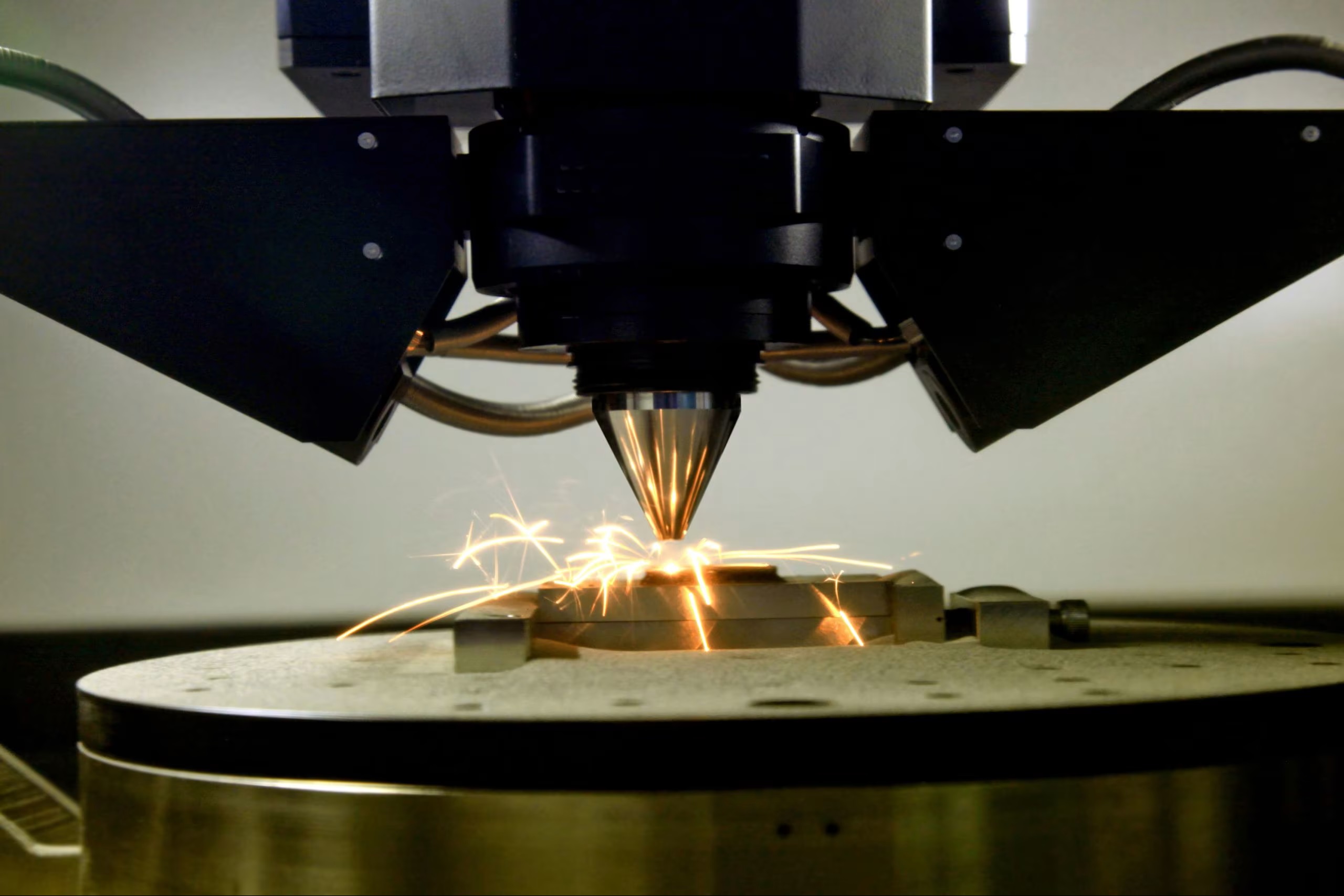
What to Consider When Selecting a Metal 3D Printing Service
- Published November 06 2025 - Updated August 12 2026
Here’s a technical checklist to evaluate the Materials, Build Volumes and the Post-processing offered by industrial additive manufacturing services.
As discussed in our previous blog post on “3D Metal Printing”, we covered the fundamentals of metal 3D printing, and then provided examples of actual metal printing. This blog will describe a checklist of factors to evaluate when selecting a service for metal 3D printing.
For this article we looked at a plethora of service providers and technologies. We will summarize the main points to look for when looking for a metal 3D printing service in this blog post.
1. MATERIAL AVAILABILITY
Most 3D printing services will have a selection of different materials that can be printed with. The amount of different materials that are available can vary between services. Typically, Stainless Steel, Aluminum, Titanium and Inconel materials are available for metal printing. Commonly used materials for metal 3D printing include Stainless Steel (such as 316L and 17-4 PH), Aluminum (such as AlSi10Mg and AL6061), and Titanium (such as TC4, Grade 5). Inconel 718&625 are also available for high temperature applications. Tool Steels are also available for high strength parts that require high strength for manufacturing components.
• Stainless Steel: Corrosion-resistant mechanical parts. Typical stainless steel grades for metal 3D printing are 316L and 17-4 PH.
• Aluminum: As light as it is, Aluminum 3D printing is typically used for Aerospace/ Automotive applications, for example with material AlSi10Mg (AlSi7Mg0.5) and aluminum alloy AL6061, which can be post processed by anodizing.
• Titanium alloys: For medical and aerospace applications. Typical grades are TC4 and Grade 5.
• Inconel 718 & 625: For high-temperature and corrosive applications like parts used in gas turbines. Other specific applications include rocket parts and other high-temperature industrial components where the alloy’s high temperature strength, low temperature ductility and resistance to corrosion and degradation can be leveraged to create functional metal parts with precise geometries.
• Tool Steels: High-strength tooling and manufacturing parts.
• Make sure the printing service offers the exact material you require for your project.
Ask the service provider about the certification they hold for any particular materials. As previously mentioned, for aerospace applications using Aluminum or Stainless Steel parts, the service provider will need to hold AS9100 certification. For healthcare parts made from Titanium, the service provider would need to hold ISO13485 certification.
2. PRINTING TECHNOLOGY
Printing technology: Direct Metal Laser Sintering DMLS / Selective Laser Melting SLM, Binder Jetting, Electron Beam Melting EBM, Metal Fused Deposition Modeling FDM.
• Direct Metal Laser Sintering DMLS / Selective Laser Melting SLM: Direct Metal Laser Sintering DMLS and Selective Laser Melting SLM are both very precise technologies for producing very dense parts. Due to their complexity, these parts are often functional.
• Binder Jetting: Low cost parts can be produced in large quantities but parts typically require additional processing to achieve desired strength.
• Electron Beam Melting EBM: The metal 3D printing technology is particularly suited for high-performance materials, such as titanium. Parts printed with EBM are frequently used in medical as well as in aerospace applications.
• Metal Fused Deposition Modeling FDM: This process uses a 3D metal printer to layer metals to produce parts. It is a cost-effective method to produce functional prototypes for verification, or non-critical production parts.
Second, ensure that the provider can offer the printing technology that best matches your needs for your specific part.
More article: Different types of Metal 3D Printing technology
3. PART SIZE AND BUILD VOLUME
The parts are typically printed in sections and then assembled. However, the assembly of the parts can weaken them. In some cases the parts can even break apart during the assembly.
Can they handle big parts, very complex parts, and large quantities of parts? How would they handle bigger parts?
IN3DTEC follows the below approach for larger or more complex prints and can confirm build sizes as follows: Max Build volume for metals is 500x500x500mm.
Upload your CAD files in our online quoting system and immediately receive an offer for 3D printing.
4. QUALITY ASSURANCE AND CERTIFICATIONS
When you’re making parts for industries such as aerospace, medical or automotive, it is very important that the quality of the metal parts that you are producing is good. When parts are produced using 3D Printing the parts will have to be checked for defects. There are many different ways in which parts can be checked for defects. These methods include penetration testing, X-ray CT scanning, nondestructive testing, 3D Scanning & data matching.
5. SURFACE FINISH AND POST-PROCESSING OPTIONS
Post-processing of metal parts printed by 3D printing can be completed in a number of different ways in order to increase surface finish, part strength and to enable features such as holes, slots and threads. Some of the most common post-processing options for metal parts printed by 3D printing are:
• Heat Treatment: Enhances material properties like strength and ductility.
• CNC Machining: Improves dimensional accuracy and surface finish.
• Polishing: Achieves a smooth, aesthetic finish.
• Coatings: Adds corrosion resistance or improves wear resistance.
This must include the range of post-processing offered by the service provider and ensure that this will be sufficient for your needs and that they have the experience to combine 3D printing with post-processing.
6. LEAD TIME AND PRODUCTION SPEED
The lead time to complete a printed part includes the time needed for printing and the subsequent processing. Typically, a service provider can process a prototype within a short timeframe. However, for production parts, more time is required. This must be taken into account when searching for a service provider to complete your work on time.
• Prototyping: Some providers offer rapid turnaround for prototypes.
• Production: Make sure the provider can fulfill the volume of production that you need in a timely manner.
We also have to integrate these processes into the existing workflow of the 3D printing service provider. Questions concerning the lead time and production speed are therefore also relevant.
7. COST AND BUDGET
When metal 3D printing, it is a very costly process. It is therefore very important to have a good balance between cost and quality. IN3DTEC offers high-quality parts at very competitive prices. The delivery time is fast and after 3 days you already have your part printed.
8. DESIGN EXPERTISE AND SUPPORT
Metal 3D printing typically requires design to be optimized for manufacturability and IN3DTEC’s experienced engineers can optimize your design to be printed in metal. IN3DTEC’s engineers can also check your design against its required functionalities to ensure that it will perform as required when it is printed and post processed. Learn how to design parts for metals.
• Optimize your design for additive manufacturing (e.g., reducing support structures, improving thermal flow).
• Provide feedback to check and make sure your part is going to meet the requirements of the part and function correctly.
A good metal 3D printing service will work with you to optimize your design to make it suitable for manufacturing, and to ensure that it will meet your part’s required functionality. Here’s how to design parts for metals.
9. REPUTATION AND REVIEWS
Research the service provider’s track record:
• Look for customer testimonials and case studies.
• Ask for samples of previous work to check quality.
• Consider their experience in your specific industry.
A reputable service provider will have a good reputation, deliver high quality parts, provide good customer service and be able to show examples of past work that they have completed.
10. SCALABILITY
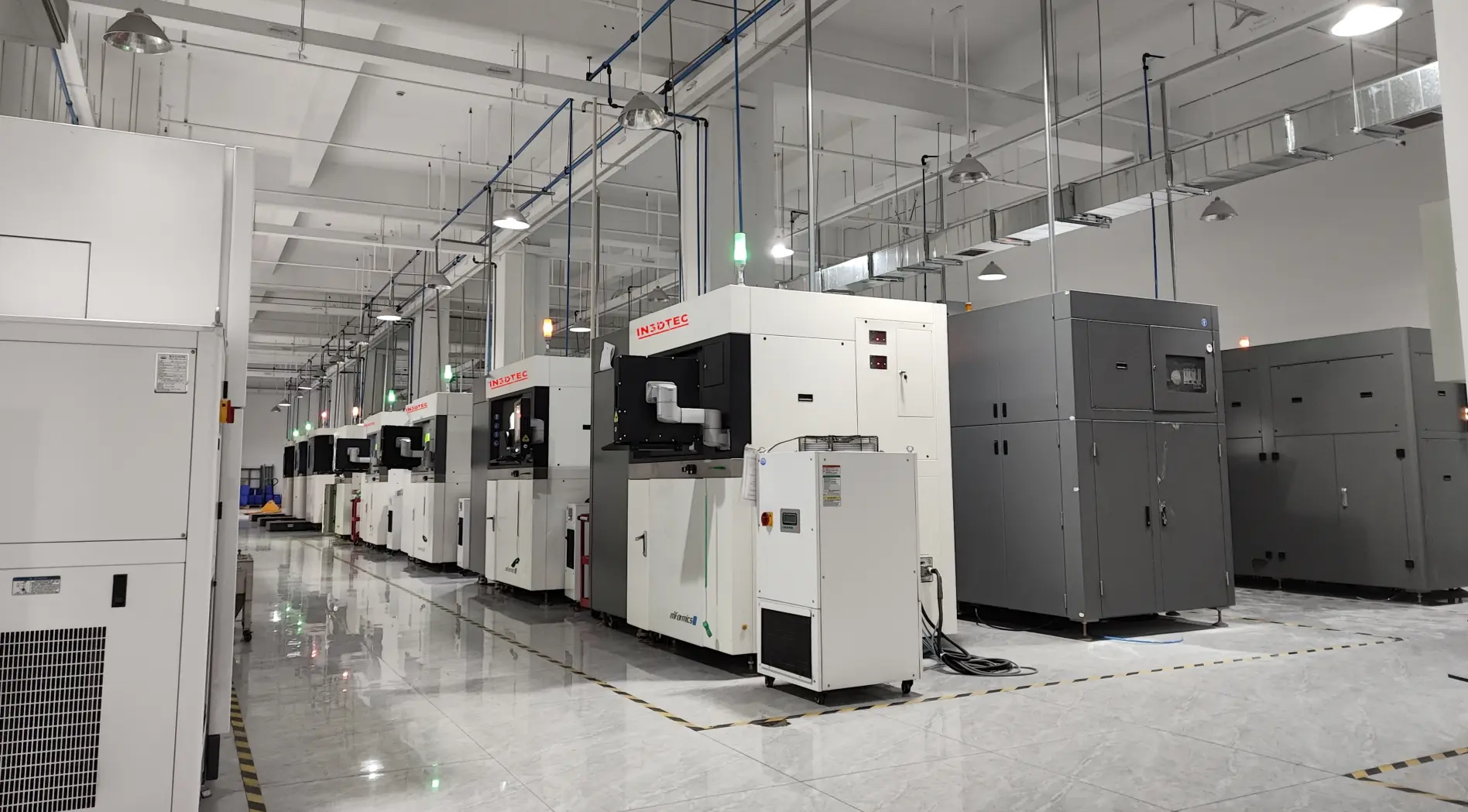
If you are planning to scale up your production in the future, make sure to pick a service provider who can scale up with you. They should have a sufficient number of printers as well as an efficient internal workflow to handle increased production volumes while maintaining same high quality as well as timely delivery. IN3DTEC has more than 80 units of industrial metal 3D Printers in-house.
CONCLUSION
With IN3DTEC you choose the right metal 3D printing service for your project. The given points are to be considered when making a selection, regarding the required materials, possible technologies, the guaranteed quality as well as the costs. Thus, your technical as well as your business needs are fulfilled.
With the right service provider, metal 3D printing is a powerful production tool for innovative, high-performance parts.