English
 Deutsch
 Español
 Français
 Italiano
 日本語
日本語 Русский
 中文
中文
3D Printed Custom Beyblade: How I Designed and Made My Own
- Published October 15 2026 - Updated October 15 2026
See how MF ZOOM designed a custom Beyblade 3D model in Autodesk Fusion and turned it into a battle-ready piece using SLM metal 3D printing, 316L stainless steel, and nylon components.
Project story by @MF ZOOM , with IN3DTEC production notes.
The 90’s was an extremely unique time, with collectible franchises everywhere. And while many were widely successful, there was something unique about Beyblade. Coming in at the tail end of the 90’s and spinning its way into the 2000’s, Beyblades took one of the world’s oldest toys, spinning tops, and reimagined it with all that 90’s monster-collecting charm.
Being based on spinning tops, the tangibility of an actual spinning top is what set Beyblade apart. Rather than having battles play out on the screen, in a card game, or even the occasional action figure. The battles in Beyblade were head-on, with spinning top vs spinning top, until one ran out of spin or was knocked out of the spinning top stadium!
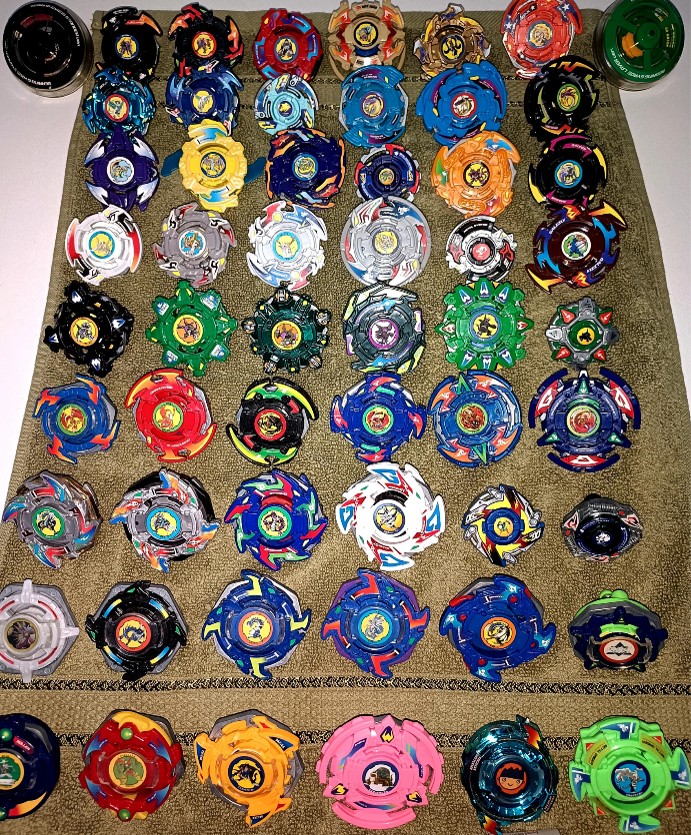
Beyblade Collector’s Collection
For many fans, collecting Beyblades is part of the appeal.
Source: Reddit – Beyblade 20th Anniversary
And of course, just like other kids growing up during that time, I probably spent way too much time daydreaming about my own one-of-a-kind Beyblade in class, when I should’ve been hitting the books.
With the advent of 3D printing and the growing accessibility of metal 3D printing, those daydreams can now become reality. So, can you 3D print a Beyblade? For this project, I designed my own custom Beyblade, Blasphemous Beelzeb, and brought it to life through metal 3D printing, with additional nylon parts for the final assembly.
Here’s how I designed and made it.
HOW I 3D MODELED MY CUSTOM BEYBLADE
What Beyblade Did I Want?
For this specific design, it came as a challenge from my friend, and it’s a Beyblade designed to move fast and hit hard.
Design-wise, I wanted this Beyblade to be round, fast, and aggressive. But getting the design right meant paying attention to a few key details, from its overall shape to the tip and the finer details of the model.
Key Design Details
When designing a Beyblade, small details can make a difference in both its appearance and how it moves. Here are a few things I focused on when designing Blasphemous Beelzeb.
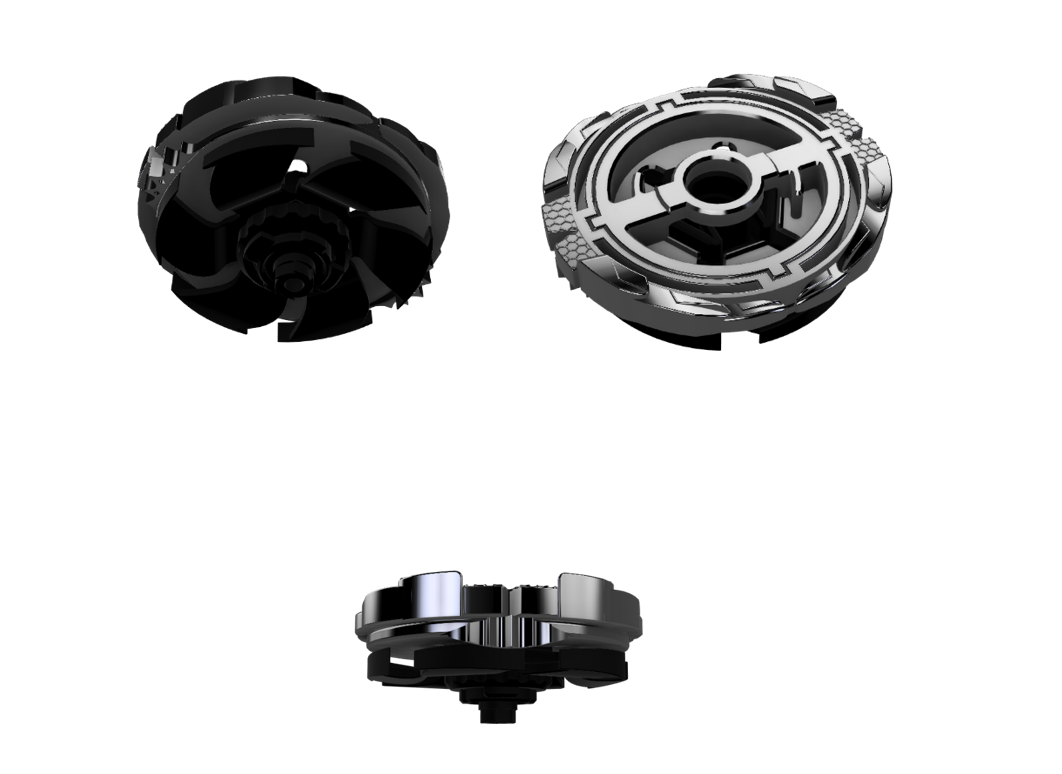
Blasphemous Beelzeb 3D Model
The CAD model shows the shape and fine details of Blasphemous Beelzeb before manufacturing.
Source: MF ZOOM
- Shape: Typically, round Beyblades are more defensive than they are aggressive, so that’s why I went with an oval shape. The elongated ends were intended to give the Beyblade a more aggressive design.
- Tip design: One of the basic fundamentals of Beyblade movement is the shape of the tip. To make this one super fast, I went with an entirely flat tip with a hole bored out in the middle, with the hole intended to give it a little extra spinning stamina!
- Fine details: I also wanted to capture the finer details of my original design, including the honeycomb pattern at the top and bottom ends of the Beyblade. These details were important to the overall look of the finished piece.
Choosing My CAD Tools
Believe me when I say that I’m no professional when it comes to CAD. But where there’s a will, there’s a way. Picking up basic 3D modeling skills from the countless video tutorials on YouTube, I was able to quickly understand the basics of 3D modeling using TinkerCAD, an online 3D modeling platform meant for students.
But like any good student, you eventually graduate. Moving on from TinkerCAD, my CAD program of choice became Autodesk Fusion. But CAD is CAD, and the fundamentals of Beyblade modeling are the same, no matter what you use.
I’ve been hobby-modeling for over a year and a half now, and I like to think I’m pretty dialed in on the fundamentals of making Beyblades.Creating my own Beyblade 3D models has also given me more freedom to experiment with different shapes and details.
Check out my video and see how I got started?
MANUFACTURING AND MATERIAL SELECTION
Why Metal 3D Printing?
With Beyblade designs moving from mostly plastic toward more metal-forward designs, getting the material right is important for both performance and giving a custom project that official product look.
For this project, I using Selective Laser Melting (SLM) from IN3DTEC for its ability to print metal parts with fine details, along with its range of material and surface finish options.
Some areas of my design had a minimum wall thickness of 0.1 mm, making it important to capture the finer features of the original model.
Choosing 316L Stainless Steel and the Surface Finish
For my design, the material I chose was 316L stainless steel. To give my custom Beyblade that official look, I went with the stone/magnetic surface finish.
The goal was to get closer to the look of an official Beyblade, rather than leaving the stainless steel in its unfinished printed state.
THE FINISHED 3D PRINTED BEYBLADE: BLASPHEMOUS BEELZEB
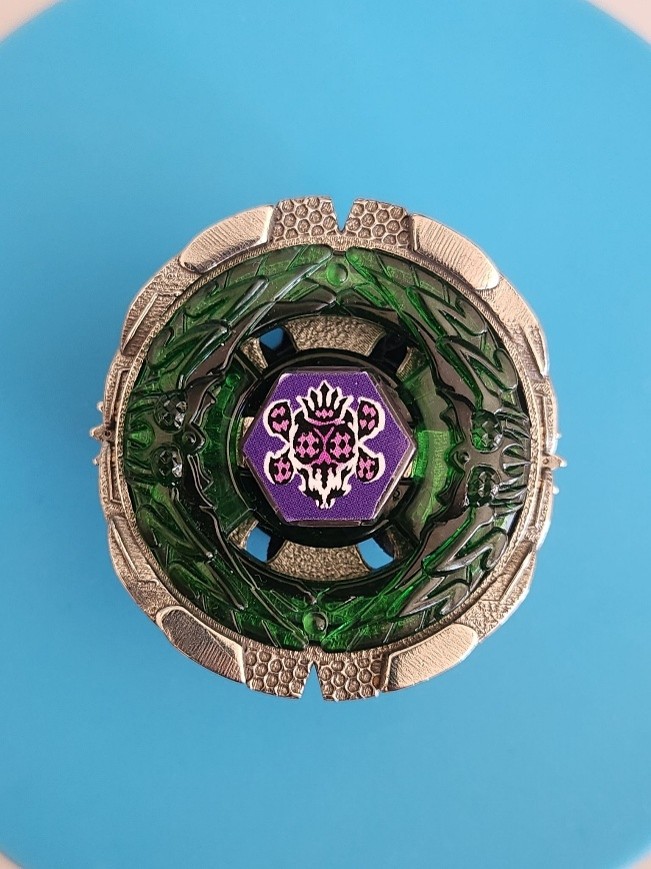
Finished Custom 3D Printed Beyblade
The finished Blasphemous Beelzeb combines a 316L stainless steel component with additional nylon parts.
Source: MF ZOOM Instagram
Here’s the finished product in its full glory! Meet Blasphemous Beelzeb, a fully custom Beyblade printed using in3dtec!
This was my first time getting a custom design of mine printed using In3dtec and I’m impressed with the quality! From the surface finish itself, thanks to the stone and magnetic finishing options, to the file details in the “honey comb” detailing you can see at the top and bottom ends of the Beyblade!
I’m no stranger to printing my custom Beyblades out using stainless steel, but you can really tell the difference between stainless steel 3D print without any surface finishing versus the surface finishing offered by in3dtec
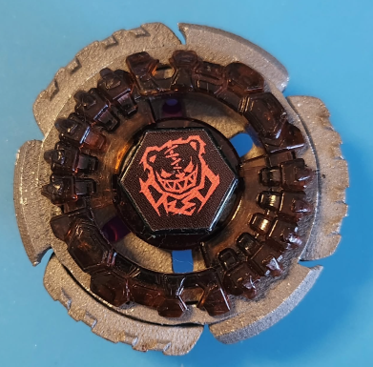
Unfinished Stainless Steel 3D Print
An unfinished stainless steel print shows the difference surface finishing can make to the appearance of a custom Beyblade.
Source: MF ZOOM
HOW DOES IT COMPARE TO AN OFFICIAL BEYBLADE?
With any custom creation based on an existing franchise, making a custom piece so convincing that it’s hard to distinguish from the actual product is a tall order and probably the goal that any custom hobbyist strives for. But with services like in3dtec, it really gives you that extra edge on creating something both beautiful but also realistic enough to fool the average person.
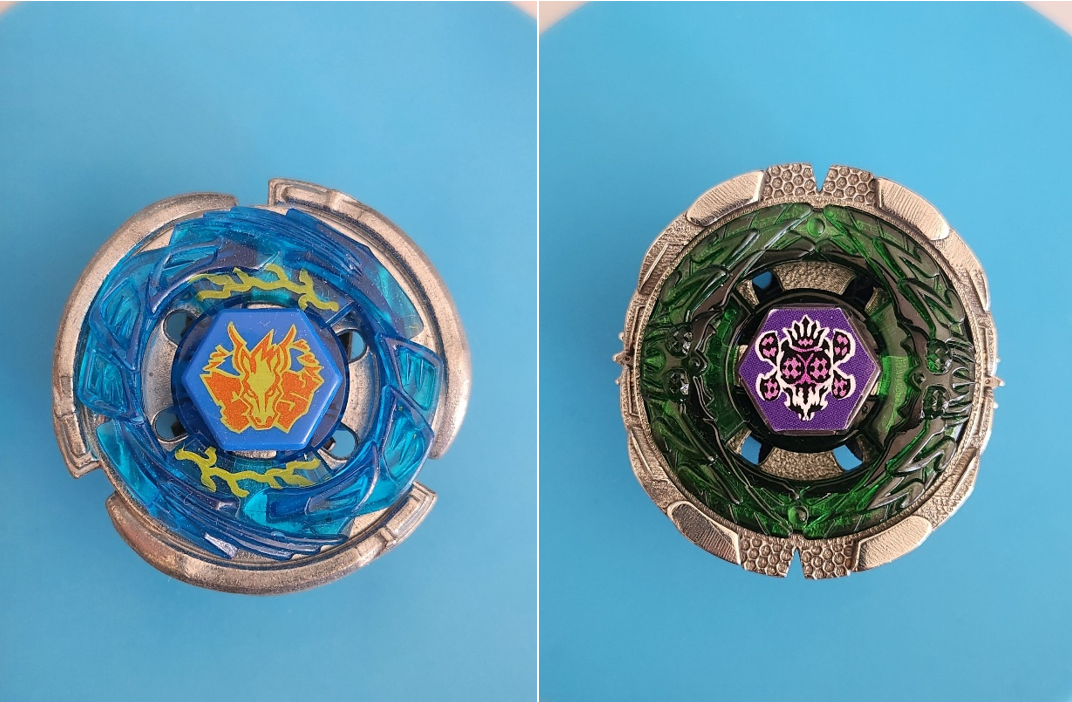
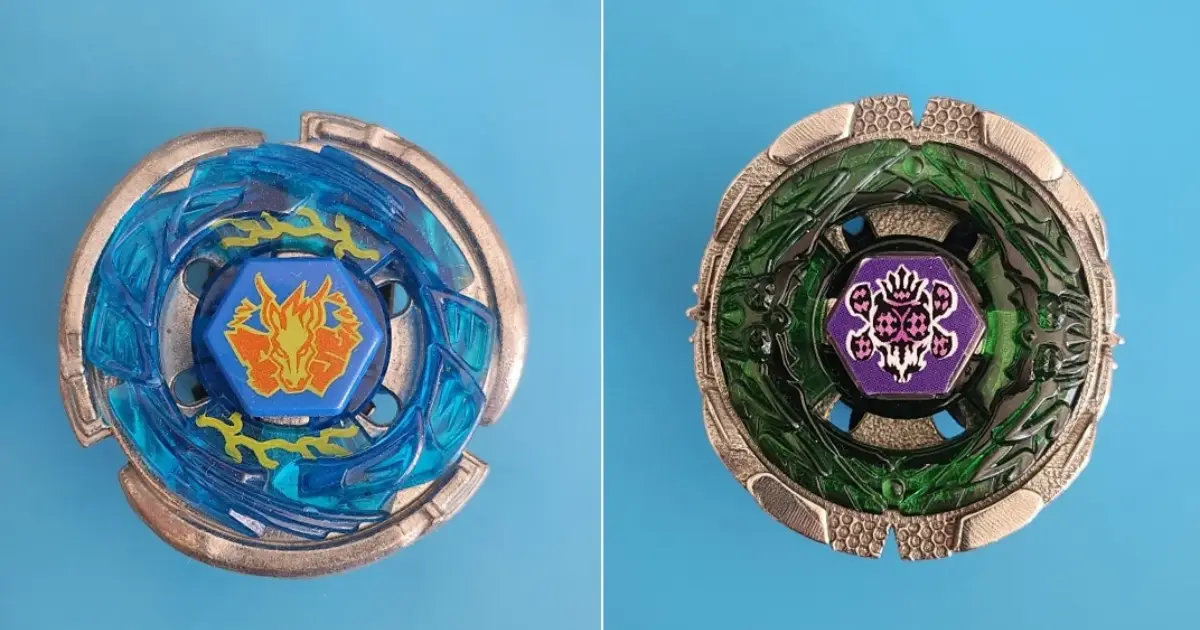
Official vs. Custom 3D Printed Beyblade
The official Storm Pegasis and custom Blasphemous Beelzeb show the visual similarities between a commercial Beyblade and a custom 3D printed design.
Source: MF ZOOM
Visually, despite official Beyblades (Storm Pegasis in Blue on the left), being made of zamak-3, a zinc alloy, with the stone and magnetic finishes, stainless steel is near indistinguishable from the real deal! At this point, it’s only super fans or flaws in the custom design itself that would give away its true nature as a custom project (though I’d like to think that my design passes that test).
And of course, Beyblades are battling spinning tops, not just display pieces! Blasphemous Beelzeb was made for actual battles, too. The metal part forms the base, while lightweight nylon parts from IN3DTEC sit between the metal and plastic parts, contributing to the overall design.
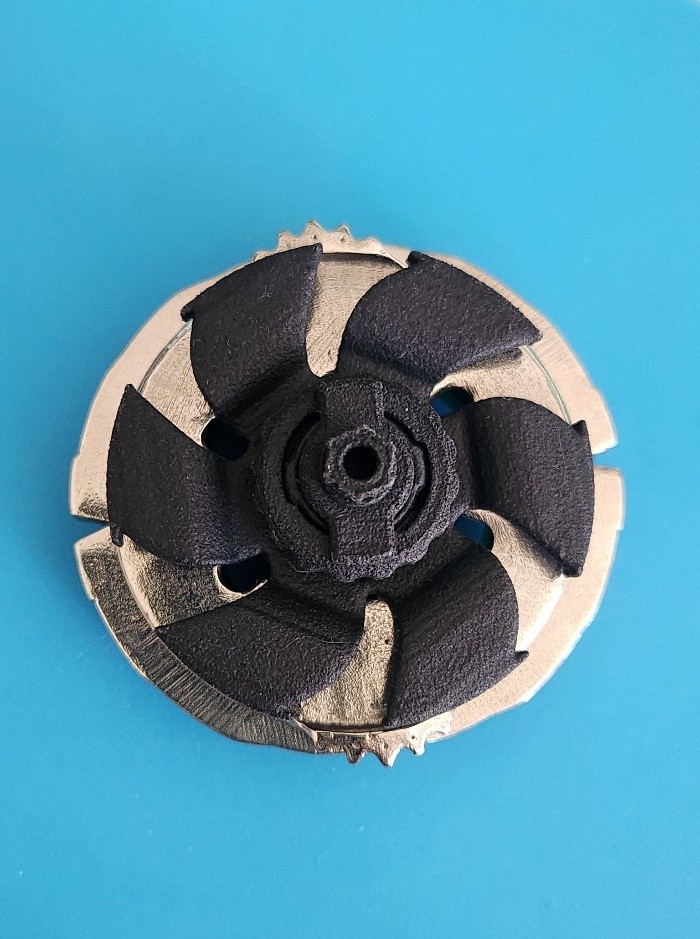
Metal and Nylon Components of a Custom Beyblade
The assembled Beyblade combines a metal base with lightweight nylon parts as part of the overall design.
Source: MF ZOOM
WATCH BLASPHEMOUS BEELZEB IN ACTION
A custom Beyblade is more than just a 3D model or a finished metal part. It’s meant to spin, battle, and be put to the test.
See this 3D printed Beyblade in action and learn more about the design process? Check out the video below!