English
 Deutsch
 Español
 Français
 Italiano
 日本語
日本語 Русский
 中文
中文
3D Printing Materials That Should Not Be Printed at Home for Safety Reasons
- Published November 06 2025 - Updated September 18 2026
Critical safety guide to toxic fumes, airborne fibers and other hazardous 3D printing materials requiring professional controlled environment ventilation.
3D printing is becoming more and more popular as it now offers strong and durable materials to print with at home. But there are some 3D printing materials that are better to print with in specialized facilities with the required equipment and staff, as they can be bad for your health to individuals printing at home.
1. CARBON FIBER
Parts printed with Carbon Fiber Filled filaments can release a large amount of airborne microscopic fibers. These fibers are very small, yet very hard, and can easily penetrate deep into the human respiratory system and cause strong irritation to the throat and lungs. In extreme cases, long term exposure to such amount of fibers can cause serious health issues.
Printing with Carbon Fiber Filled filaments requires high temperature extruders that can easily reach temperature of up to 600C. Such high temperature objects are a major danger to life and health, especially during failure. Printing such objects should be done in well ventilated areas or in professional 3D printing facilities equipped to handle such objects.
However when home printing carbon fiber very fine fibers are released into the air which can be very bad for you to breathe in. These fibers can penetrate deep into your lungs and can cause severe problems for your respiratory system. There is even a chance that there can be long term health problems. High temperature extruders are also required for printing with carbon fibers. These are very dangerous if not handled correctly. Therefore home printing of carbon fiber is not recommended and should be printed in a well-ventilated area or by a professional 3D printing service.
2. METAL OR NYLON POWDERS
There are many different processes that are used in 3D printing, and in this blog we are specifically going to be focusing on the Powder Bed Fusion process. Within this process a layer of powder is initially spread across the build tray, and then a component is printed on top of this layer using a beam of focused energy that is absorbed by the powder within the area to be printed.
Once the component has been printed, the excess powder that surrounded it is then removed from around it, and this same powder is then reused in the creation of subsequent layers. Because of the fine nature of the powder used within this type of printing, and also the high energy created by the beam, many of the 3D printing materials can disperse into the air, and cause problems with both respiratory issues and even fires.
As a result of this, some of the materials are better to use than others, and there are even some that should only be used within a specialized facility that is equipped with the correct safety equipment. With 3D printing of metal or nylon powders it is typical for these to be used in Powder Bed Fusion (PBF) 3D printing processes. The working with fine powders creates risks of dispersion into the air. The major risk to health is that the powder can be inhaled into the lungs.
Combustion of the air and powder mixture is also a risk and so printing with powders is typically carried out in well-ventilated facilities filled with an inert gas, such as nitrogen or helium. There are also occasions when a powder explosion can occur and so the printing area is surrounded by a containment or explosive protection zone.
3. RESINS CONTAINING VOLATILE ORGANIC COMPOUNDS (VOCS)
3D printing resins used for stereolithography SLA and digital light processing (DLP) printing emit VOCs (Volatile Organic Compounds) while they are curing. Most 3D printing resins typically do not emit high levels of VOCs. However, there are resins that emit more than others. Safe use of most resins is possible by printing them in a well-ventilated space and preventing their fumes from concentrating in a small space.
When printing with resins that contain VOCs it is best to avoid printing in confined or poorly ventilated spaces. These type of facilities include homes and small offices. The vapors released by the resin can cause serious health problems including respiratory problems, headaches and more. Printing with resins that contain VOCs in well ventilated facilities such as large offices or dedicated print facilities is recommended. When printing with resins that contain VOCs, it is also recommended to use safety gear such as gloves and a mask to prevent skin contact and inhalation of fumes.
4. ABS (ACRYLONITRILE BUTADIENE STYRENE)
As it is known, ABS filament is one of the most commonly used materials for additive manufacturing with FDM Fused Deposition Modeling technology. It has higher strength than PLA, which is why it is widely used for the creation of models and prototypes that require higher durability. However, ABS requires higher temperature for melting and also the heated bed must be set at higher temperature in order to prevent warping of the printed object.
Furthermore, ABS emits fumes during the printing process, especially styrene that in high concentrations can cause serious health problems. For this reason, it is recommended to print with ABS in well ventilated areas or in a printing enclosure with an exhaust system.
5. ASA (ACRYLONITRILE STYRENE ACRYLATE)
A strong alternative to ABS for use in outdoor applications is ASA (Acrylonitrile Styrene Acrylate). The ASA filament offers similar print characteristics to ABS and is a very strong and impact resistant material. The ASA filament also offers excellent dimensional stability and is ideal for a wide variety of applications. It also has the added benefit over ABS in that it will not fade or become yellowed over long periods of time when exposed to the sun.
Printed products made from filaments made of styrene such as ASA can also release harmful fumes when being printed. These fumes are released in large amounts when printing with ASA and can be very bad for your health. To avoid the fumes being released into the air while printing with filaments made from styrene it is recommended to print in well-ventilated areas or in an additive printing enclosure with an exhaust.
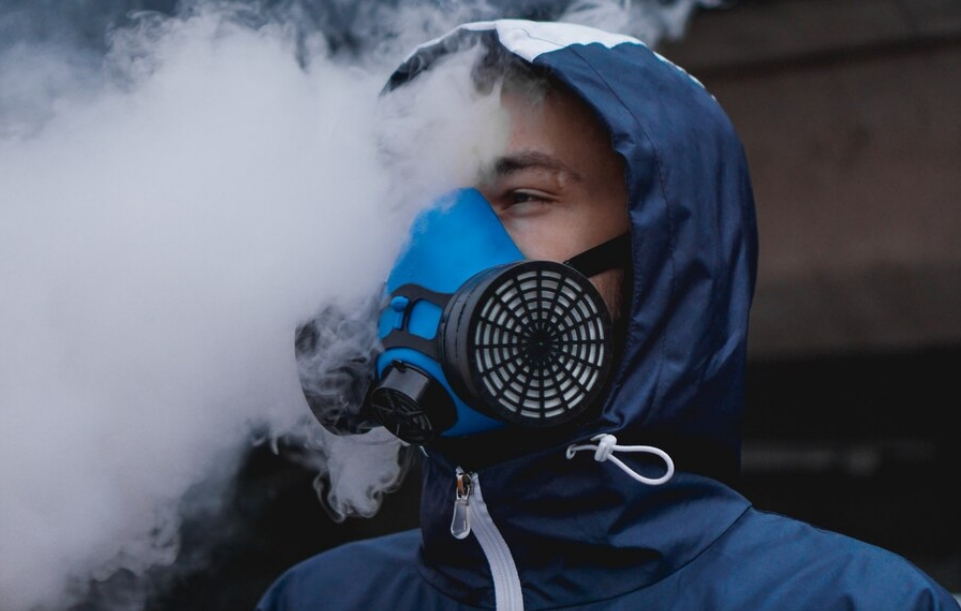
In addition to the above methods for avoiding the fumes it is also a good idea to wear a respirator mask or to make sure there is a good flow of air to the area where you are printing with filaments made from styrene.
6. PC (POLYCARBONATE)
Polycarbonate (PC) - high strength, tough, heat resistant. It is used for engineering applications, protective cases, etc, which also require transparency, such as optical components. PC is printed at high temperature and requires a heated bed to prevent warping. PC emits fumes during printing, which may contain bisphenol A (BPA).
Levels of BPA emitted are typically low, but it is recommended to print PC in well-well-ventilated area or using a ventilation system or a additive manufacturing enclosure. If you are concerned about the health effects of BPA, you may want to consider alternative 3D printing materials or contact the filament manufacturer for more information on the specific material used.
Polycarbonate (PC) printing: Release of fumes during printing. The vapors released can contain bisphenol A (BPA). However, the quantities released during 3D printing and additive manufacturing are typically very low. Printing in a well ventilated area or with the aid of a means of ventilation such as a filter or airlock should be sufficient to allow the safe printing of parts with PC filament.
However, those who are concerned about the potential health effects of BPA should consider an alternative 3D printing material or contact the manufacturer of the PC filament to establish the exact composition of the material and to check for any known potential health problems.
7. ARE PLA & PETG 3D PRINTING SAFETY FOR HOME?
Printing PLA at home. PLA (Polylactic Acid) is a very popular FDM printing material. The reason for that is simple: It’s easy to use. It prints well at lower temperatures, thus reducing the chance of warping or other issues that might occur with other types of FDM printing materials. Because of its relatively low printing temperature, it is non-toxic, bio-degradable, and doesn’t smell too badly when being printed. Of course, it is always recommended to work in well-ventilated area.
PETG filaments have the same ease of use as PLA, but possess the strength of ABS, with high impact resistance and good chemical resistance. It also has a few prints that warp. Home 3D printing materials are generally non-toxic and do not emit any smell while printing, therefore it is safe for use at home. However, most of the home 3D printing materials require high temperature for melting, thus will emit some odor during printing. In order to prevent harm from such odor, it is essential to provide good ventilation when printing with most of the home 3D printing materials.
Home rapid manufacturing 3D printing with safe to use filaments! Home 3D printing and additive manufacturing is a growing market that has brought the power of manufacturing to our fingertips. Most of us would like to use our own home to produce parts and objects for various purposes. To be able to use AM additive manufacturing at home responsibly, we first have to know which filaments are safe to use at home and which should be printed at a professional facility or in a well-ventilated environment to avoid any potential health issues.