English
 Deutsch
 Español
 Français
 Italiano
 日本語
日本語 Русский
 中文
中文
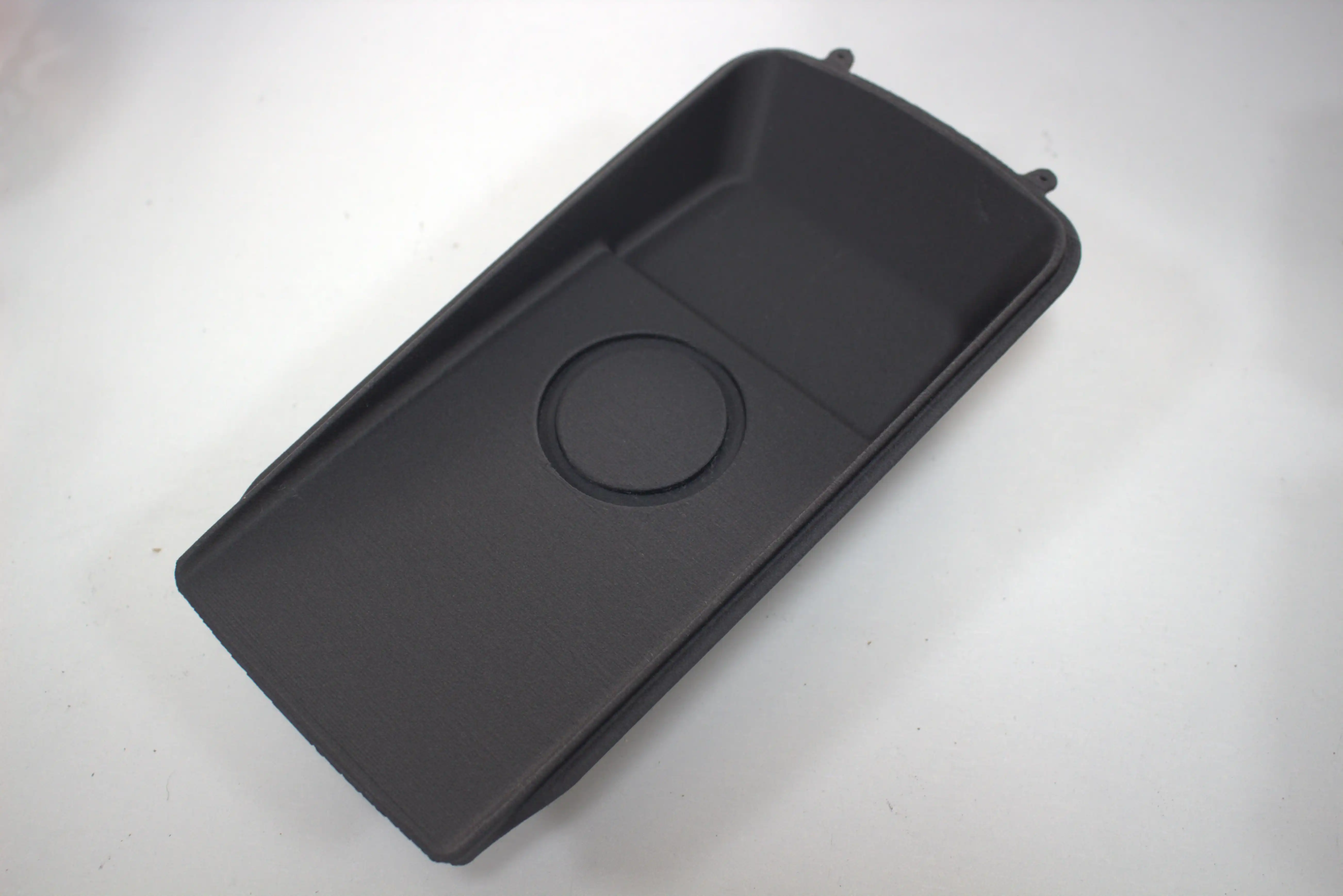
What Makes PA6-CF + FDM a Practical Option for Certain Automotive Interior Parts?
- Published August 17 2026 - Updated August 24 2026
This article talks about why combining PA6-CF and FDM can be a practical option for automotive interior parts. To explain this, there’s a material property comparison and an analysis of a real manufacturing project.
This article talks about why combining PA6-CF and FDM can be a practical option for automotive interior parts. To explain this, there’s a material property comparison and an analysis of a real manufacturing project.
1. 3D PRINTING IN AUTOMOTIVE INTERIOR MANUFACTURING
There are different kinds of manufacturing methods for automotive interior parts. Traditional methods can meet the needs of many standard parts, but for prototyping, customized parts, and low-volume functional parts, 3D printing has lots of advantages in design speed, production volume, complex geometry, and cost-effectiveness.
2. WHY FDM IS A CHOICE FOR IT?
For this kind of part, manufacturing not only needs to meet complex geometries but also needs to be suitable for thermoplastic materials with certain mechanical properties. Compared with other 3D printing methods, a big point of FDM is that it can fabricate lots of thermoplastic materials, such as PA. This is why, when it comes to stiffness, strength, and heat resistance, FDM is always a good choice.
3. PA6-CF IN FDM
3.1 What’s PA6 in FDM?
PA6 (Nylon 6) is a kind of engineering thermoplastic material that can be printed by FDM. It’s different from PLA and ABS. PA6 plays more of a functional role, with better performance in mechanical properties, wear resistance, and heat resistance.
But there are some problems with it. PA6 has higher manufacturing requirements in a real process. It has better hygroscopicity, which can affect the printing quality and final properties. In the meantime, PA6 has shrinkage and warpage issues during the cooling process. So it needs more attention to whether the material and environment are dry, the printing temperature, and even the part design because of this.
3.2 What’s PA6-CF in FDM?
PA6-CF is a composite material in which PA6 is reinforced with chopped carbon fiber. So it comes from PA6, not as a totally new material. It is a PA6 matrix + carbon fiber reinforcement.
When carbon fiber is added to the material and it becomes a composite material, it usually enhances the stiffness of the material, and it can also change the strength, heat properties, and dimensional stability.
Also, in the FDM printing process, carbon fiber can not only change the material’s mechanical properties, but also impact the molten material’s behavior during extrusion and deposition processing.
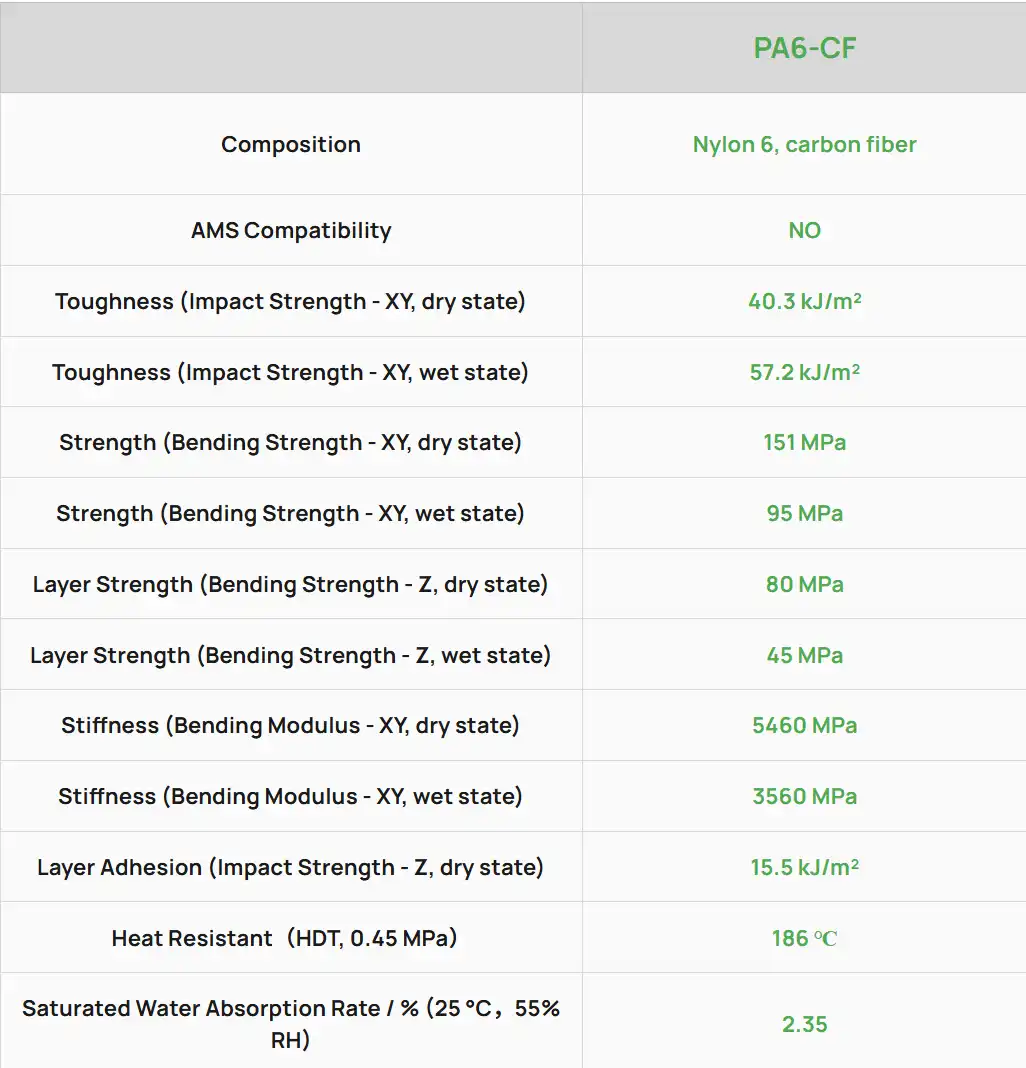
Caption: Bambu Lab PA6-CF material properties and technical specifications.
Image source: Bambu Lab
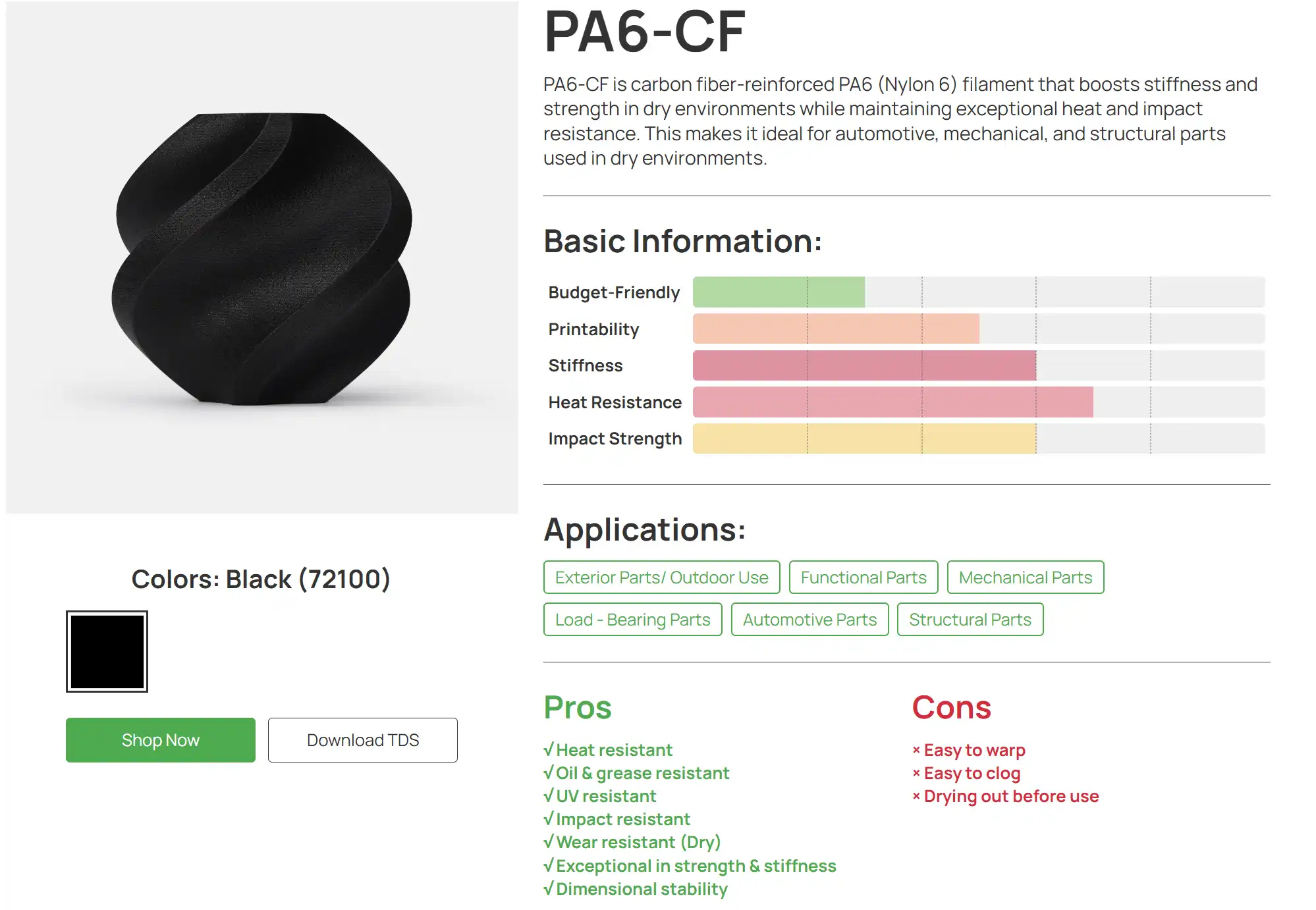
Caption: Bambu Lab highlights the material characteristics and automotive applications of PA6-CF.
Image source: Bambu Lab
3.3 What’s the Difference in FDM?
| PA6 | PA6-CF | What Does It Mean in Engineering | |
|---|---|---|---|
| Stiffness | Good | Better than PA | CF can enhance the resistance to deformation |
| Strength | Good | Better than PA | Depends on CF content, orientation, and processing |
| Anisotropy | Exists | More complicated | Combined influence of CF orientation and FDM interlayer bonding |
| Shrinkage | Apparent | Lower than PA | CF restricts polymer cooling shrinkage |
| Stability | Sensitive to moisture | Can be improved | The PA6 matrix remains hygroscopic |
| Toughness | Good | Worse than PA | Increased stiffness is often accompanied by reduced ductility |
| Printing difficulty | Difficult | More demanding | Drying, nozzle wear, parameter control, etc. |
Table 1: PA6 vs PA6-CF: Key Differences in FDM
Summary based on published research and material data
Note: PA6-CF is not simply a better material than PA6. They have different characteristics and are suitable for different real-world problems. The right choice depends on what the part actually needs.
| Property | PA6 | PA6-CF, 15 wt% CF |
|---|---|---|
| Density | 1.12 g/cm³ | 1.17 g/cm³ |
| Tensile strength | 66 MPa | 105 Mpa |
| Elongation at break | 9.7% | 3.0% |
| Flexural modulus | 1,665 Mpa | 8,300 Mpa |
Table 2: Example Material Data for PA6 and PA6-CF
Note: The mechanical properties of FDM nylon materials vary depending on the formulation, carbon fiber content, humidity conditions, printing parameters, and build orientation. The values mentioned above serve only as examples for specific PA6/PA6-CF material systems and do not represent universal material specifications.
4. A REAL PROJECT IN PA6-CF + FDM
In a recent project, IN3DTEC used FDM technology to print a custom automotive interior panel, which included center console and instrument panel-related components. In this case, the customer appointed PA6-CF as the material, and then IN3DTEC did the rest of the printing work.
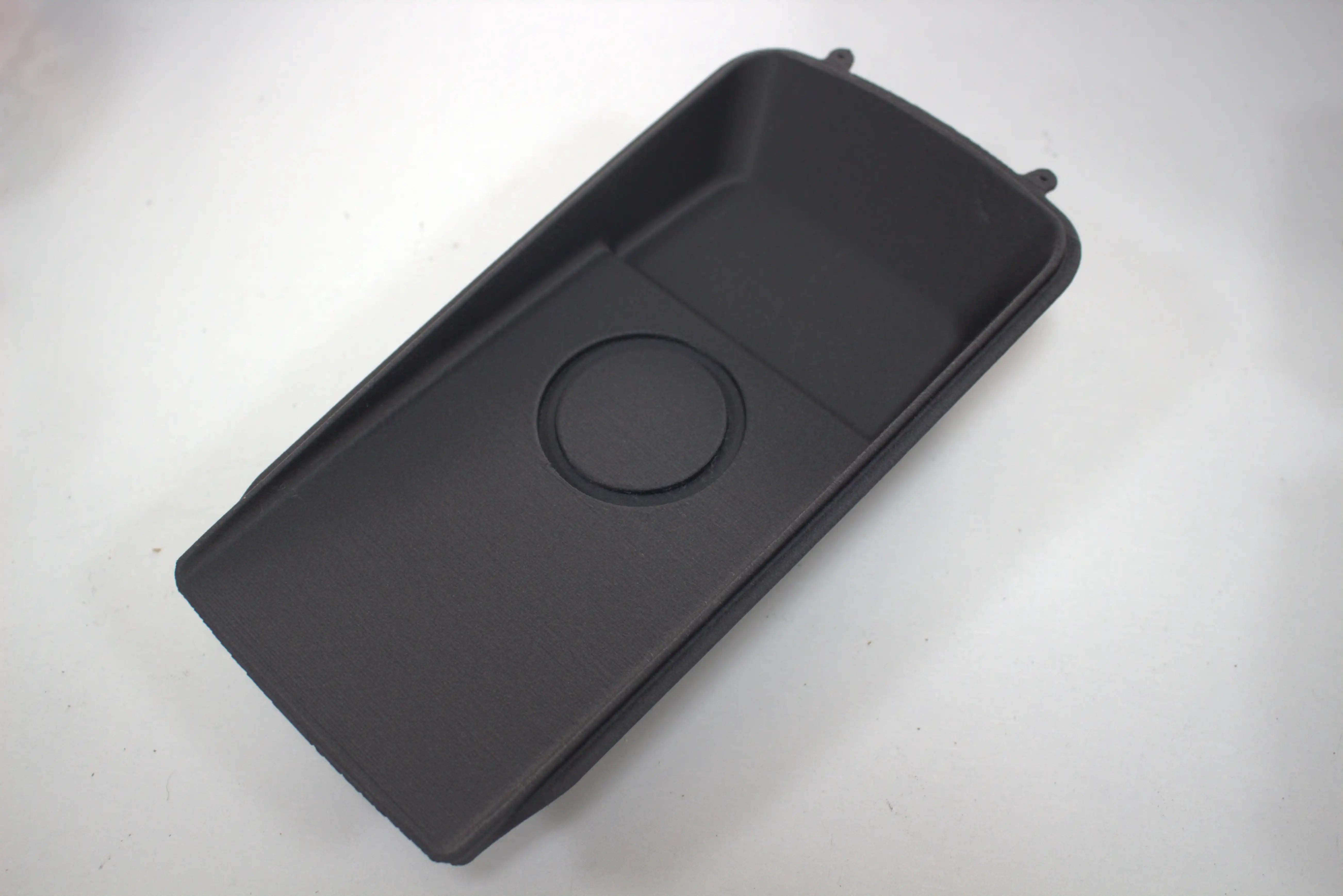
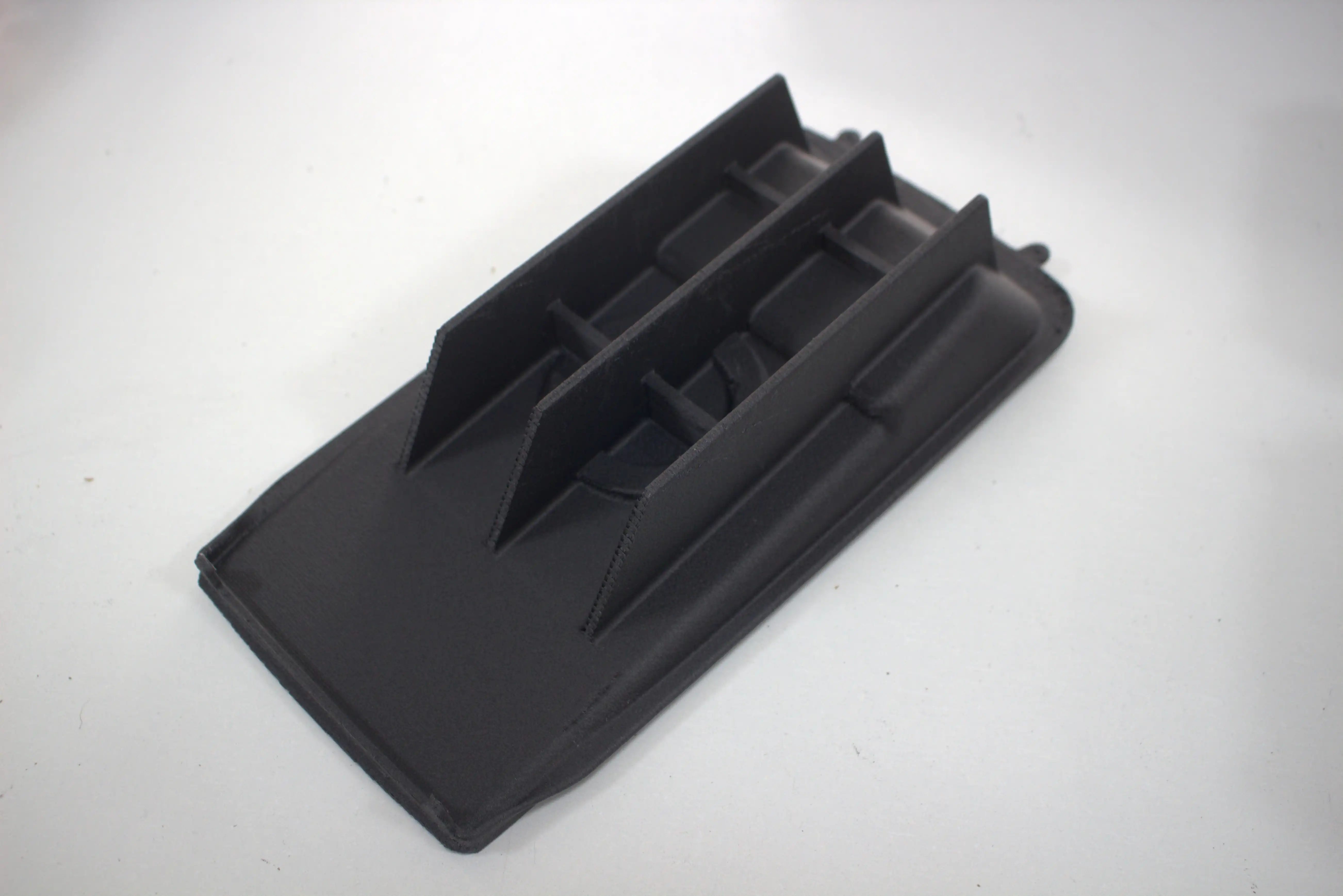
Caption: Automotive interior panel manufactured from PA6-CF using FDM 3D printing.
Image source: IN3DTEC
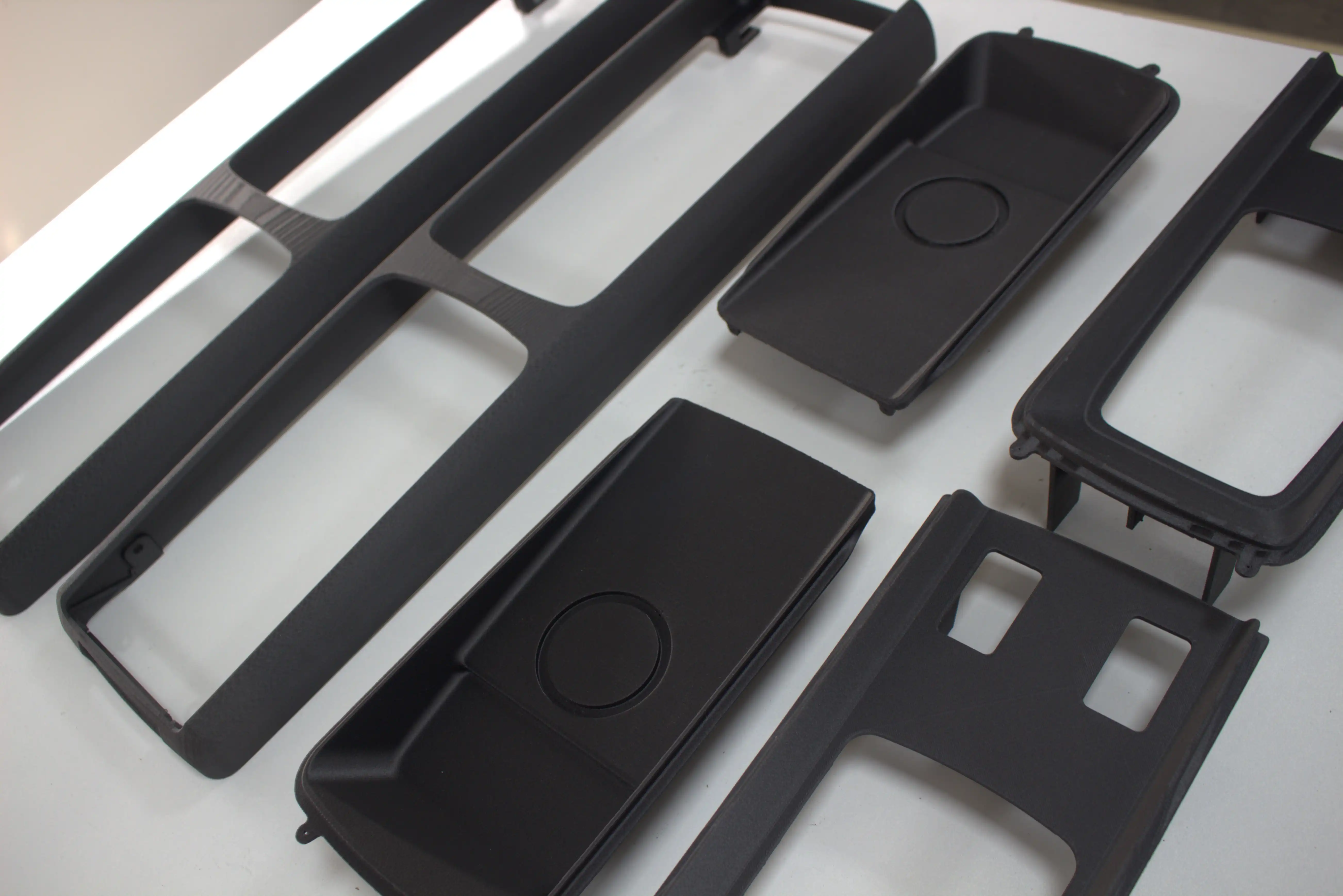
Caption: A batch of automotive interior parts manufactured from PA6-CF using FDM 3D printing.
Image source: IN3DTEC
For this kind of panel part, the final printing outcome is not only depending on the material itself, but also related to the geometry’s structure, printing orientation, and fabrication data.
Different from other methods, FDM printing’s working principle is to make parts layer by layer, so that every layer’s connection will further influence the different orientations. That’s why, before printing, the CAD design and how to set the printing data are so essential and different.
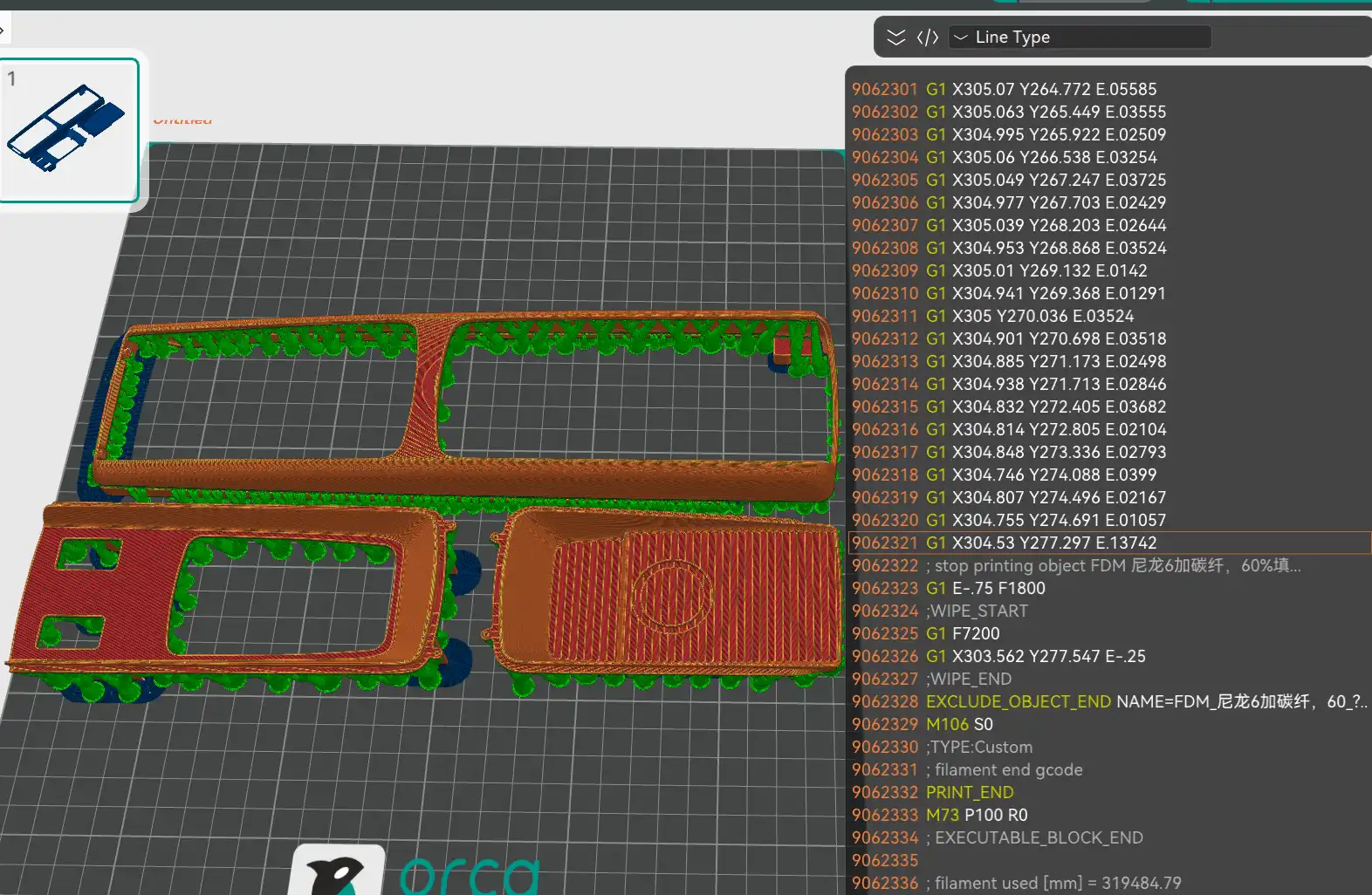
Caption: CAD model showing the support structures used for FDM printing of the PA6-CF automotive interior part.
Image source: IN3DTEC Engineering Team
Based on the part’s structure, equipment’s condition, and PA6-CF-based FDM printing requirements, we set the specific fabrication data.
| Parameter | Set |
|---|---|
| Material | PA6-CF |
| 3D printing method | FDM printing |
| Printer | High-temperature enclosed-chamber 3D printer |
| Nozzle diameter | 0.4 mm |
| Nozzle temperature | 280°C |
| Chamber temperature | 90°C |
| Print speed | 100 mm/s |
| Nozzle material | Tungsten steel |
Table 3: Actual FDM Printing Parameters Used in the Project
Note: These parameters were used for the specific PA6-CF automotive interior project described in this case study. Actual settings may vary depending on the printer, part geometry, material formulation, and production requirements.
Have a custom part in mind? Bring your idea to life with IN3DTEC’s 3D printing services. Upload your CAD files HERE now.
5. PA6-CF + FDM IN OTHER AUTOMOTIVE APPLICATIONS
Besides automotive interior applications, PA6-CF + FDM can be used in the following applications:
5.1 Functional Prototyping
For example, UnionFab sees PA6-CF as an FDM material and uses it in automotive parts and mechanical components that need high strength.
5.2 Air Intake / NACA Duct and Cooling Air Duct
These kinds of parts usually have very complex geometries, and they also have high demands on stiffness, weight, and manufacturing flexibility. For example, NACA ducts have been used in racing applications.
5.3 Automotive Manufacturing Tooling
Auxiliary tools such as tooling and fixtures can be used in automotive manufacturing processes because of their high stiffness, low weight, fast making, and no need for tooling.
5.4 Limitations of PA6-CF + FDM
PA6-CF + FDM is not the best choice for every automotive part. Its performance can be affected by moisture, printing orientation, and processing conditions. For high-volume production, very high surface-finish requirements, or applications requiring highly consistent mechanical properties, other manufacturing methods may be more suitable.