English
 Deutsch
 Español
 Français
 Italiano
 日本語
日本語 Русский
 中文
中文
Formlabs Tough 1000 vs Tough 1500 &2000 : What's the Difference?
- Published August 10 2026 - Updated August 28 2026
A complete guide to Formlabs Tough 1000, Tough 1500, and Tough 2000: differences in rigidity, toughness, applications, and engineering performance.
Tough series of liquid photopolymer resins was developed by Formlabs to solve the limitations of early SLA printing technology, which made printeds that were for display rather than functional use. The different tempers of Tough series (Tough 1000, Tough 1500, and Tough 2000), each offer benefits tailored to different applications. Understanding the differences between these materials helps engineers select the right resin for specific engineering and manufacturing needs.
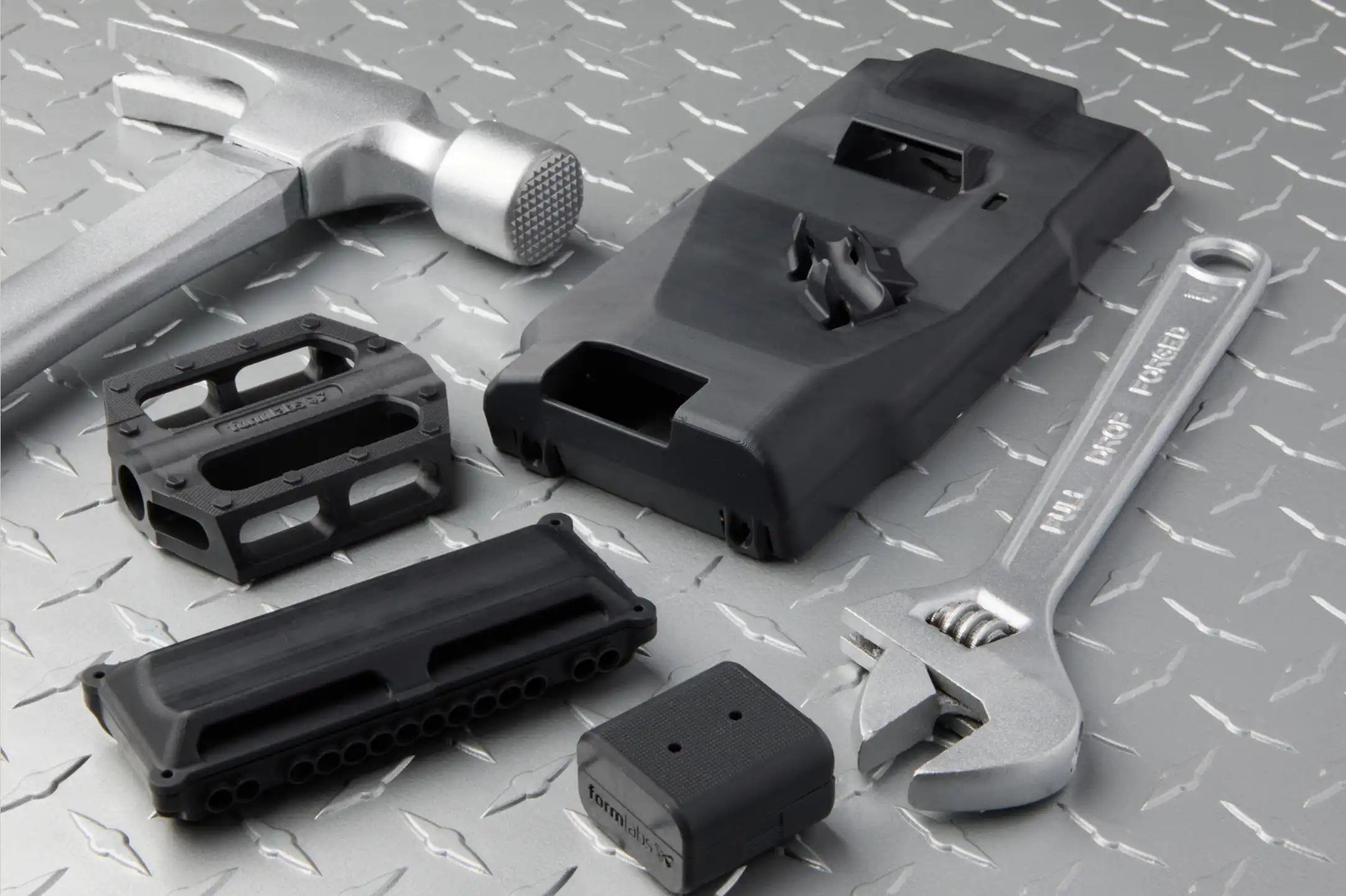
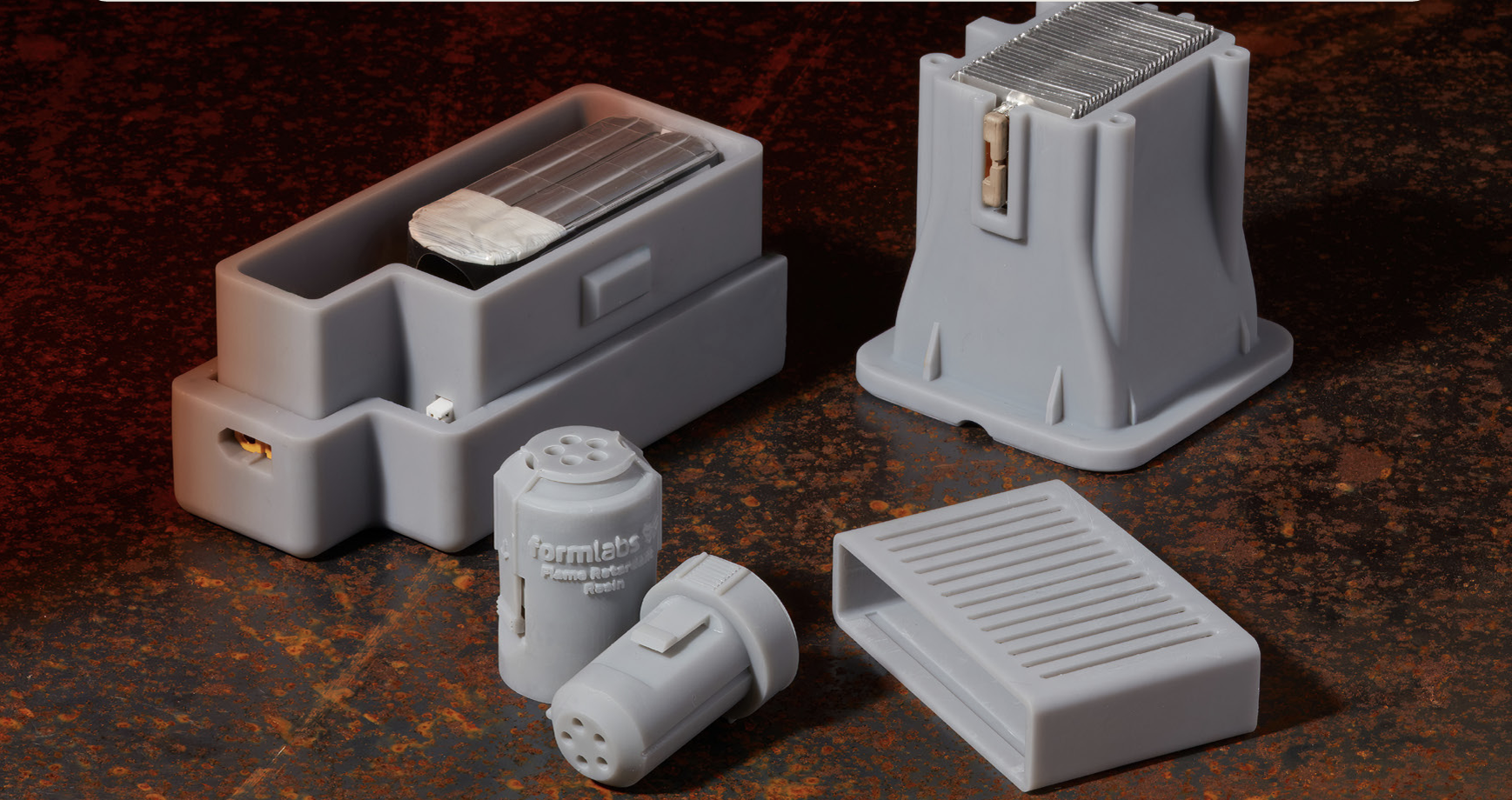
Tough 2000 Rugged Enclosure and Pedal
Tough 2000 supports rugged enclosures and functional components requiring high rigidity.
Image Source: Formlabs
1. TOUGH 1000, TOUGH 1500 AND TOUGH 2000 EXPLAINED
What's "Tough" ?
It signifies high toughness, the material's ability to absorb energy and maintain structural integrity under stress. The core distinction between Formlabs' Tough series and other product lines is that it is specifically engineered to simulate engineering thermoplastics such as ABS, PP, and HDPE. The numbers in the Tough product names roughly correspond to their Tensile Modulus ratings—a measure of a material's resistance to deformation (expressed in megapascals, or MPa). A higher number indicates greater rigidity, while a lower number indicates greater flexibility.
What is Tough 1000?
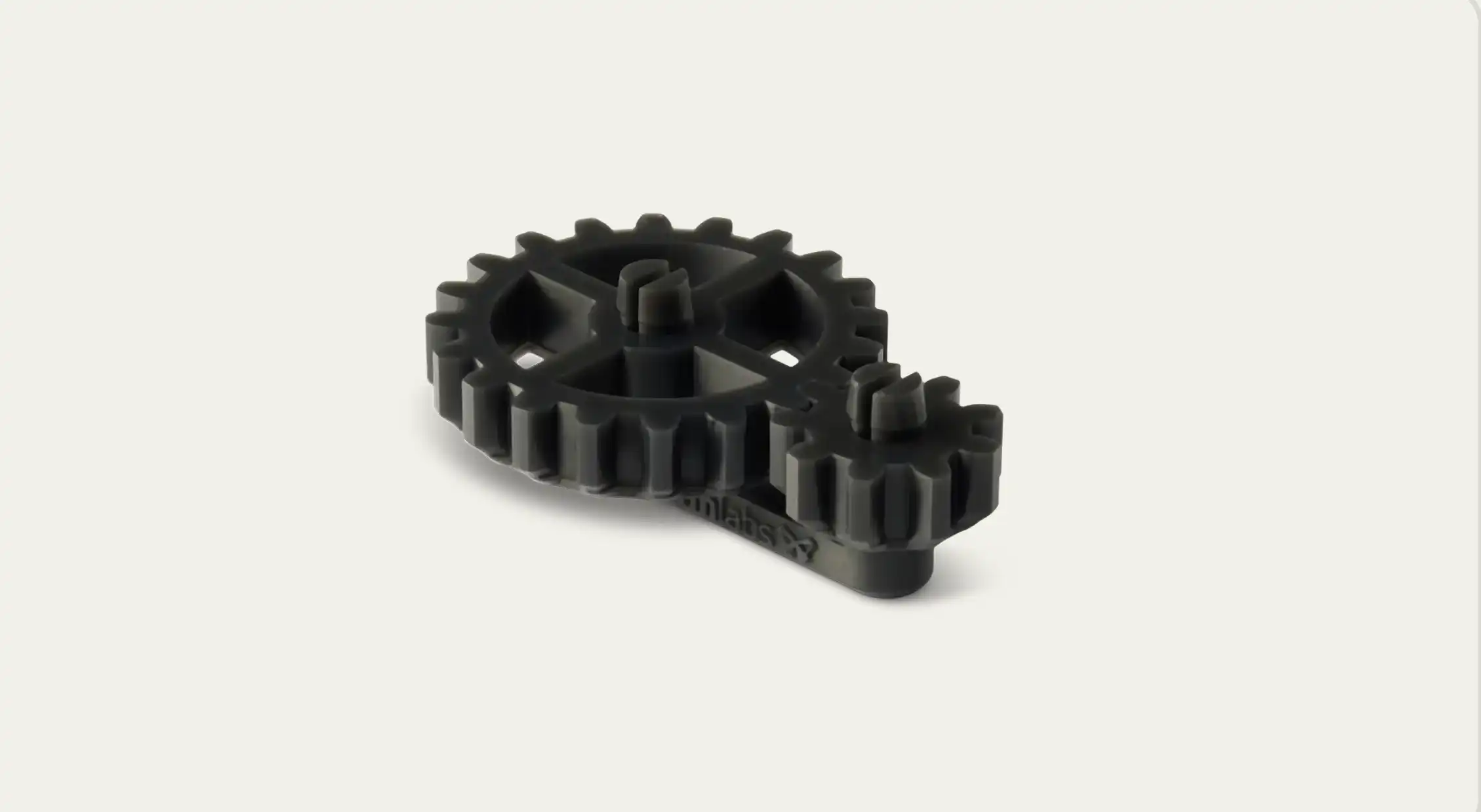
Tough 1000 Gear Assembly
Tough 1000 gear assembly demonstrating low-friction movement and wear resistance.
Image Source: Formlabs
Tough 1000 Resin is a ductile, impact-resistant material with comparable strength, stiffness, and toughness to high-density
polyethylene (HDPE), designed with exceptional wear and fatigue resistance for long-term toughness and utility. The 180% elongation at break (EAB) and Gardner impact strength of 128 in-lb surpass HDPE, making it ideal for parts that bend, compress, or deform without cracking. Hinges and functional parts can handle repeated stress and wear with a work of fracture of 3,200 J/m2 and a Ross flex fatigue of >100,000 cycles (at 23 °C). With a matte, dark grey color, Tough 1000 Resin is engineered for applications that require smooth surfaces and low-friction finishes.Source: Formlabs Tough 1000 Resin Technical Data Sheet.
Tough 1000 is the latest addition to the Tough series. It is a high-toughness, high-elongation SLA engineering resin designed to simulate the properties of HDPE; its tensile modulus after full curing is approximately 1,000 MPa. The fundamental process of SLA resin curing involves liquid resin molecules undergoing polymerization under light exposure to form a three-dimensional, cross-linked network structure. Traditional high-rigidity resins typically feature a high degree of cross-linking, which restricts molecular chain movement; consequently, while these materials are hard, they are prone to brittle fracture upon impact. The material structure of Tough 1000 is designed to allow greater freedom of movement for polymer chain segments. When subjected to external loads, the molecular chains can alleviate local stress concentrations through stretching, rotation, and rearrangement, converting input energy into controlled, overall deformation—thereby exhibiting superior elongation and impact resistance.
In short: Tough 1000 does not resist failure by increasing hardness; instead, it allows for greater controlled deformation, absorbing external energy through this process to reduce the risk of fracture.
What is Tough 1500?
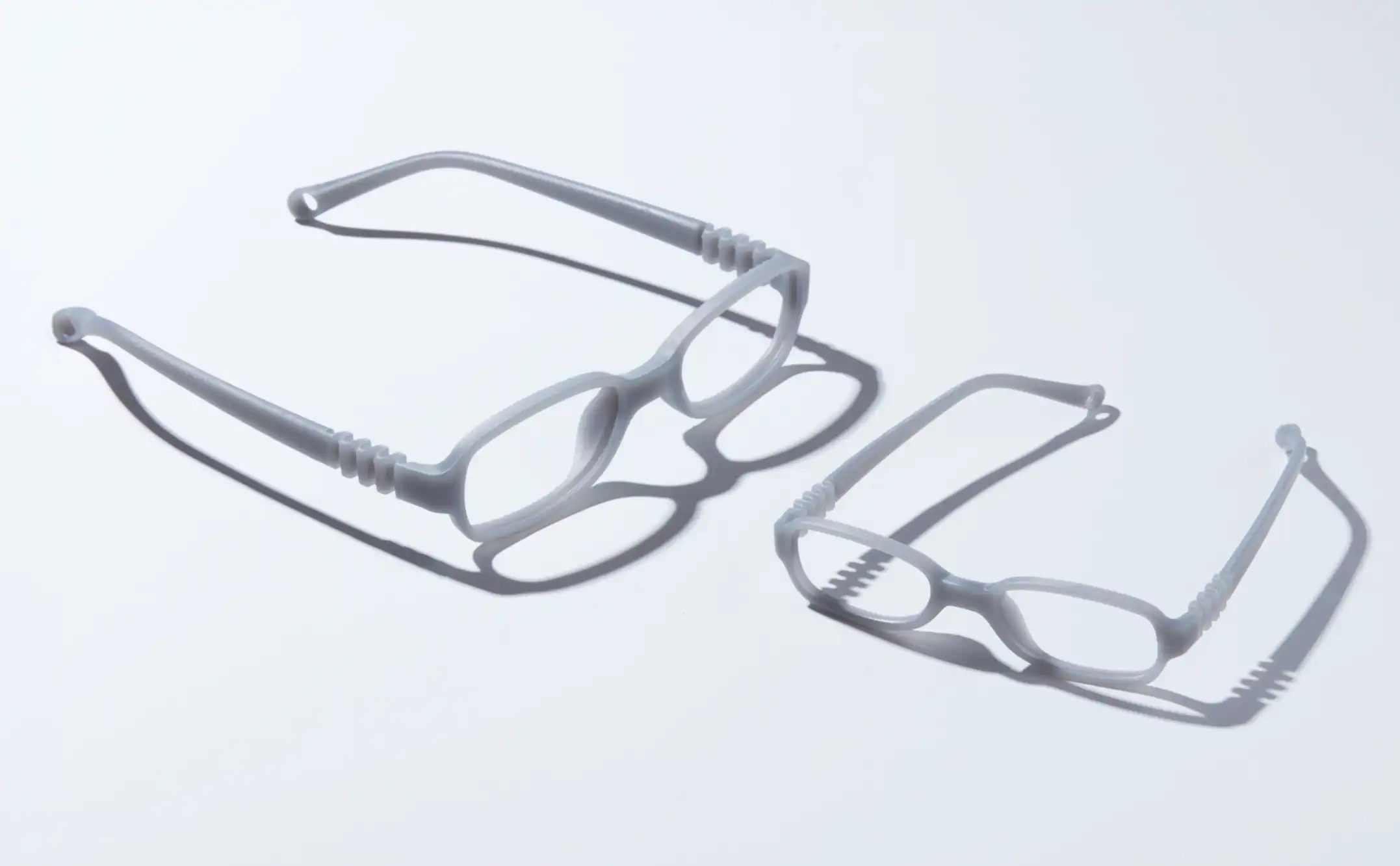
Tough 1500 Eyewear Frame
Tough 1500 produces stiff yet pliable parts that can bend and recover their shape.
Image Source: Formlabs
Tough 1500 Resin is the most resilient material in our functional family of Tough and Durable Resins. This resin produces stiff and pliable parts that bend and spring back quickly under cyclic loading.
Source: Formlabs Tough 1500 Resin Technical Data Sheet.
Tough 1500 is a widely used SLA engineering resin that balances rigidity and toughness, offering properties similar to polypropylene (PP); its fully cured tensile modulus is approximately 1,500 MPa. A material's rigidity and toughness essentially stem from the balance between the "restriction" and "freedom" of molecular chain movement within the polymer network. If the cross-linked structure is too tight, preventing molecular chains from moving, the material becomes more rigid but prone to brittleness; conversely, if there is too much room for movement, the material may be flexible but will suffer from reduced load-bearing capacity. The structural design of Tough 1500 allows for a degree of segmental chain movement while maintaining sufficient structural constraint. When subjected to bending or mechanical loads, internal molecular movement alleviates local stress concentrations and reduces the risk of cracking, all while preserving good structural stability and the ability to recover from deformation.
Simply put, the core concept behind Tough 1500 is not to achieve maximum rigidity or flexibility, but to strike a balance within the molecular network that enables the material to bear loads while avoiding sudden fracture.
What is Tough 2000?
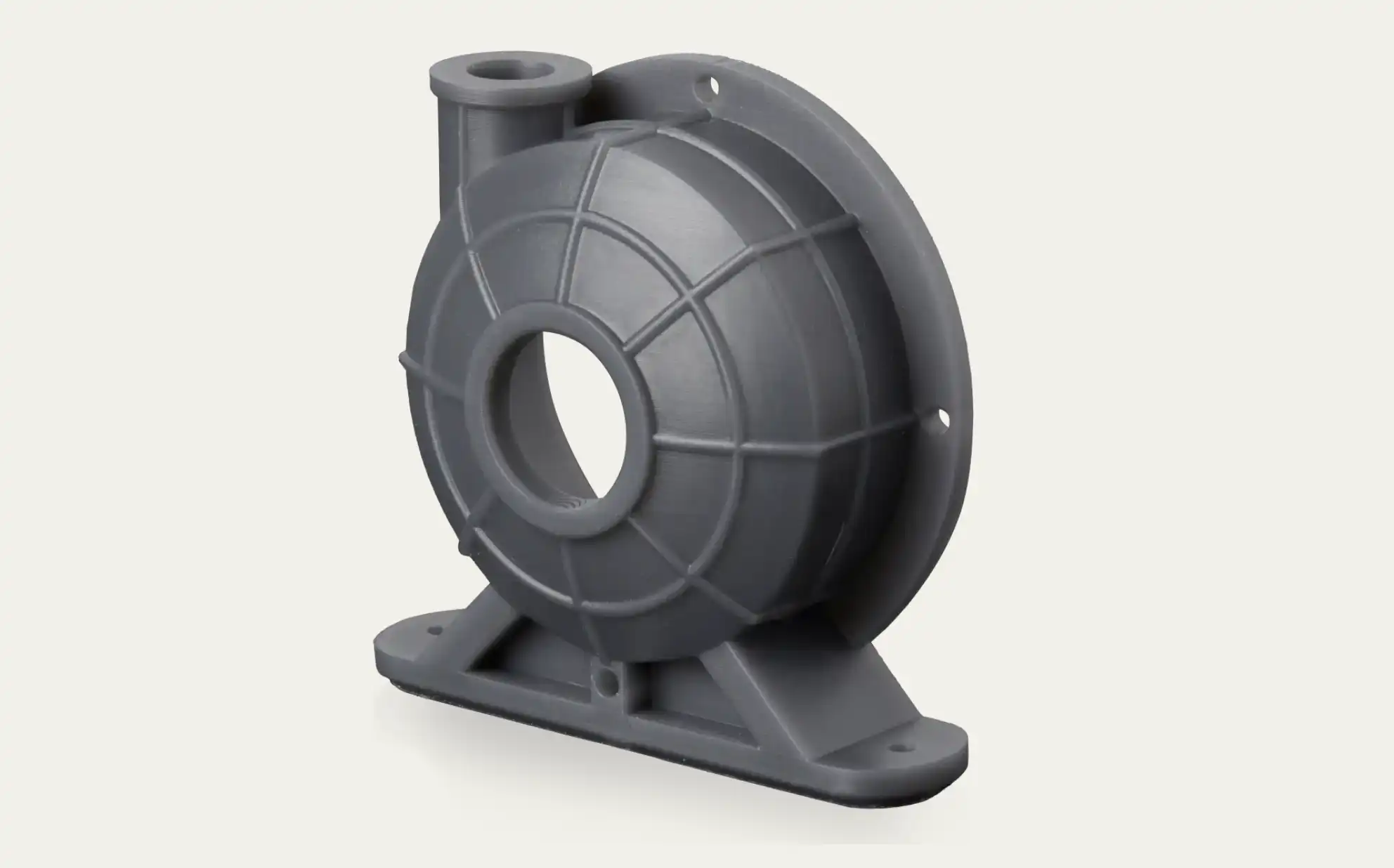
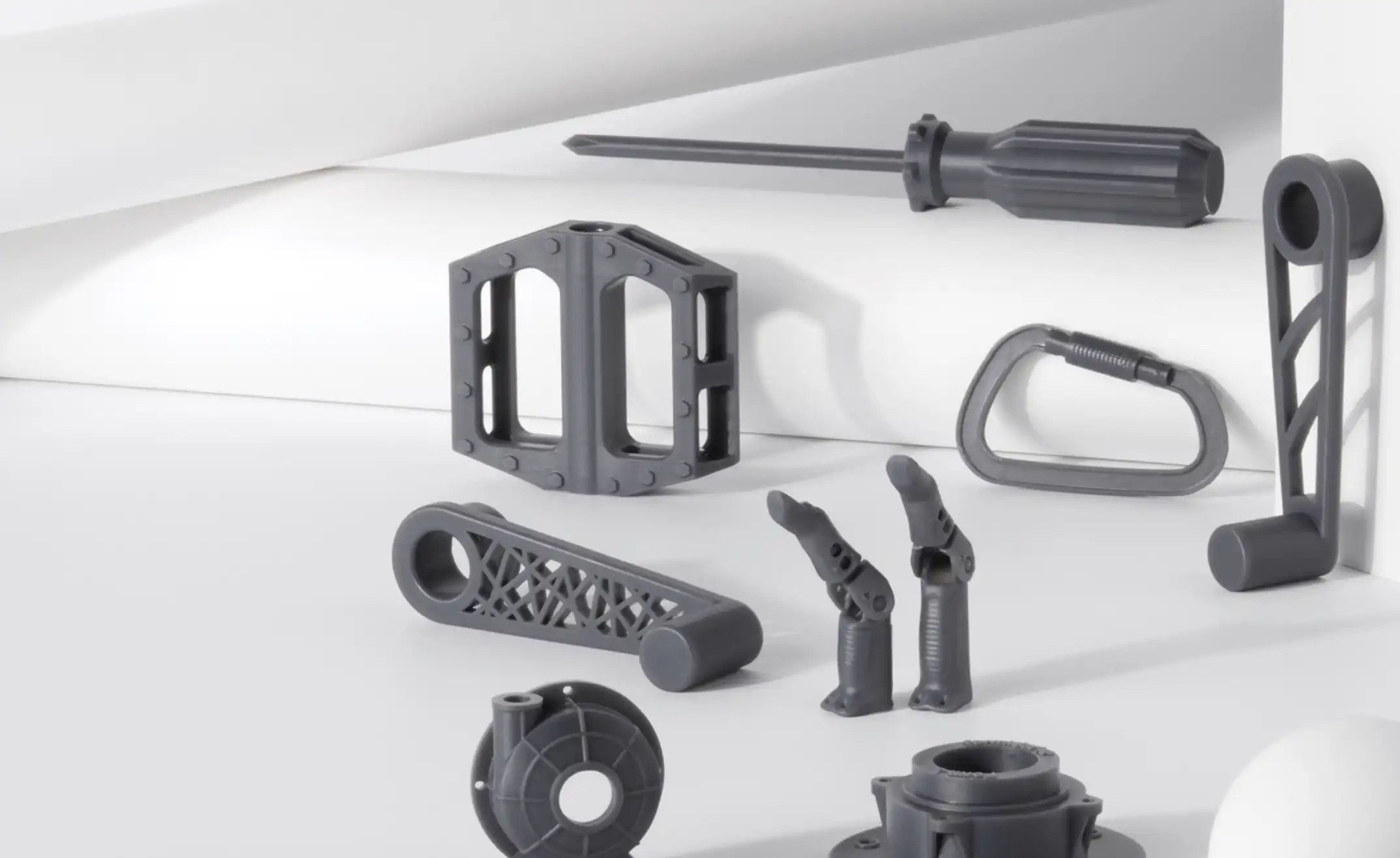
Tough 2000 Pump Housing
Tough 2000 is suited to rigid functional parts and housings that require dimensional stability.
Image Source: Formlabs
Tough 2000 Resin is the strongest and stiffest material in our functional family of Tough and Durable Resins. Choose Tough 2000 Resin for prototyping strong and sturdy parts that should not bend easily.
Source: Formlabs Tough 2000 Resin Technical Data Sheet.
Tough 2000 is the most rigid SLA engineering resin in the Tough series; it simulates ABS engineering plastic and is suitable for parts subjected to higher mechanical loads, with a fully cured tensile modulus of approximately 2,000 MPa. Material rigidity depends primarily on the degree to which molecular chain movement is restricted. The polymer network structure of Tough 2000 imposes tighter constraints on molecular chain movement, making the material more resistant to deformation under external force and resulting in a higher elastic modulus and greater structural stability. This high rigidity allows parts to better maintain their original geometry and reduces the risk of creep and permanent deformation under long-term loading. However, due to the relatively limited space for molecular chain movement, the material's ability to absorb impact energy through deformation is lower than that of high-toughness materials; therefore, the risk of crack formation must be considered under conditions of extreme bending or intense impact.
Simply put: Tough 2000 enhances rigidity by restricting molecular chain movement, allowing parts to better maintain their shape and withstand mechanical loads, albeit at the cost of some flexibility.
2. TOUGH 1000 VS TOUGH 1500 VS TOUGH 2000: WHAT ARE THE DIFFERENCES?
Tough 1000:
- A high-toughness, high-ductility engineering resin with properties similar to HDPE; suitable for applications requiring impact absorption and repeated deformation.
- Offers the highest flexibility and impact resistance within the Tough series, along with good fatigue performance.
- Suitable for flexible structures, snap-fits, and protective components.
- Lower rigidity and dimensional stability compared to Tough 1500/2000; not suitable for long-term, high-load structural parts.
Tough 1500:
- An engineering resin with balanced overall properties (similar to PP), striking a good balance between rigidity, toughness, and flexibility.
- Capable of withstanding repeated mechanical loads while maintaining good dimensional stability.
- Suitable for functional prototypes, assemblies, and pre-injection molding performance verification.
- Not suitable for applications requiring extreme flexibility or extreme rigidity.
Tough 2000:
- A high-rigidity, high-dimensional-stability engineering resin with properties similar to ABS; suitable for structural parts.
- Offers the highest rigidity and deformation resistance in the Tough series; suitable for load-bearing and precision engineering applications.
- Features good creep resistance, making it suitable for parts requiring long-term dimensional stability.
- Lower flexibility than Tough 1000/1500; not suitable for frequent bending or significant deformation.
3. APPLICATIONS
Tough 1000
- Flexible structural parts: e.g., snap-fits and living hinges; suitable for parts requiring repeated bending.
- Protective and cushioning components: e.g., protective housings, shields, and energy-absorbing structures; suitable for impact-resistant applications.
- Assembly aids: e.g., positioning clamps and assembly jigs; suitable for structures requiring a degree of elastic deformation.
- Tough, functional prototypes: Used to validate performance characteristics similar to HDPE plastics.
Tough 1500
- General-purpose functional prototypes: Used to test mechanical properties that mimic final plastic products.
- Assemblies and interconnects: Parts requiring a balance of strength and flexibility, such as snap-fits, connectors, and housing components.
- Consumer electronics component validation: Such as handles, protective covers, and structural test parts.
- Low-volume functional parts: Suitable for applications requiring properties similar to PP (polypropylene).
Tough 2000
- Structural and mechanical prototypes: Suitable for parts requiring high rigidity and mechanical load-bearing capacity.
- Jigs, fixtures, and manufacturing aids: Such as mounting brackets, clamps, and test fixtures.
- Parts requiring high dimensional stability: Such as equipment housings and precision structural components.
- Long-term functional test parts: Used to validate mechanical performance in real-world operating environments.
IN3DTEC now supports printing with Tough 1500 and Tough 2000 resins. Select the engineering resin that fits your application needs today to accelerate the process from design validation to real-world performance testing. Upload your drawing to here and contact us to start your 3D printing project.
photo credits: Formlabs.com