English
 Deutsch
 Español
 Français
 Italiano
 日本語
日本語 Русский
 中文
中文
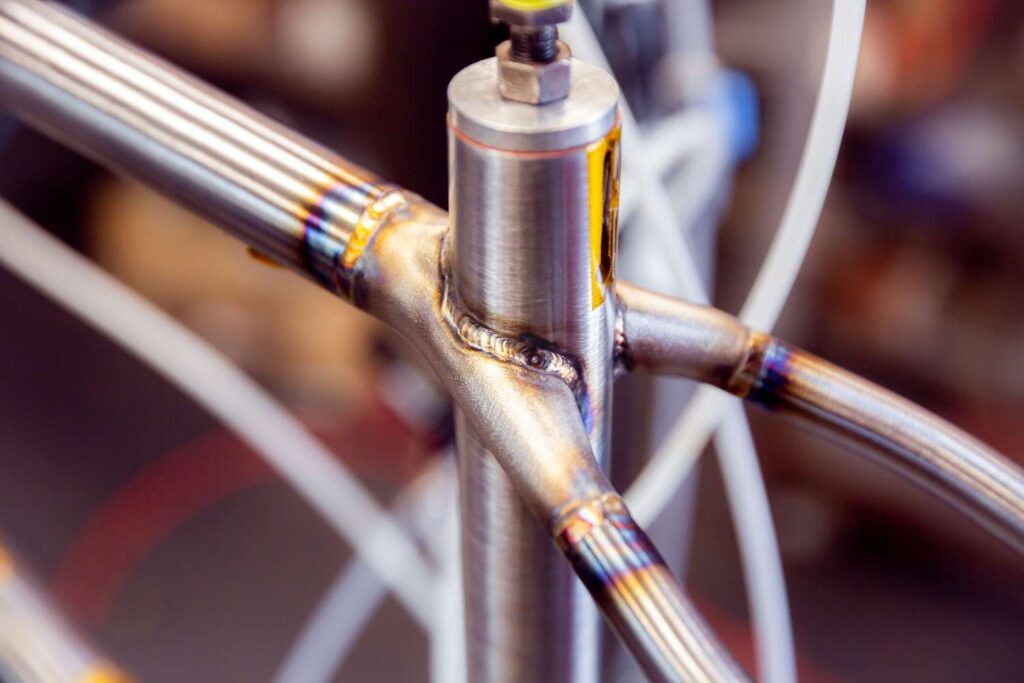
How the Bicycle Industry Benefits from 3D Printing
- Published November 07 2025 - Updated October 14 2026
Let’s explore how the 3D printed carbon fiber frames, custom titanium lugs, and lightweight accessories enhance bike performance while reducing manufacturing costs and lead times.
In recent years, components manufactured by metal 3D printing have found a wide range of application in areas such as transport. Just a few years ago, this would have seemed straight out of a science fiction novel. Thanks to the exceptional flexibility offered by metal 3D printing, manufacturers have not only begun to incorporate this technology into their products but have even started to turn their entire production processes towards additive manufacturing.
In this blog post, you will see some examples of how 3D printing services are transforming the lives of cyclists around the world.
BIKE
If one were to ask what 3D printing can bring to the cycling industry, the answer would be that it unlocks creativity and design potential. The Superstrata bicycle is a perfect example of the application of this technology. Superstrata is a bicycle made from carbon fibre, 3D-printed into the shape you see before you.
Although 3D-printed carbon-fibre bicycles are nothing new, the Superstrata is not manufactured by layering carbon-fibre sheets. Instead, it is printed by a single continuous fiber of carbon fibre. This makes it a fully customizable bicycle that can be easily tailored to your body type. Furthermore, it is both lightweight and robust, and the base model Superstrata is priced at just US$2,800.
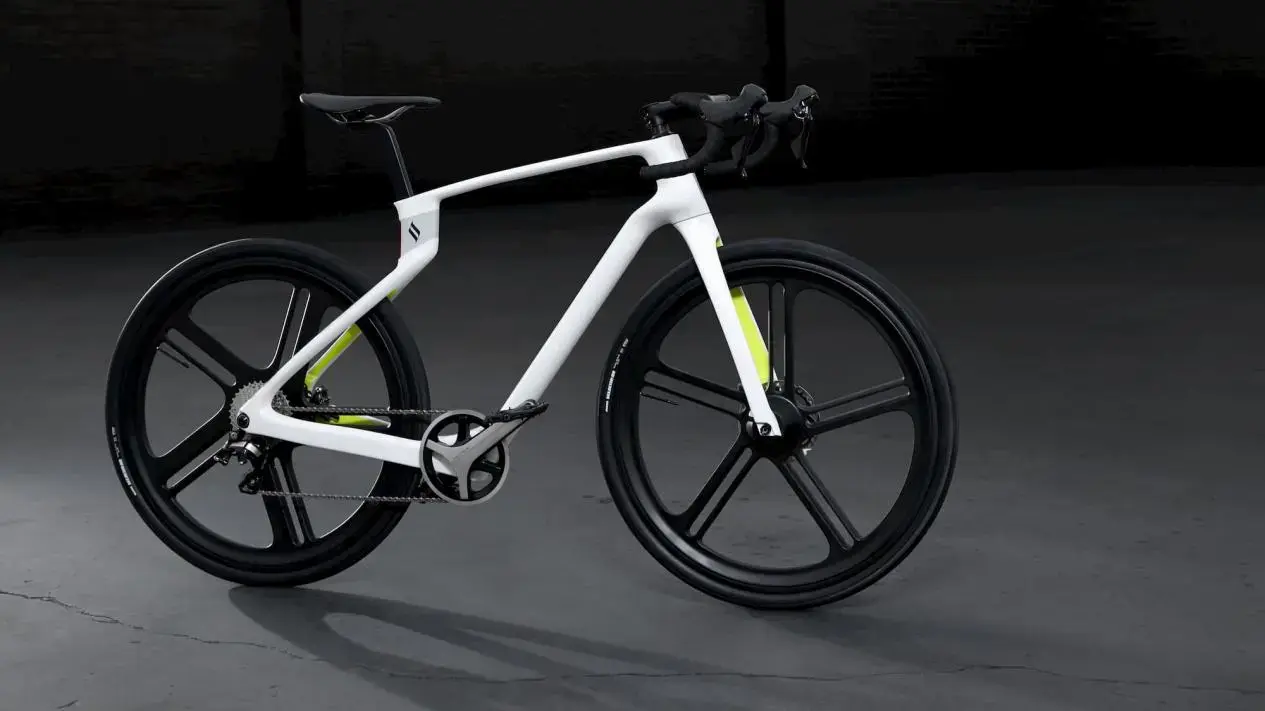
A high-performance bicycle showcasing how 3D printing can enable lightweight, customized frame designs and innovative bicycle components for improved performance and aerodynamics.
Another company offering 3D-printed bicycle services is Urwahn Bikes, based in Germany. Compared to Superstrata, Urwahn’s approach is slightly different: they first print the bicycle frame in separate parts, which are then assembled. The team decided to move away from traditional welding techniques, choosing instead to manufacture components via additive printing and then using selective laser melting SLM 3D print technology to ‘weld’ the tubes into place using these components.
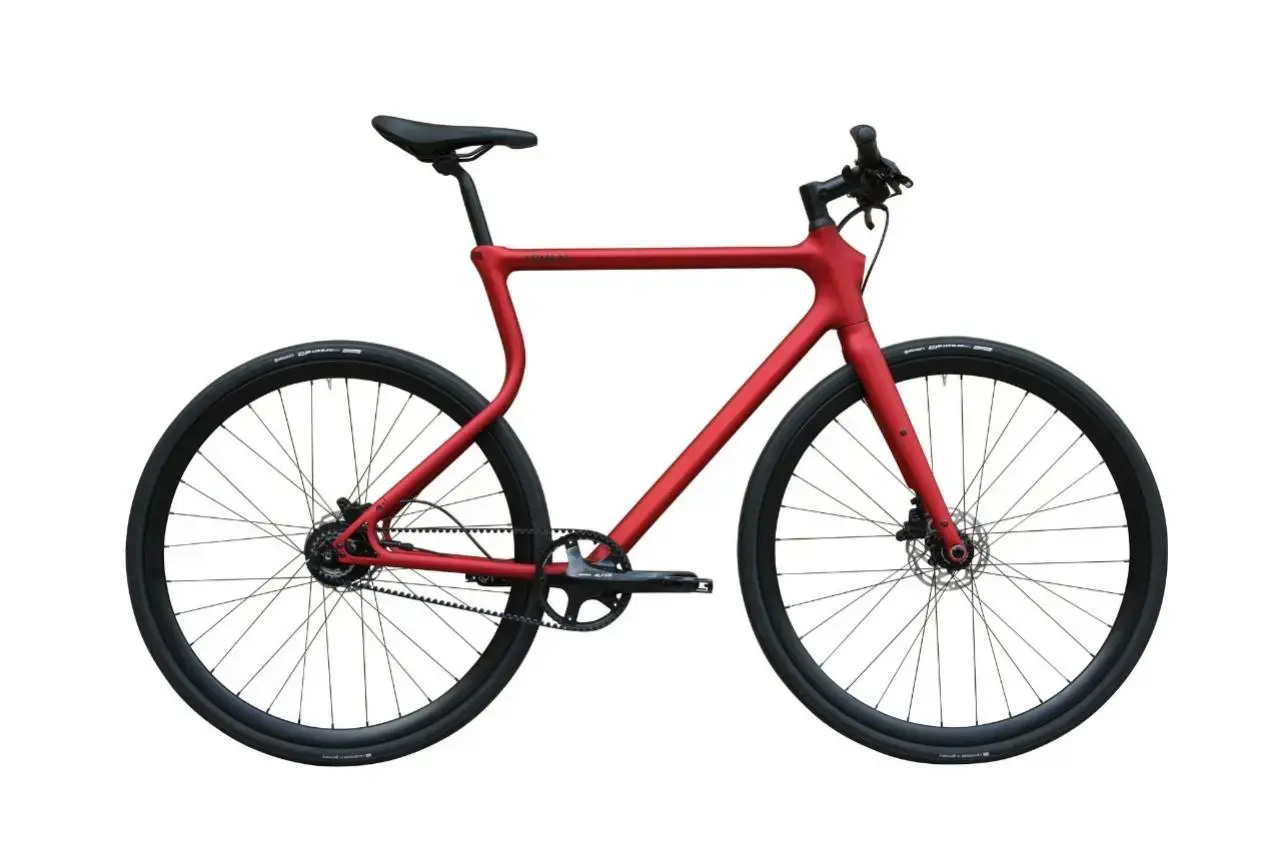
A custom bicycle showcasing the design flexibility of 3D printing for developing lightweight, aerodynamic, and personalized bicycle frames and components.
COMPONENTS
Another area in which additive manufacturing is having an impact on the industry is the manufacture of components. As 3D modeling software such as CAD can be used to design components, the prospects for the application of additive printing are vast.
A custom bicycle design and fabrication shop could look for a way to create prototype models of custom bike lugs and dropouts.
Producing these parts in Titanium Ti-6Al-V4 (Ti64), Stainless Steel additively allowed building bikes designed specifically for the individual fit of each rider; meaning no two bicycles are the same.
Selective Laser Melting 3D printing can achieve complex geometries that cannot be achieved by subtractive manufacturing or casting processes. These frame dropouts are completely hollow and have complex internal geometries, such as internal cable routing and custom mounting points. To facilitate repairs, if the carbon fibre tubes were damaged, the frame dropouts and rear fork dropouts can be removed from the carbon fibre tube and they look very amazing too!
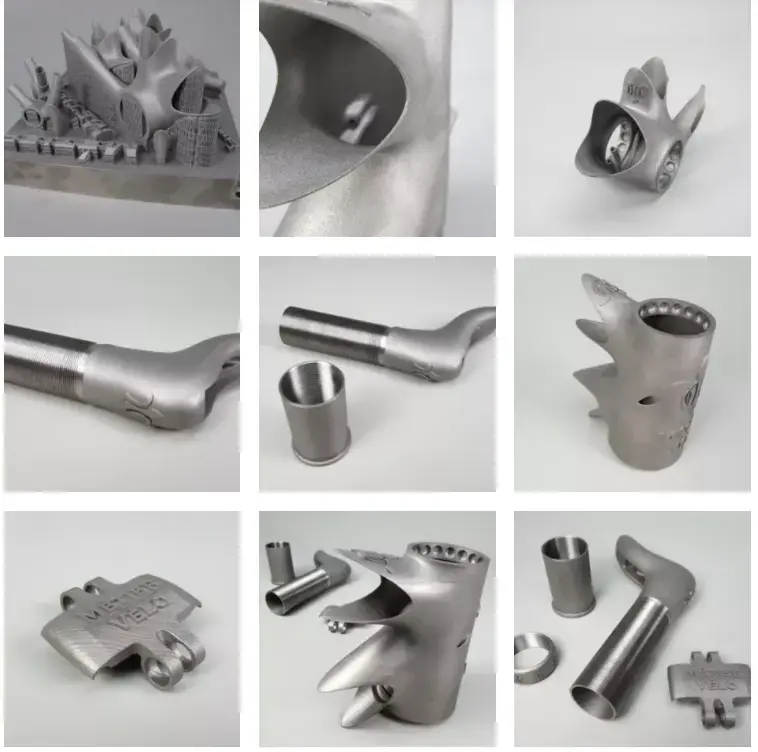
A collection of metal 3D printed components showcasing complex geometries, lightweight structures, and customized designs for bicycle and other high-performance applications.
ACCESSORIES
Another area of the cycling industry that is being impacted by 3D printing services is accessories. These include items such as helmets, bottle holders and even chain guides. KAV Sports is a company that is making full use of the advantages of this technology. They plan to create a fully customizable helmet only using 3D printing. The helmet has a honeycomb structure, which ensures strength without adding any extra weight. The finished helmet weighs less than 300 grams.
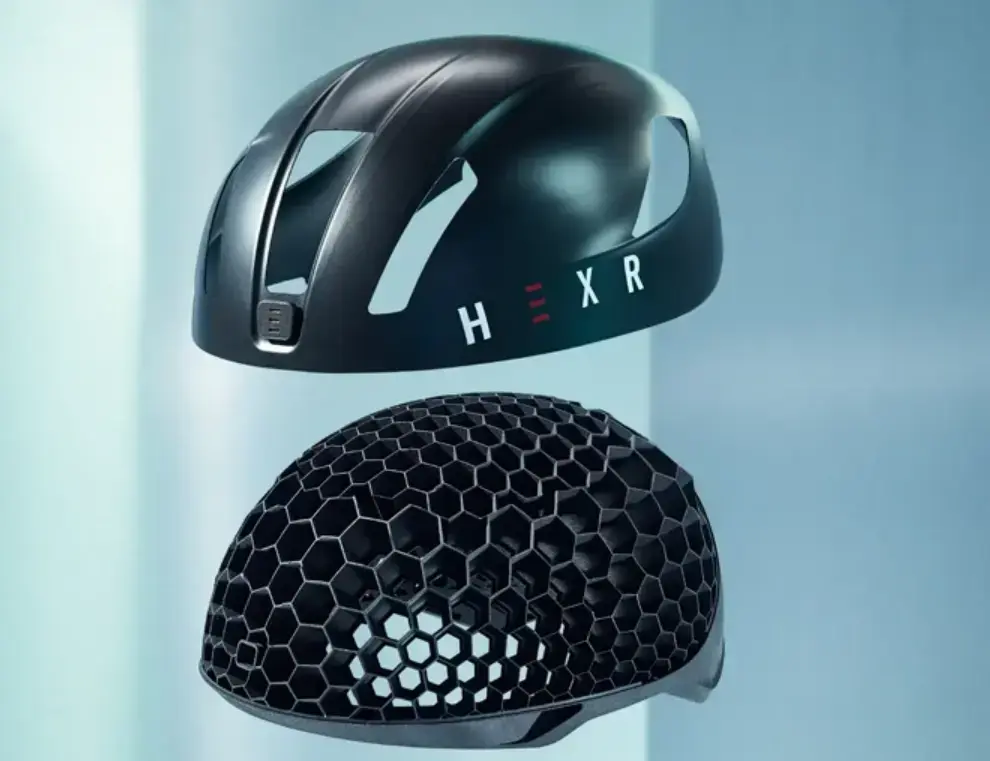
A 3D printed bicycle helmet featuring a complex honeycomb lattice structure designed to reduce weight while providing customized ventilation, impact protection, and aerodynamic performance.
As for accessories such as bottle holders and chain guides, there’s no need to go out of your way to find a manufacturer to buy them from. A quick Google search will bring up countless designs. If you have a 3D printer, you can simply download them and make them yourself.
In the field of 3D-printed bicycles, customization has great value. Not only does it lend a unique flair to bicycle design, but, more importantly, it also enhances the performance of the bicycle itself. The design flexibility offered by 3D printing services goes hand in hand with the ability to customize bicycle components in a cost-effective and efficient manner, thanks in part to the mold-free manufacturing process.
These parts were manufactured in just four days, whereas traditionally, manufacturing precision-cast models and manually modifying parts would typically take three to four weeks. Furthermore, 3D printing services have reduced manufacturing costs.
Manufacturing parts directly using metal 3D printing not only saves time and money but, more importantly, frees designers from the constraints of traditional manufacturing, allowing them to focus on the creative aspects of design.
IN3DTEC has extensive experience and success stories in using 3D printing technology to manufacture bicycle components. We have assisted hundreds of bicycle companies in producing bicycle frames and components. 3D printing technology shows the potential of enabling small businesses to compete on equal terms with multinational corporations in the traditional manufacturing industry.
If you Metal 3D Printing service or high-performance plastics 3D printing service, visit our >> 3D Printing online store to get an instant quote within seconds.