English
 Deutsch
 Español
 Français
 Italiano
 日本語
日本語 Русский
 中文
中文
Plastics Injection Molding vs. 3D Printing: Making the Right Choice for Your Project
- Published November 06 2025 - Updated August 28 2026
How to choose from plastics injection molding and 3D printing?
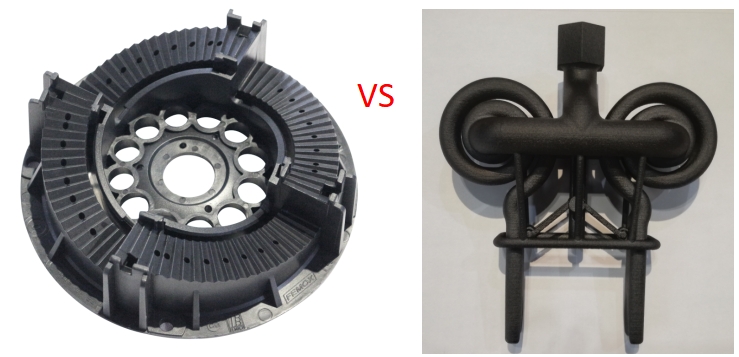
Nowadays, 3D printing is replacing injection molding in some mass production applications. Both 3D printing and injection molding have their own distinct benefits and considerations, and these factors must be weighed up when figuring out the best manufacturing solution for a specific project. This article intends to analyze the factors involved in choosing between these two technologies.
1. ECONOMIC IMPACT: UPFRONT TOOLING VS. UNIT COSTS
Injection Molding: If you choose the injection molding process, there is usually an additional cost for the mold. Even for the simplest of products, its mold costs start at over $2,000. Therefore, this is not a wise choice when your product’s sales volume is still uncertain or the design is subject to frequent changes. The high cost of molds makes this process more suitable for high-volume production.
3D printing: As additive manufacturing does not require the manufacturing of expensive molds in advance, it is a cost-effective option for low-volume production and custom designs. However, for high-volume production, its unit cost is often higher than that of injection molding process.
2. PRODUCTION TIMELINE: SPEED AND LEAD TIME TRADE-OFFS
Injection Molding: Once the mold has been manufactured, the injection molding process enables rapid mass production. Taking the manufacture of mobile phone cases as an example, a single injection molding machine can produce 5,000 units within 3–4 days, or even faster. However, when using 3D printing technology, it takes at least 15–20 days with just one 3D printer. The high speed of injection molding makes it great for high-volume production. However, the initial set-up and mold-building tasks may require 20–30 days of preparation before production can commence.
3D Printing: When it comes to prototyping and small-batch production, additive printing offers the benefit of short lead times. It enables rapid prototyping without the need for mold, thereby accelerating the iteration process.
3. MATERIAL VERSATILITY: DIVERSITY AND FUNCTIONAL PERFORMANCE
Injection Molding: Injection molding offers a lot of different material options, including various plastics and elastomers. Furthermore, it supports metal inserts (insert molding) and the combination of multiple materials within a single part (overholding), making it very versatile for a lot of different uses.
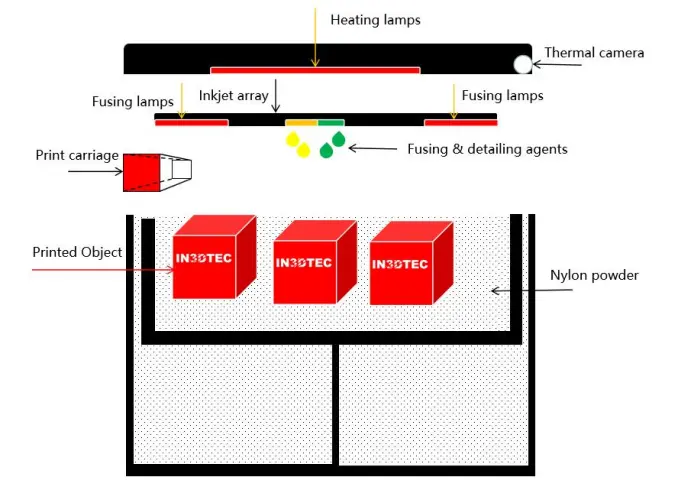
3D Printing: Although the range of 3D printing and additive manufacturing materials has expanded significantly in recent years, the choice of available materials continues to be limited compared to injection molding. To date, the main technologies capable of replacing injection molding for mass production in industrial and functional applications are FDM, SLS and MJF. However, additive manufacturing technology is constantly advancing, and new materials with exceptional efficiency will be introduced in the future.
4. QUALITY STANDARDS: SURFACE FINISHES AND AESTHETICS
Injection Molding: The surface finish achieved through injection molding is typically smooth and uniform. The molds used in injection molding are custom-made to make the desired texture or surface finish to the molded part. Common surface finishes in injection molding include glossy, matt, textured or patterned surfaces. Injection molding is capable of producing high-quality, highly detailed surface finishes and is suitable for a wide range of applications.
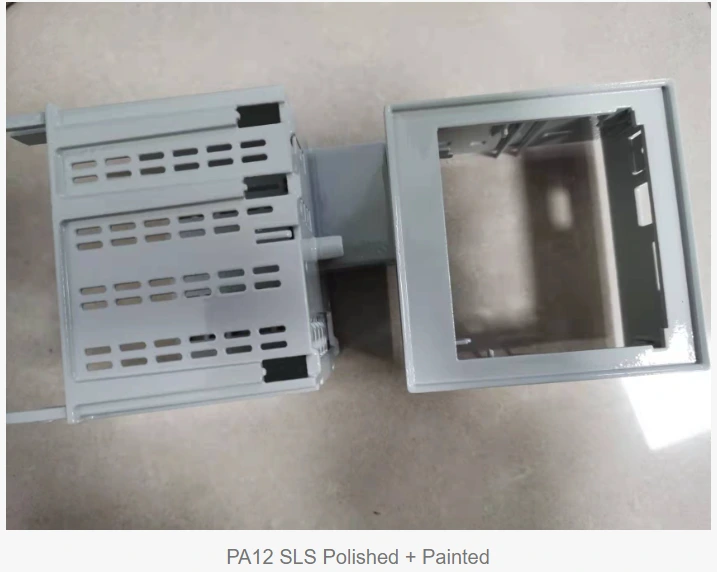
3D Printing: The surface finish achieved through 3D printing can be very different depending on the printing technology and materials used. Typically, 3D-printed parts are likely to show noticeable layer lines or a slightly rough texture. However, these issues can be solved through post-processing techniques such as sanding, vaporfuse smoothing, polishing or applying surface coatings to improve surface finish. Nevertheless, achieving the same level of smoothness and consistency as that of injection mounding may prove more challenging for additive printing.
5. AGILE MANUFACTURING: DESIGN FLEXIBILITY AND ITERATION
Injection Molding: As you may already be aware, the injection molding process requires a mold to be prepared first. Once the mold has been finalized, only minor design modifications can be made. It is therefore essential to be fully confident in your design before considering mass production via injection molding.
3D Printing: As no tooling involved, it allows the user to change the design at the middle way without losing any cost.
Technology Comparison Matrix
| Technology | Cost | Production Speed | Materials Selection | Surface Finishes | Design Flexible |
|---|---|---|---|---|---|
| Injection Molding | Low for large volume | High for large volume | Many | High | Low |
| 3D Printing | Low for low-volume | High for low-volume | Few | Low | High |
CONCLUSION
When considering whether to choose from injection molding and 3D printing, it is essential to take a detailed analysis of factors such as production costs, production speed, material selection, surface finish and design flexibility into consideration. Injection molding offers benefits in terms of high-volume production, high surface quality and a wide range of material options. On the other hand, 3D printing provides design freedom, rapid prototyping and cost-effective small-batch production. Ultimately, the choice depends on the specific requirements of the your project. In some cases, combining the two technologies may be the optimal solution.