English
 Deutsch
 Español
 Français
 Italiano
 日本語
日本語 Русский
 中文
中文
Surface finishes options for metal 3D Prints
- Published November 06 2025 - Updated August 14 2026
A technical review of post-processing techniques to enhance aesthetics, precision, and mechanical performance for metal components.
Metal 3D printing has completely revolutionized the manufacturing industry by enabling the rapid and cost-effective production of complex metal parts.
However, the inherent nature of the metal 3D printing process often results in surfaces that may require additional treatment to achieve the desired aesthetics, functionality, and performance. This is where surface finishing becomes crucial.
In this blog post, let’s explore surface treatment processes related to 3D metal printing. These processes not only improve appearance but also enhance mechanical properties, surface quality and suitability for specific applications.
1. AS-PRINTED FINISH
Layering lines and traces left by the removal of support structures are usually visible on this type of surface. The roughness of the surface is RA7. However, even without surface treatment, this does not affect the part’s dimensional accuracy. For parts requiring secondary machining, this level of surface finish is also a good choice.
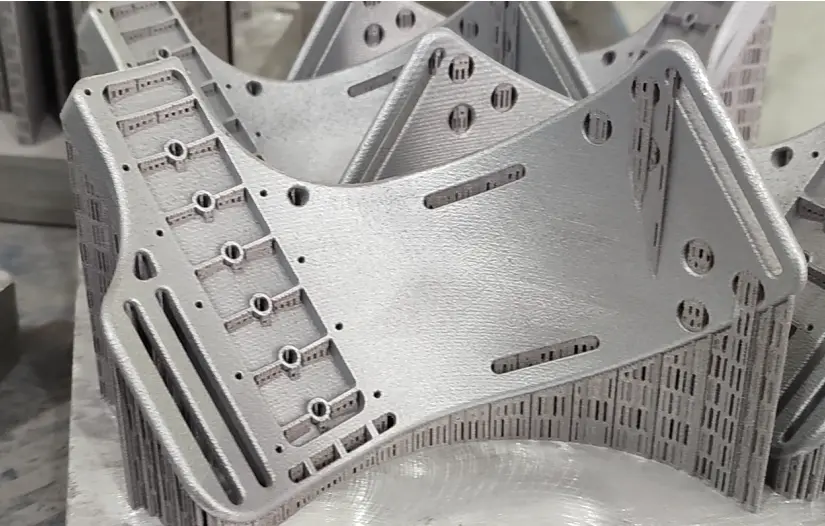
Metal 3D printed components in their as-printed condition, featuring visible layer lines, support structures, and a characteristic surface finish before post-processing such as support removal, machining, or polishing.
2. MACHINED FINISH
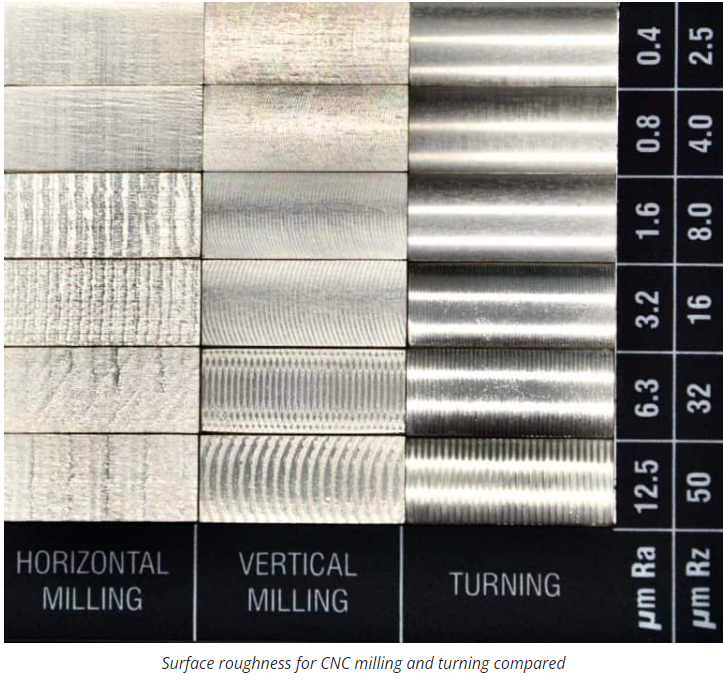
For parts that require high precision, secondary machining is necessary. The highest achievable precision is +/- 0.02mm. For parts that require this type of post-processing, it is essential to leave enough cutting allowance before printing. After the post-processing, the printed parts can achieve the normal precision and surface smoothness of CNC machining. It also opens up possibilities for other additional post-processing techniques.
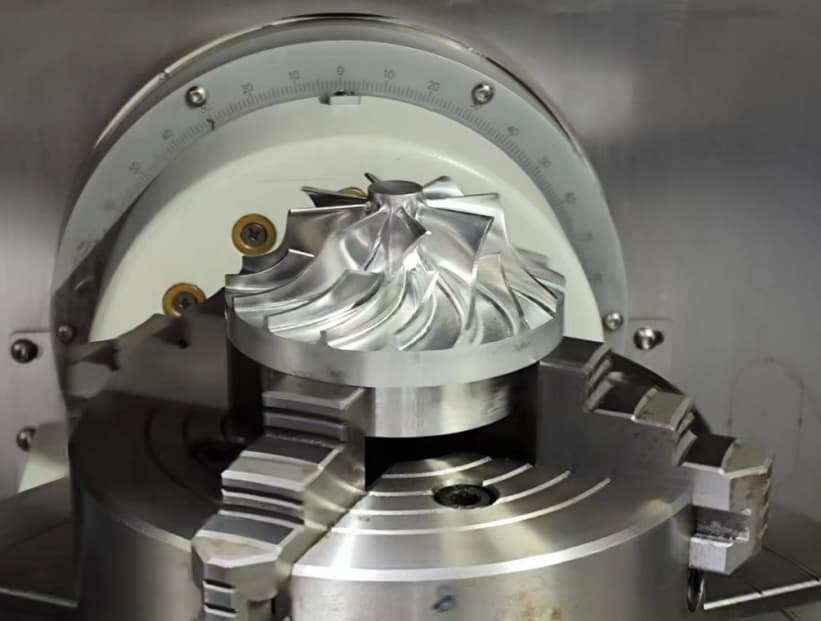
A precision CNC machined aluminum impeller showcasing an excellent surface finish, tight tolerances, and complex curved geometry produced using multi-axis CNC milling.
3. MEDIA BLASTING SURFACE FINISHES
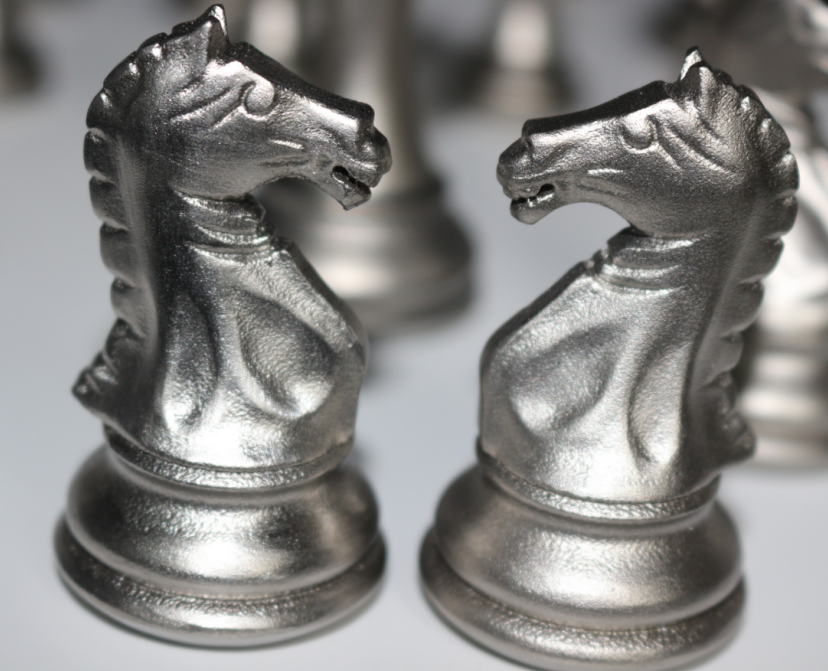
Media blasting is a highly efficient method for 3D metal printing. It uses compressed air to propel abrasive media (aluminium oxide, stainless steel shot, metal powder or glass beads) onto the surface of a part. This process helps to abrade the surface, thereby achieving a uniform matt or glossy finish.
This process offers key competitive benefits for tasks such as removing discoloration, smoothing surface scratches and eliminating machining traces. Importantly, media blasting does not affect the dimensional accuracy of parts and can be completed in just a few minutes.
The intensity of the media blasting process can be adjusted by regulating the air pressure. Lower air pressure is suitable for altering the surface color of parts. The use of steel shot or glass beads with higher air pressure can effectively removes surface burrs, improving smoothness and overall appearance.
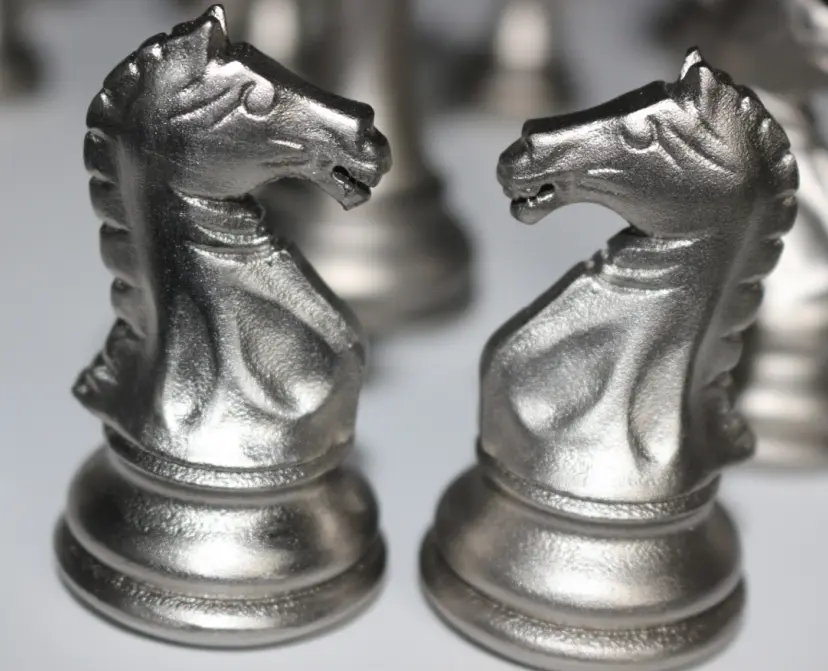
Metal 3D printed chess pieces after glass bead blasting, featuring a clean, uniform satin finish that improves surface appearance while preserving fine details and dimensional accuracy.
4. CHEMICAL SURFACE TREATMENT
Chemical treatments such as etching or passivation can be used to alter the surface finish of metal 3D printed parts. These treatments can remove impurities, improve corrosion resistance, or create specific textured patterns on the surface.
However, before use this type of surface treatment, the sample surface must be polished and ground to improve its durability.
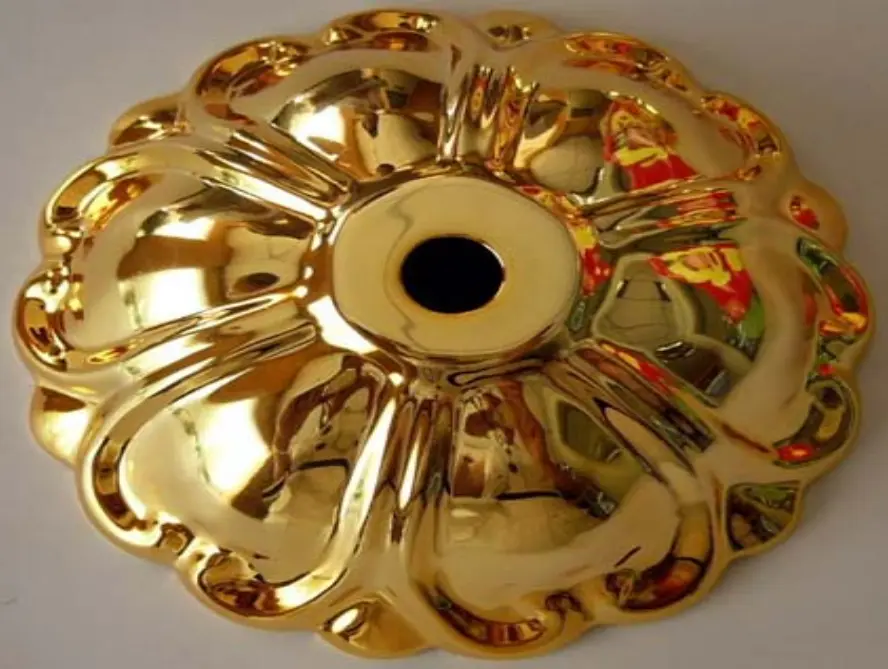
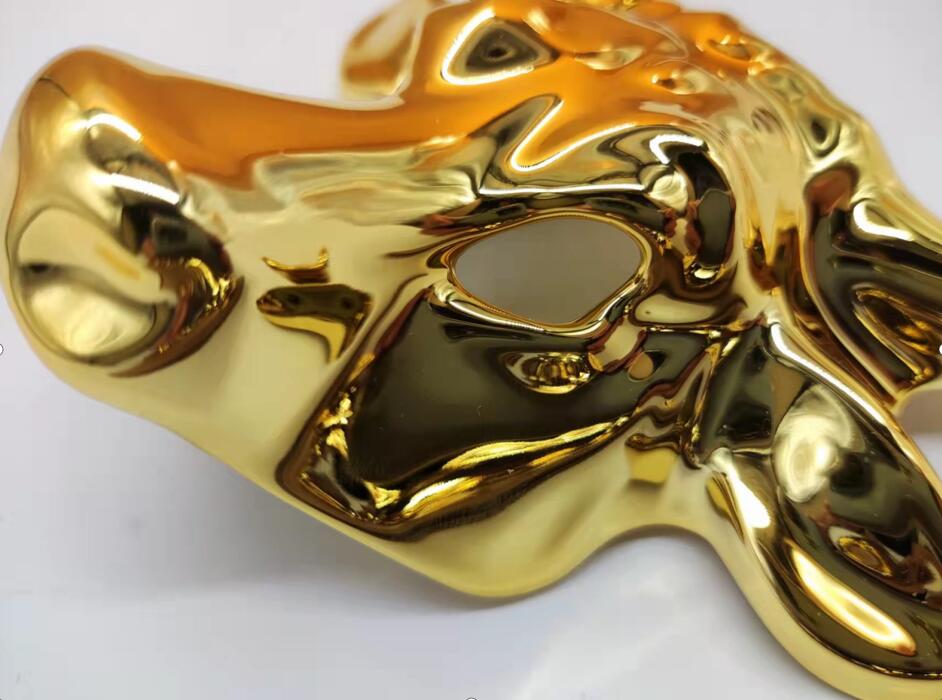
A precision metal part after chemical surface treatment and gold electroplating, featuring a high-gloss decorative finish that enhances corrosion resistance, wear resistance, and overall appearance.
5. ELECTROPOLISHING
Electrolytic polishing is the ideal solution for polishing irregularly shaped objects. This process reduces surface roughness, smooths out minute peaks and valleys, and significantly improves the effect of surface finish.
Electroplating is a process that uses electric current to attract positively charged metal ions dissolved in a solution to the negatively charged surface of a part. This can form a thin metal coating over the entire surface of the part.
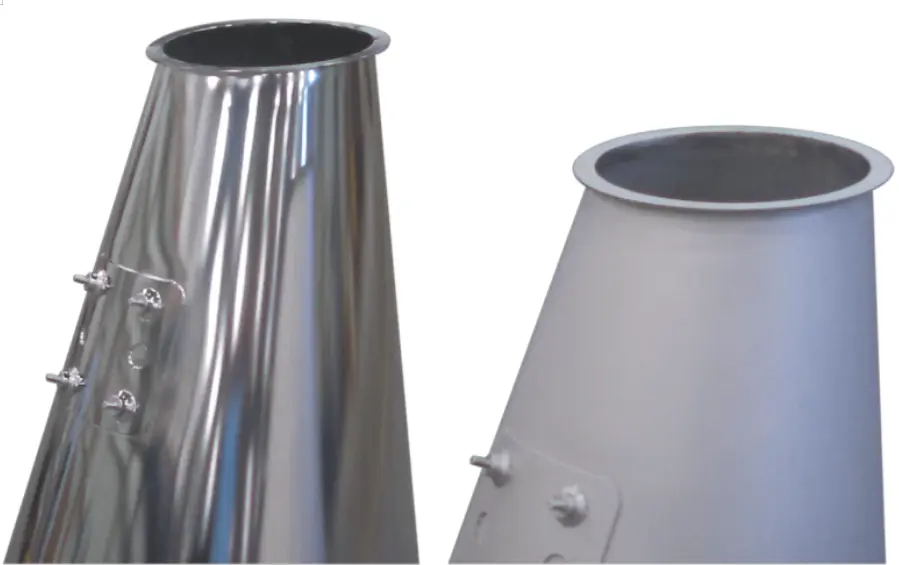
Metal components before and after electropolishing, demonstrating how the process creates a smoother, cleaner, and brighter surface finish while improving corrosion resistance and reducing surface roughness.
6. ANODIZING, PAINTING
As with CNC machining, these processes are also suitable for metal-printed parts. However, compared with CNC machining, the surface finish of metal-printed parts is generally inferior. If direct oxidation or painting processes are applied, the color of the finished parts may appear inconsistent, and visible lines or pits may be present. Therefore, some post-processing is required before performing such treatments.
For parts with less stringent surface finish requirements, we can choose bead blasting and tumbling. For parts with more stringent surface finish requirements, fine polishing and polishing treatments.
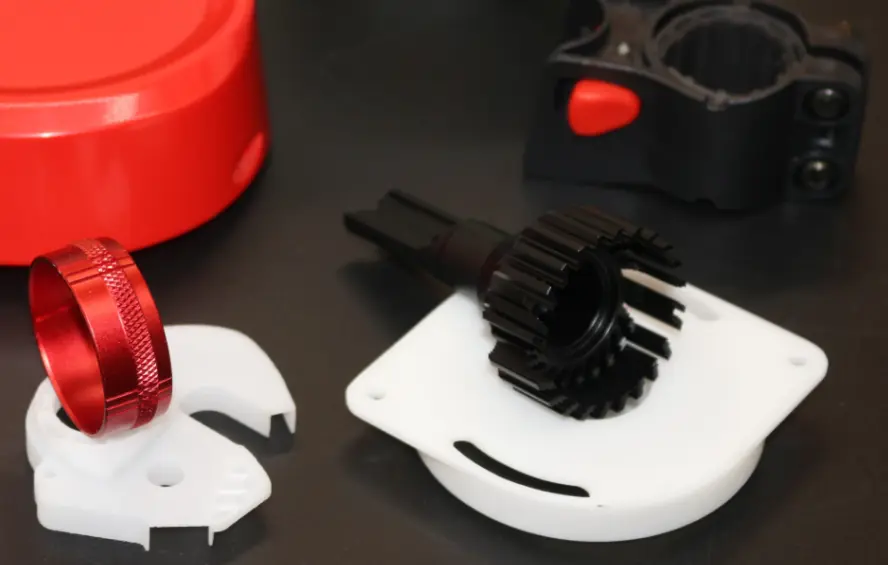
CNC machined components featuring anodized and painted surface finishes, demonstrating improved corrosion resistance, wear protection, and customizable colors for functional and aesthetic applications.
7. TUMBLING
This process is very similar to the traditional polishing techniques used in jade and jeweler making. The principles behind the equipment and the materials used are almost identical. When determining whether a part requires tumbling, the most important factor is to check whether its surface features delicate details that are susceptible to damage, such as threads or thin-walled structures. In such cases, particular care must be taken when applying this process.
The main material used in tumbling is small stones with triangular edges, along with some incremental additives. After tumbling, the surface of the sample appears shiny and smooth.
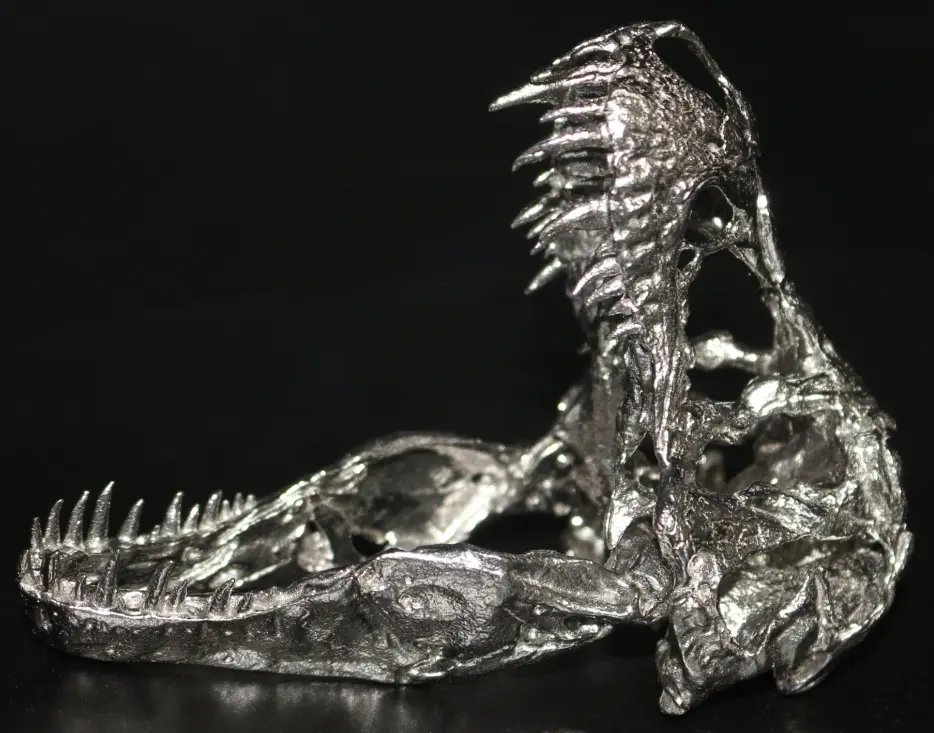
A metal 3D printed skull model after tumbling, showcasing a smoother, more uniform surface finish with reduced roughness while preserving intricate geometric details.
8. MANUAL POLISHING
Besides its flexibility and ease of use, it has a minimal equipment requirements. So, this is the most traditional, most effective and widely used polishing method. Commonly used metal polishing tools include metal polishing buffing wheels, grinding stones, sanding bands polishers, rotary polishers and rotary belt wheels. It is necessary to pay attention to the control of polishing intensity so as not to affect the precision and surface finish effect.
It should be noted that the specific surface finish effects achieved by metal printing may vary depending on the printing technology used (such as selective laser melting, electron beam melting or binder jetting) and the type of metal being printed. Furthermore, post-processing techniques can be tailored to the intended application or aesthetic requirements of the part, thereby achieving specific surface finishes.