English
 Deutsch
 Español
 Français
 Italiano
 日本語
日本語 Русский
 中文
中文
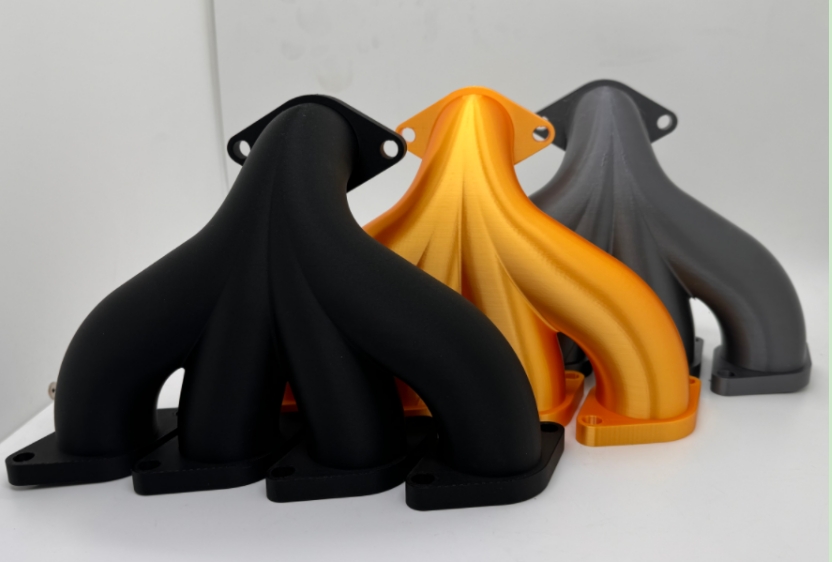
The Future of Automotive Parts: How 3D Printing is Transforming the Industry
- Published November 06 2025 - Updated September 19 2026
Innovative Manufacturing for Future Cars.
The use of 3D printing technology in the automotive manufacturing industry is growing rapidly and there are many different applications that can be transformed using this technology. Here we will explore the current applications and how they are expected to develop in the near future.
1. ADVANTAGES OF 3D PRINTING IN AUTOMOTIVE MANUFACTURING
• Customization and Design Freedom: Traditional automotive manufacturing methods for producing car parts are restricted by the use of conventional manufacturing methods and corresponding molds and tooling. Additive manufacturing, however, enables car parts to be designed in complete freedom. As so-called “functional structures” complex shapes can be designed for automotive components. In addition, individually designed parts for individual vehicles can also be produced for individual customers. The design of car parts is no longer a problem. In this way, greater innovation potential for automotive design and for individual cars is possible.
• Rapid Prototyping: This is probably the most important feature for automotive manufacturers. It enables designers and engineers to test and evaluate parts within a few hours, thereby enabling them to detect errors and problems early on in the development process.
• Cost Efficiency: With 3D printing no expensive molds for production are required, which, in combination with low waste of materials, can be a lot cheaper than traditional car manufacturing for large quantities of the same part. This especially applies for the production of small quantities of custom car parts. Such parts normally are too expensive to be produced with traditional methods.
• LIGHTWEIGHT PARTS: Typical parts manufactured with conventional methods contain excess material, which can impose a significant burden on a part and increase overall weight. Automotive components often require light weight parts and these can now be designed and manufactured using 3D printed parts. The parts can be designed with the required strength and are often used in brackets, engine mounts and other associated assemblies.
2. APPLICATIONS OF 3D PRINTING IN THE AUTOMOTIVE INDUSTRY
• Prototyping and Testing: A manufacturer of vehicles can test out new automotive parts which are printed by means of additive printing for his vehicles. The prototype as well as sample parts can be printed by means of 3D printing and additive manufacturing. First test under real conditions of corresponding parts can be made by means of AM additive manufacturing of such test parts.
• Tooling and Fixtures: Many specialized tools, jigs and fixtures are needed on the automotive production lines. These can be very expensive to make by traditional methods, but can be made very quickly and cost efficiently by 3D printing.
• End-Use Parts: As previously mentioned high performance parts, such as those for cars, are being printed employing advanced materials, such as carbon fiber composites and advanced polymers, in order to ensure that the parts last long and can with stand wear and tear. Examples of parts that can be printed using this technology are interior car parts, car engine parts, and structural car parts.
• Spare Parts and Legacy Components: With rapid manufacturing 3D printing it is possible to make spare parts on demand. This could be for example older car models where it is very hard to find the right spare part. Even if a part has been taken out of production for a long time it is possible to make a copy with the help of additive manufacturing.
• Automotive Restoration: The automotive restoration market is a relatively new area for additive printing. Many classic cars are difficult to find parts for, and even when they are found the parts can be worn or damaged. With AM additive manufacturing it is possible to create bespoke parts to exact specifications, printed to very high accuracy. This allows for the restoration of classic cars to their original factory specifications, and the creation of new parts for long discontinued models.
3. CASE STUDIES AND SUCCESS STORIES
Companies, such as Ford, BMW and many others, are now using 3D printing for various parts such as brake parts and interior components, such as seat belts. In addition, additive manufacturing can be used to test out various prototypes. The structural components and other car parts printed with additive printing will be featured in the BMW i8 Roadster. The startup of Local Motors is designing an entirely 3D-printed car.
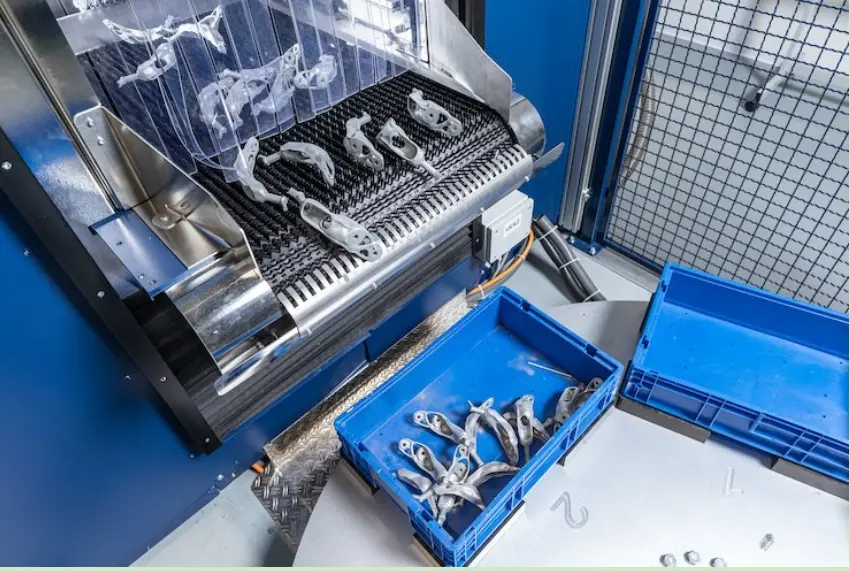
BMW Group AM Campus - Separated components are transported in small load carriers
CONCLUSION
The technology for 3D printing and additive manufacturing is continuously being further developed. In particular, progress is being made with regards to materials, printing speed, and multi-material printing. New parts are increasingly being produced in the automotive sector using AM additive manufacturing. These components are characterized by being lighter, stronger and more complex. They are crucial for the advancement of effective and innovative vehicles.
Rapid manufacturing 3D printing will continue to revolutionize the automotive design and testing. More parts for car manufacturing can be made in innovative ways with the printing’s advantages for design and testing.