English
 Deutsch
 Español
 Français
 Italiano
 日本語
日本語 Русский
 中文
中文
Revolutionizing Automotive Reconstruction with Metal 3D Printing
- Published November 06 2025 - Updated September 16 2026
Metal 3D printing for car restoration and repair with custom metal parts, complex geometry and on-demand manufacturing.
We are living in the era of automotive evolution and the field of car restoration is not different. As cars are evolving with the passage of time to achieve better performance, enhanced fuel efficiency and eye catching designs, ways to restore them to their former glory and also to improve their performance are being devised.
In the recent years, a technology has emerged which has greatly impacted the car restoration industry. We are talking about the metal 3D printing technology and its benefits, applications in the automotive industry in this blog.
1. WHAT IS METAL 3D PRINTING?
Additive manufacturing (AM) processes create parts layer by layer starting from raw material, in contrast to subtractive manufacturing processes which cut or remove material from a larger workpiece to create a part. The layer by layer nature of additive printing processes typically creates an upright part, either standing on its base on a build platform or suspended from overhead.
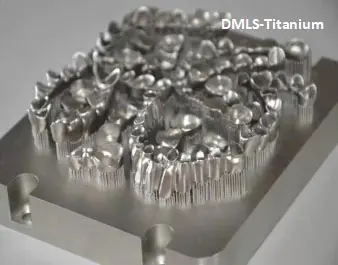
There are many processes that can create parts with metal, but the most common process for creating metal 3D printed parts is a type of powder bed process. In these processes a layer of metal powder is spread across the build platform, representing a single cross-sectional layer of the part to be created. Once a layer is defined, the part is created layer by layer using a focused beam of energy that selectively melts the metal powder where needed.
The most common type of powder bed process for metal uses a laser beam of light to melt and fuse together the metal powder where it is needed. Two types of light are commonly used for this purpose. A high powered laser is typically used for smaller, more detailed parts, while higher powered electron beams are typically used for larger parts with coarser layers.
For each layer, the build platform is lowered by a small amount of space between layers, and a new layer of metal powder is spread across the top of the previous layer. The process is then repeated for each subsequent layer until the entire part has been created, layer by layer.
2. ADVANTAGES OF 3D METAL PRINTING IN AUTOMOTIVE RECONSTRUCTION
Customization and Precision
By using metal 3D printing bespoke parts can be designed and produced for individual vehicles. This is especially useful for older or rare cars as spare parts are no longer in production.
There are many applications in the automotive sector that require great precision, such as the assembly of individual components that have to fit within a larger assembly with great precision.
Reduced Lead Times
Due to its nature metallic 3D printing can very quickly produce prototypes and end parts for vehicle restoration, greatly aiding the restorer in quickly completing a project.
No need for large stocks of parts. Production is carried out as needed.
Cost Efficiency
Because 3D printing is an additive manufacturing process, unlike traditional milling or other “subtractive” manufacturing methods that destroy excess material as they create a part, 3D printing is very material-efficient.
The cost of custom tools for 3D metal printing is almost always zero.
Complex Geometries
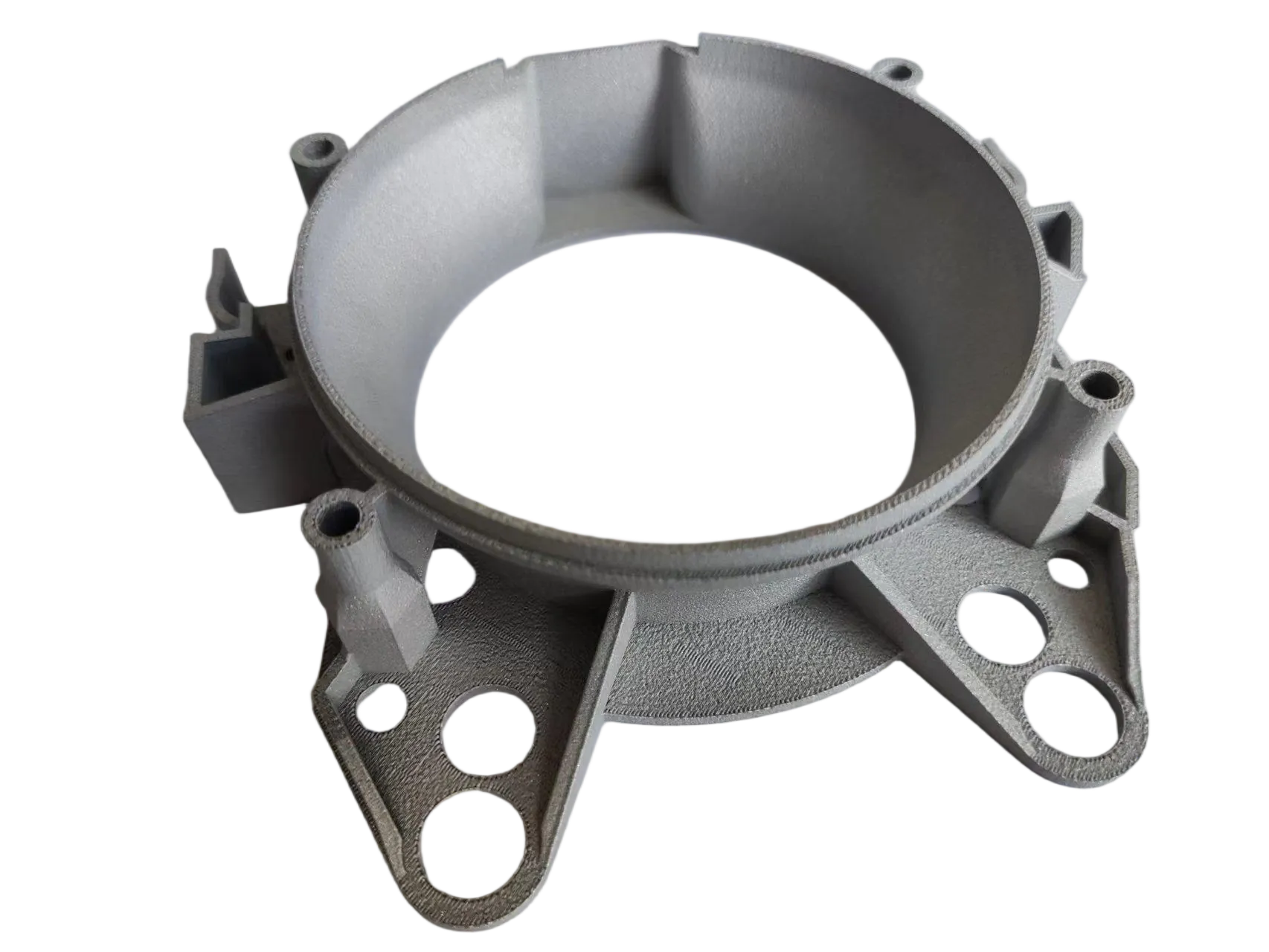
Most parts can be produced using Metal 3D printing and will have complex geometries. Automotive reconstruction can benefit from new innovative parts for car repairs.
3. APPLICATIONS IN AUTOMOTIVE RECONSTRUCTION
Restoration of Classic Cars
Metal 3D printing allows to reproduce obsolete parts which are required for the restoration of classic cars. High quality parts are produced fast and exactly as required.
The latest of materials and designs can be used to improve the performance and life of vintage car components.
Collision Repair
3D printed parts can be produced to fit like a glove in the damaged area of the car to ensure it is restored to its original form and look.
Production of quick repair parts for vehicles which allows for quick repair and putting the vehicle back on the road for driving as quickly as possible.
Prototyping and Testing
For designers of automotive reconstructions, quick production of prototypes of reconstructions and parts to be used in the reconstructions with metallic 3D printing allows them to test them, and by using the results to improve and optimize their designs, to achieve the best results for the reconstructions.
The same applies to parts that are printed for prototype models. The printed parts can be subjected to functional testing in order to determine how they will function in real life situations. This will also highlight any areas where improvements can be made.
Performance Upgrades
The use of advanced materials in combination with optimized designs allows the production of very light car parts that offer high performance and strength.
Such parts can be 3D printed and attached on the outside of a car to increase efficiency of the car and to improve its handling.
Tooling and Fixtures
In the automotive reconstruction process often many custom parts of a vehicle need to be assembled. Custom tooling can be produced very reliably with metal 3D printing to assemble these parts.
4. CHALLENGES AND CONSIDERATIONS
Challenges and Considerations for the Use of 3D Metal Printing in Automotive Reconstruction.
The list of all the available metals for 3d printing today, and also the metals that are currently under development for 3d printing and Additive manufacturing processes: Alunimum, 316L Steel, 17-4PH Steel, Maraging Steel, Copper, Co_Cr, Titanium.
3D printed parts are generally rough from printing and often go through post-processing to achieve a surface finish that meets their needs. Seek help from professional online store like IN3DTEC to get instant quote for surface finish services.
The maximum part size is dependent on the build volume of the 3D printer. Large parts can be split and assembled together.
5. THE FUTURE OF METAL 3D PRINTING IN AUTOMOTIVE RECONSTRUCTION
There is much to be hopeful for in the future regarding the use of metallic 3D printing in automotive reconstruction. There will be an improvement in technology, in new materials, and the quality of the printed part. Also, the Automotive Reconstruction process will be more efficient and more precise, thanks to the use of AI and Machine Learning in the design phase, and smart production in the manufacturing phase.
Advances in Material Science
As research into metal 3D printing continues, new metal alloys are being designed with the additive manufacturing process in mind. These parts will have a number of advantages over parts that have been traditionally manufactured, including increased strength, improved durability and resistance to corrosion.
Many parts can now be created using a combination of different metals and other materials, such as ceramics and polymers, in order to create the best characteristics of each individual material and to create parts that cannot be made from single metal parts.
Improved Printing Technologies
Parts will have much finer details and a smoother surface finish because of higher printing resolution.
The production using 3D metal printing will be much faster in the future, due to improvements in current technologies.
Integration with Smart Manufacturing
Internet of Things (IoT) technologies in combination with Industry 4.0 technologies will enable a fully monitored and managed process of additive manufacturing.
Increasing the degree of automation in the production process in order to contain costs and to minimize the impact of human errors.
CONCLUSION
This work explores how metal 3D printing is revolutionizing the repairs on and the restoration of old cars. This modern solution, very customized and very efficient, is opposed to the traditional way of making car parts, slow, labor intensive and not very customized with metal castings.
Metal 3D printing of components for rebuilding and restoring classic cars as well as late model cars is a burgeoning field. It’s an extraordinary medium, that fuses the world’s best and oldest craft with 21st century innovation – bringing new dimensions to automotive repair and restorations – to the very highest standards.