English
 Deutsch
 Español
 Français
 Italiano
 日本語
日本語 Русский
 中文
中文
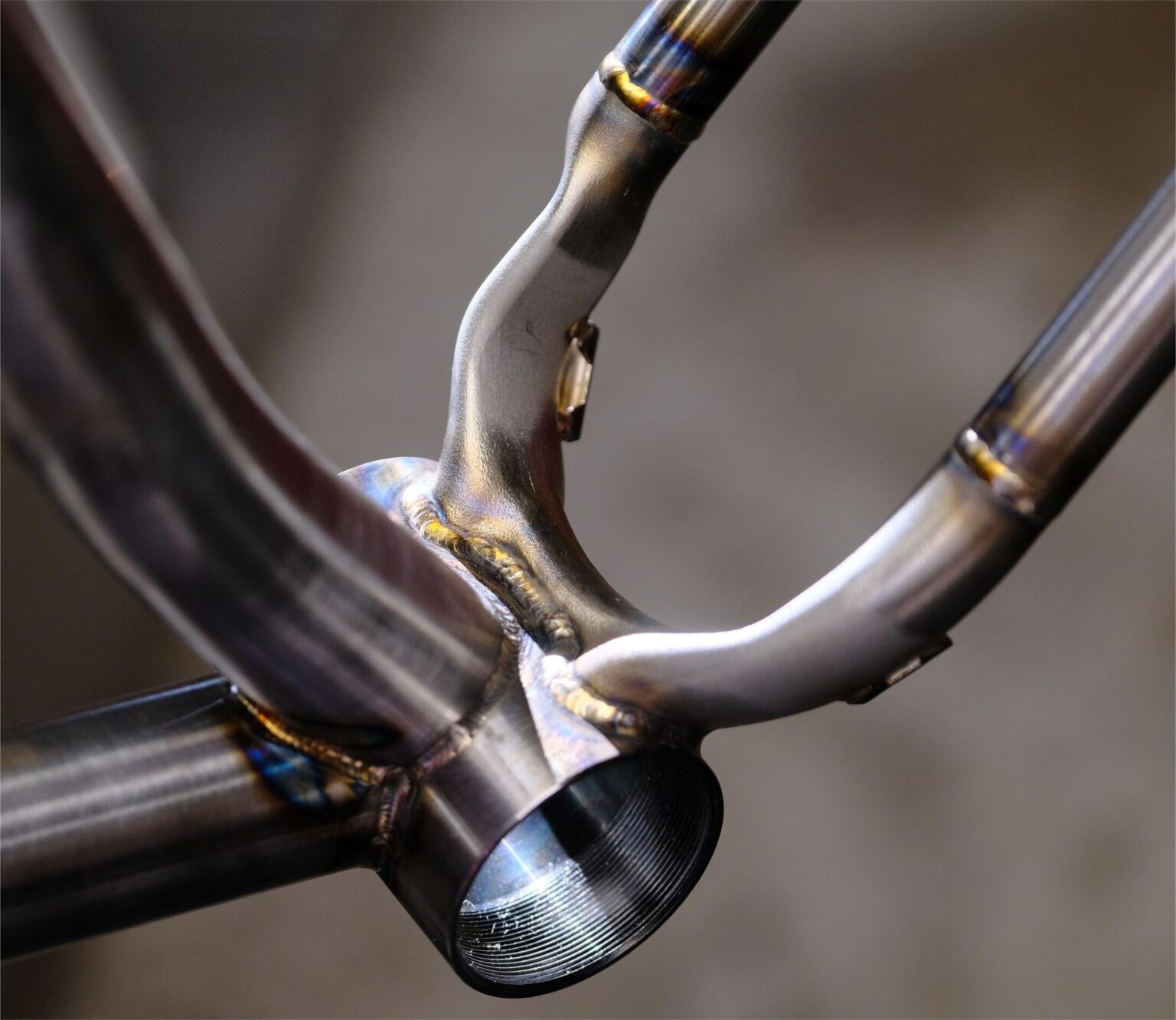
Unveiling the Optimal 3D Printing Material for Bicycle Frames
- Published November 06 2025 - Updated August 26 2026
A comparative guide to Titanium, Aluminum, and Steel: Balancing strength, weight, and cost for the next generation of cycling.
With the integration of 3D printing and additive manufacturing technology in bicycle manufacturing, the way bicycle frames are processed and manufactured is changing. 3D printing is showing its advantages in the production of complex and marked curved parts. In addition, AM additive manufacturing printing can quickly manufacture some lightweight, durable and high-performance bicycle frames. The technology has been adopted by more and more bicycle enthusiasts in recent years. In this blog, we will explore the top additive printing materials that have proven to be the best choice for manufacturing bicycle frame, thus revolutionizing the bicycle industry.
1. TITANIUM
Titanium is a great material for 3D printing bicycle frames. It offers an exceptional strength-to-weight ratio, excellent corrosion resistance and outstanding fatigue resistance. It perfectly combines a lightweight structure with robustness, resulting in frames that deliver a smooth riding experience. Titanium frames are highly favored by cyclists who prioritize comfort, durability and long-term performance.
2. ALUMINUM(ALSI10MG)
AlSi10Mg is an aluminium alloy composed mainly of aluminium (Al), silicon (Si 9–11 per cent) and magnesium (Mg 0.2–0.6 per cent), along with trace amounts of other elements.
Aluminium has long been a favored material in traditional bicycle frame manufacturing and continues to excel in the field of additive manufacturing. Aluminium frames are renowned for their light weight, high stiffness, corrosion resistance and affordability. Additive printing technology offers greater design freedom for aluminium frames. Through 3D printing, complex geometries and complex structures can be realized. They are great choices for cyclists seeking a balance between performance, cost-effective and durability.
3. 316 STEEL
316L steel is a widely popular stainless steel alloy. It offers excellent corrosion resistance and mechanical properties. So, it is widely used in many industries. It has a long history in the manufacture of bicycle frames and remains a high-quality option worth considering in the age of 3D printing.
Steel bicycle frames are renowned for their exceptional strength, durability and flexibility. Additive Manufacturing 3D Printing technology enables steel frames to be tailor-made to the rider’s specific requirements, thereby delivering a comfortable and responsive riding experience.
4. 17-4PH STEEL
17-4PH steel is a precipitation-hardening stainless steel that can be used for 3D printing of bicycle components. 17-4PH steel, also known as 17-4 stainless steel, consists primarily of iron (Fe), chromium (Cr 15%–17.5%), nickel (Ni 3%–5%), copper (Cu 3%–5%), carbon (C 0%–0.07%) and trace amounts of other elements.
17-4PH steel can be used to manufacture a variety of components, such as bicycle frames, handlebars, cranksets and other structural parts. This material combines strength, corrosion resistance and compatibility for rapid manufacturing 3D printing, positioning it as a top choice for applications requiring lightweight, durable and high-performance bicycle components.
5. WHICH OF THESE 3D PRINTING MATERIALS HAS THE LOWEST COST FOR MAKING BICYCLE FRAME?
Of the materials can be used for 3D printing bicycle frames, aluminium alloy is the cheapest. Next come 316 stainless steel and 17-4PH steel. Titanium alloy is the most expensive.
6. WHICH 3D PRINTING MATERIAL SHOULD I CHOOSE TO MAKE A BICYCLE FRAME?
Below is a table comparing the properties of various materials, for your reference:
| Material Name | Density | Yield Srength (Mpa) | Tensile Strength (Mpa) | Elongation After Fracture (%) | Machinability |
| Titanium | 4.5g/cm^3 | 1000 | 1050 | 10 | Good |
| Aluminum (AlSi10Mg) | 2.7 g/cm^3 | 300 | 450 | 4 | Excellent |
| 316L Stainless Steel | 7.95g/cm^3 | 550 | 600 | 34 | Excellent |
| 17-4PH Steel | 7.95g/cm^3 | 1235 | 1340 | 13 | Excellent |
CONCLUSION
Choosing the most suitable 3D printing material for a bicycle frame needs a full considerations of factors such as strength, weight, stiffness, durability and cost. Materials such as titanium, aluminium and steel have all demonstrated outstanding performance in the field of additive manufacturing, with each giving special benefits tailored to different riding preferences and styles. As 3D printing technology progresses to advance, further material innovations and hybrid solutions will emerge, driving the design and performance of bicycle frames to new heights and expanding the horizons of what is possible.