Hi, I’m Monica from IN3DTEC. I focus on discovering the stories behind advanced manufacturing and turning complex technologies into easy-to-understand content. From metal 3D printing to CNC machining, I’m always curious about how ideas move from design concepts to real-world applications.
How DLP 3D Printing Makes a One-Piece TPU Lattice Bike Saddle?
Published July 14 2026
- Updated September 19 2026
From FDM Limitations to a DLP-Printed TPU Bike Saddle
The objective of this project was to make a one-piece TPU lattice bike saddle using 3D printing instead of traditional manufacturing methods. Compared with traditional methods, this approach can produce a more lightweight saddle with better breathability, and more comfortable riding experience.
During the development process, we changed the technology from FDM (Fused Deposition Modeling)to DLP (Digital Light Processing) and optimized the original customer design to make it suitable for printing after evaluating all aspects. Finally, we successfully helped the customer create a complicated, flexible lattice-structure saddle that can be used not only for prototyping but also for production.
Product name
One-piece TPU lattice bike saddle
Application
Bike industry
End solution
DLP 3D printing + dfam service + printing finish
Material
Shore 60A TPU
1. BACKGROUND
Traditional bike saddles are usually made of three structures: a plastic support, a middle layer filled with PU or EVA material, and an outer layer made of leather or fabric. However, traditional saddles have limitations: limited breathability, lower comfort, and limited design freedom.
Our customer, a bike maker, wanted to use a simpler structure and a more effective manufacturing method — 3D printing technology — to address these limitations. They contacted us and provided their original design. They wanted to use FDM technology and TPU material to manufacture the saddle. However, after reviewing the design and considering our industrial engineering experience, we found that FDM was not a suitable solution and would be difficult to achieve successfully.
WHY FDM COULD NOT MEET THE REQUIREMENTS
FDM is a widely used 3D printing technology, and TPU materials are also popular among engineers, especially for making simple designs and small parts such as standard shells and seals. However, for this 3D printed bike saddle, the lattice size, structural details, and overall design complexity were beyond what FDM could achieve smoothly and stably. The main reasons are as follows:
The lattice structure is too complicated for FDM to produce stably because of its printing process, which is similar to spinning a thread.
When TPU meets FDM, it is difficult to achieve effective support or simply recover the design because of TPU’s soft properties.
FDM-printed parts are usually not good enough to meet products that focus on appearance because of the rough surface finish and obvious layer lines.
WHY CHOOSE DLP FOR THE TPU BIKE SADDLE
Why still use TPU?
Shore 60A TPU Material for DLP Printing
Shore 60A TPU provides a balance of flexibility and support for the one-piece lattice bike saddle.
Image Souce: IN3DTEC Material' Page
TPU has better flexibility and fatigue resistance compared with many other materials. It is already widely used in applications such as shoe soles and motorcycle seals, where repeated deformation is required.
In this project, we used Shore 60A TPU for lattice bike saddle. Its material properties can fully meet the requirements of a bike saddle, which needs to provide both support and comfort. Shore 60A TPU can maintain a good balance between flexibility and support.
Why use DLP instead of FDM
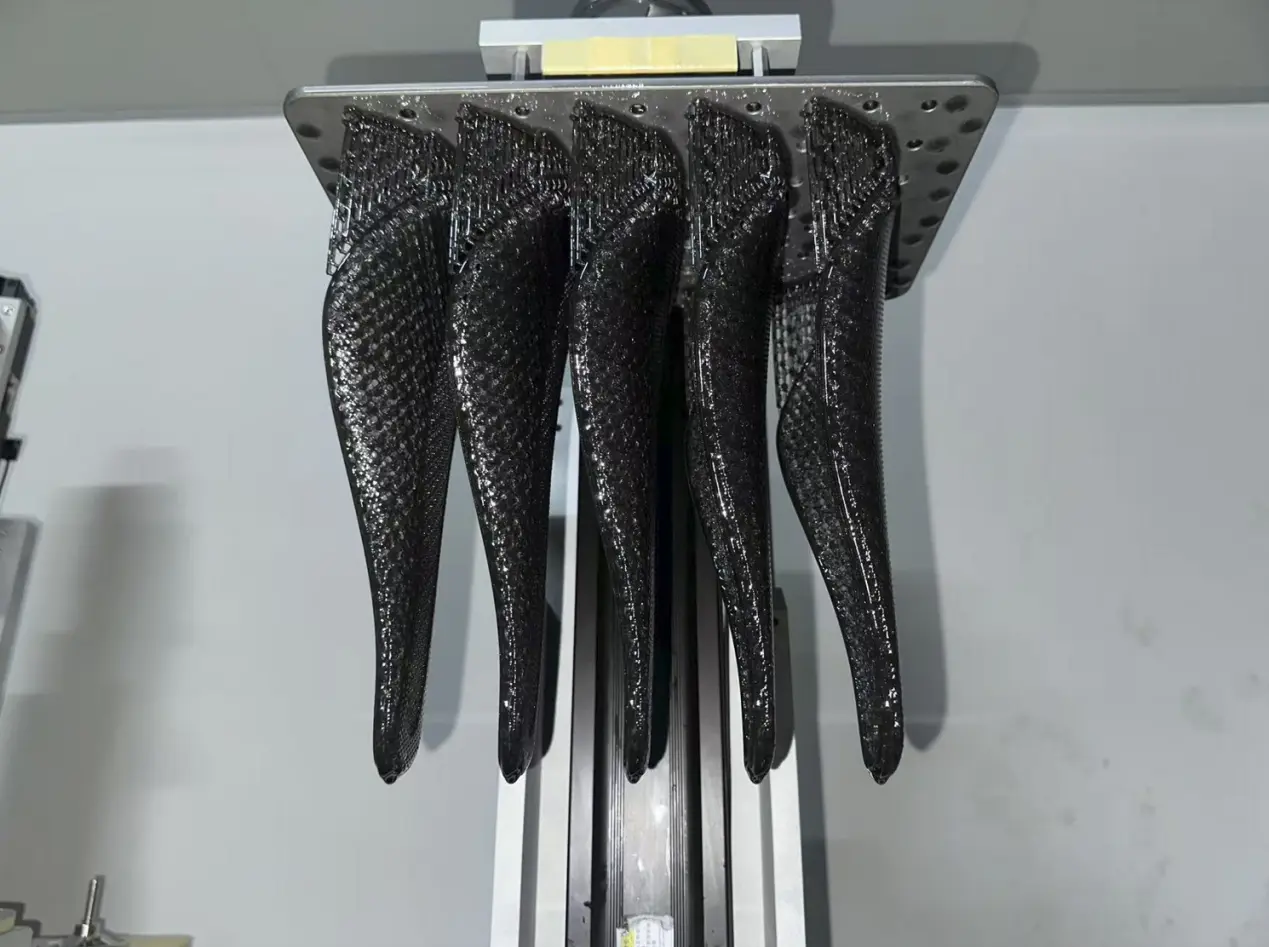
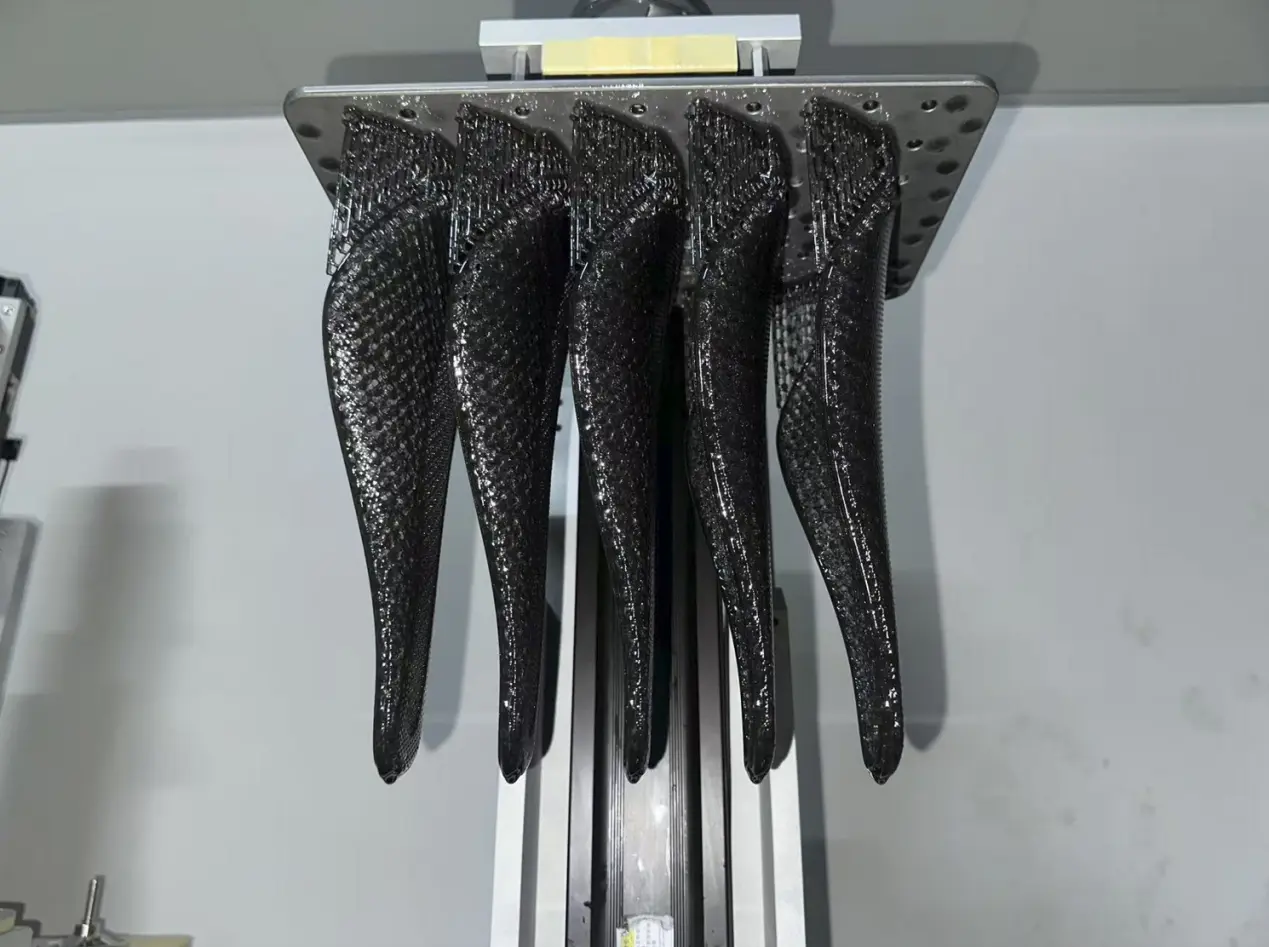
TPU Lattice Bike Saddles After DLP Printing
A batch of TPU lattice bike saddles after DLP 3D printing, before post-processing.
Image Source: IN3DTEC Production Team
You can find the reasons one by one in the table below.
Requirements
Why DLP?
Ensure the lattice structure can be successfully printed
Like a projector, DLP cures the entire layer at once, which helps achieve complex lattice structures with fine details.
Ensure the final printed saddle performs as designed
Higher printing accuracy helps reproduce the lattice dimensions more accurately and makes the actual support performance closer to the original design.
Ensure large-size one-piece printing
Layer-by-layer curing helps maintain printing stability and reduces potential printing failures during the process.
Ensure the appearance quality
Higher surface quality helps meet the appearance requirements of a consumer product.
WHY THE ORIGINAL CAD DESIGN WAS NOT READY FOR DLP
The customer's original CAD file was designed based on FDM printing logic, which means there were many enclosed areas inside the structure.
If we used the original design directly for DLP printing, uncured resin would remain trapped inside these areas and could not be removed. The design would also require multiple internal supports that would be difficult to remove after printing.
Therefore, we needed to optimize the design using DfAM (Design for Additive Manufacturing) to preserve the customer original concept while modifying the geometry to meet the specific requirements of DLP printing.
REDESIGNING THE TPU LATTICE BIKE SADDLE WITH DFAM
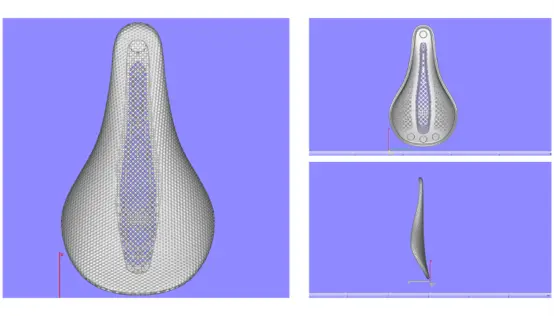
CAD Design of One-Piece TPU Lattice Bike Saddle
The CAD model shows the one-piece lattice structure developed for the TPU bike saddle.
Image Source: IN3DTEC Technical Team
The following are the four main DfAM adjustments we made:
Refine the internal structure to improve the resin flow and drainage by redesigning the internal connection way of the lattice.
Refine the lattice connection points to improve structural reliability by adjusting the direction to better suit the DLP’s printing process.
Refine wall thickness distribution to improve the load distribution by adjusting the wall thickness and local geometry
Refine the printing orientation and support strategy to improve printing success and reduce the difficulty of post-processing.
SURFACE FINISH OF THE DLP-PRINTED TPU SADDLE
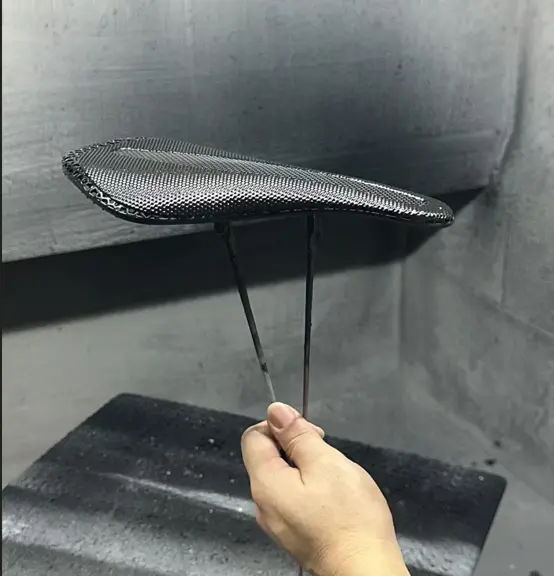
Color Coating for DLP 3D Printed TPU Bike Saddle
Color coating is applied to the DLP 3D printed TPU saddle to achieve a more uniform black appearance.
Image Source: IN3DTEC Production Team
After printing, the TPU 3D printed saddle had a semi-transparent black appearance. To achieve a more uniform black appearance, we applied a color coating to the surface of the part. This process can further improve the overall quality and style of the part. It helps transform the saddle from only a prototype into a real ready-to-use product. It also allows customization with different colors based on different customer preferences.
THE FINAL TPU LATTICE BIKE SADDLE
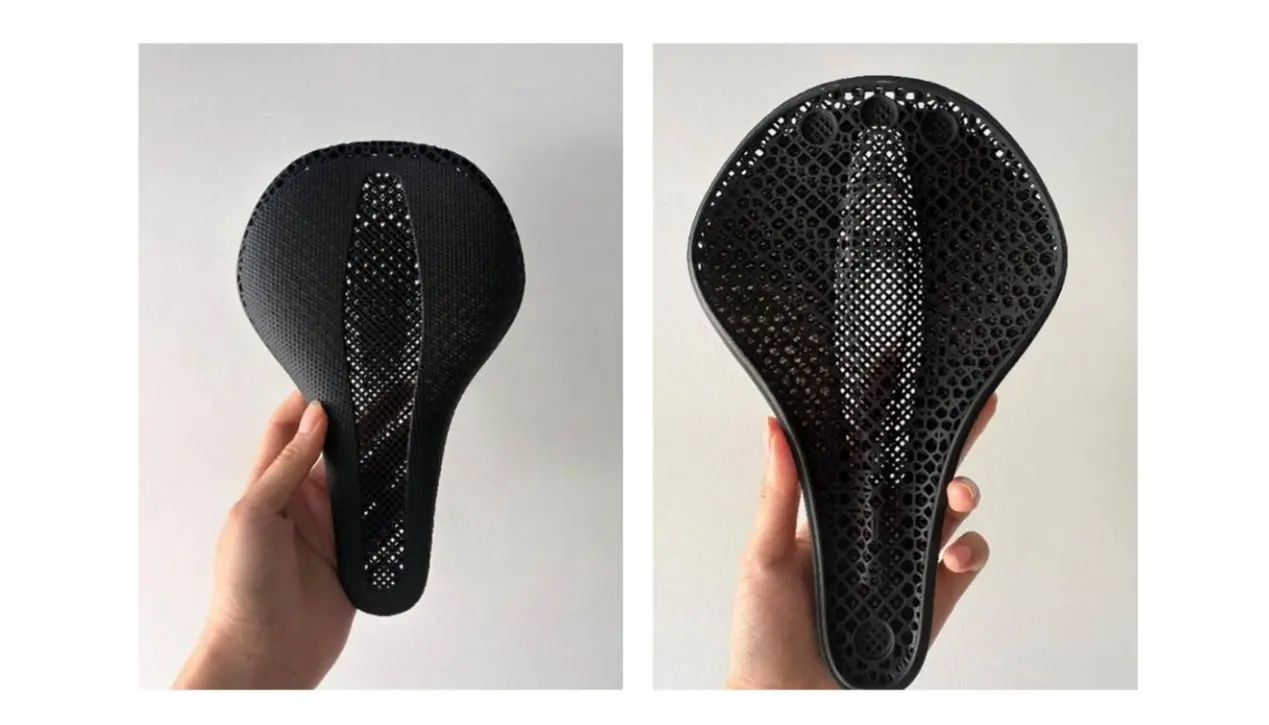
Finished One-Piece TPU Lattice Bike Saddle
Front and back views of the finished one-piece TPU lattice bike saddle made with DLP 3D printing.
Image Source: IN3DTEC Technical Team
In the end, we successfully manufactured a one-piece TPU lattice bike saddle using DLP 3D printing.
The final solution met the main requirements of the project:
Not using traditional materials and manufacturing methods, but instead using one-piece 3D printing with a lattice structure and TPU material.
Improving the appearance and breathability of the saddle.
Supporting personalized colors and a high-quality appearance.
Turning the customer's idea into reality with an excellent manufacturing solution.
Hi, I’m Monica from IN3DTEC. I focus on discovering the stories behind advanced manufacturing and turning complex technologies into easy-to-understand content. From metal 3D printing to CNC machining, I’m always curious about how ideas move from design concepts to real-world applications.
In3dtec Profile
Profile Name
In3dtec
We rapidly delivers prototyping & scaled production on demand to help project designers and engineers accelerate new product introduction. We make excellent products from your ideas.
In3dtec Profile
Profile Name
In3dtec
We rapidly delivers prototyping & scaled production on demand to help project designers and engineers accelerate new product introduction. We make excellent products from your ideas.
Stay Updated
Subscribe for practical industry insights, new blog posts, case studies, and exclusive offers from IN3DTEC.
Get early access to our latest offerings,
manufacturing updates, and industry news


 English
 Deutsch
 Español
 Français
 Italiano
 日本語
日本語 Русский
 中文
中文