English
 Deutsch
 Español
 Français
 Italiano
 日本語
日本語 Русский
 中文
中文
Top 5 Design Tips for Stronger 3D Printed Parts
- Published November 06 2025 - Updated September 11 2026
3D Printing Design Guide: Parts & Prototypes – Geometry, Materials & Print Orientation.
You don’t have to allow your 3D printed objects to fall apart. Even functional printed parts can withstand great stress if designed well. Here are 5 design tips to help you create objects that will be stronger and last longer.
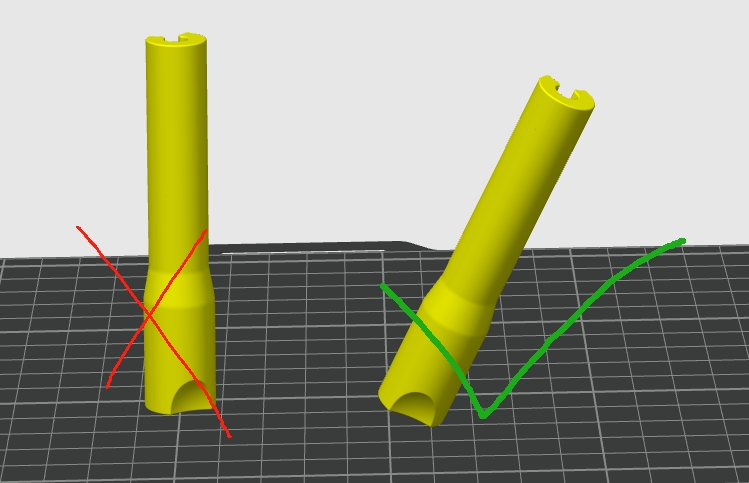
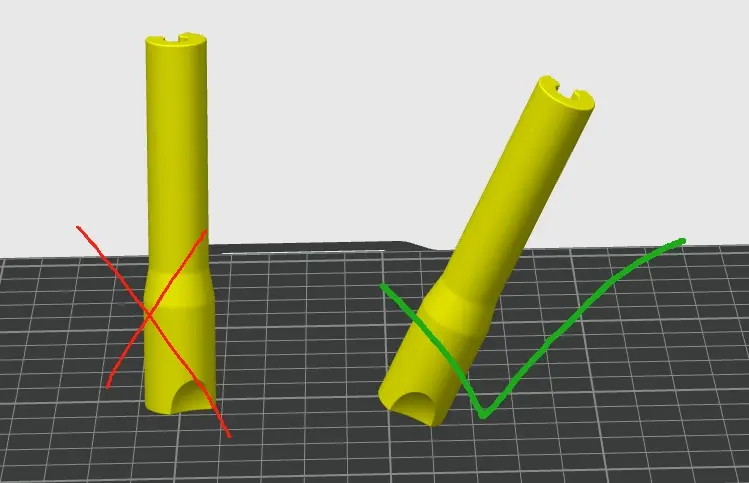
1. OPTIMIZE PRINT ORIENTATION
When designing a part to be as strong as possible the layers in the part must be as perpendicular as possible to the forces acting on the part. In simple terms, when designing a part that will be subject to a lot of vertical force the part should be printed flat with the layers building up horizontally. There are many tools and programs available that can simulate the stresses that a printed part will undergo. These tools can be very useful when trying to work out the best way to print a part prior to printing it.
Professional Tip: Use simulation tools to predict stress concentration points and adjust the model's printing orientation accordingly.
2. USE FILLETS INSTEAD OF SHARP CORNERS
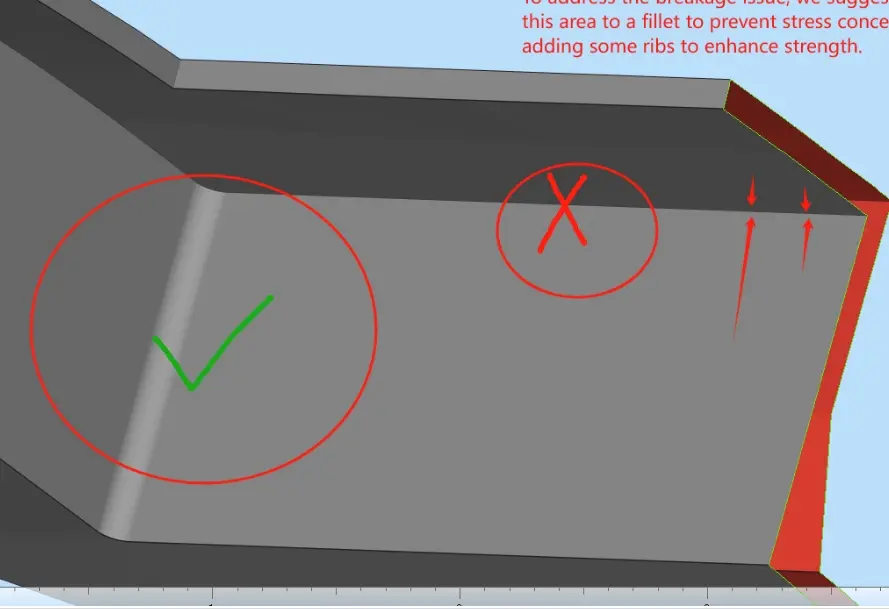
Sharp internal and external corners on a model cause high stress concentrations, that can cause parts to crack. Therefore, rounding off such corners by adding so-called fillets is always a good idea. The required fillet radius depends on the intended use of the part. A fillet radius of 1-2 mm is usually sufficient to add strength without too much loss of details.
The recommended size of the fillet is around 1-2mm in size.
3. INCREASE WALL THICKNESS AND INFILL DENSITY
The most obvious way to make parts stronger would be to increase the wall thickness and the amount of infill. While this will make parts stronger it also means that you are using more material to create the part. In addition, thicker walled parts with high amounts of infill will print for a longer period of time. For functional parts we suggest increasing the wall thickness to 2 mm or more and the amount of infill to 50% or more.
Professional Tip: For functional parts, a minimum wall thickness of 2 mm and 50% infill are recommended.
4. ADD RIBS AND GUSSETS FOR STRUCTURAL SUPPORT
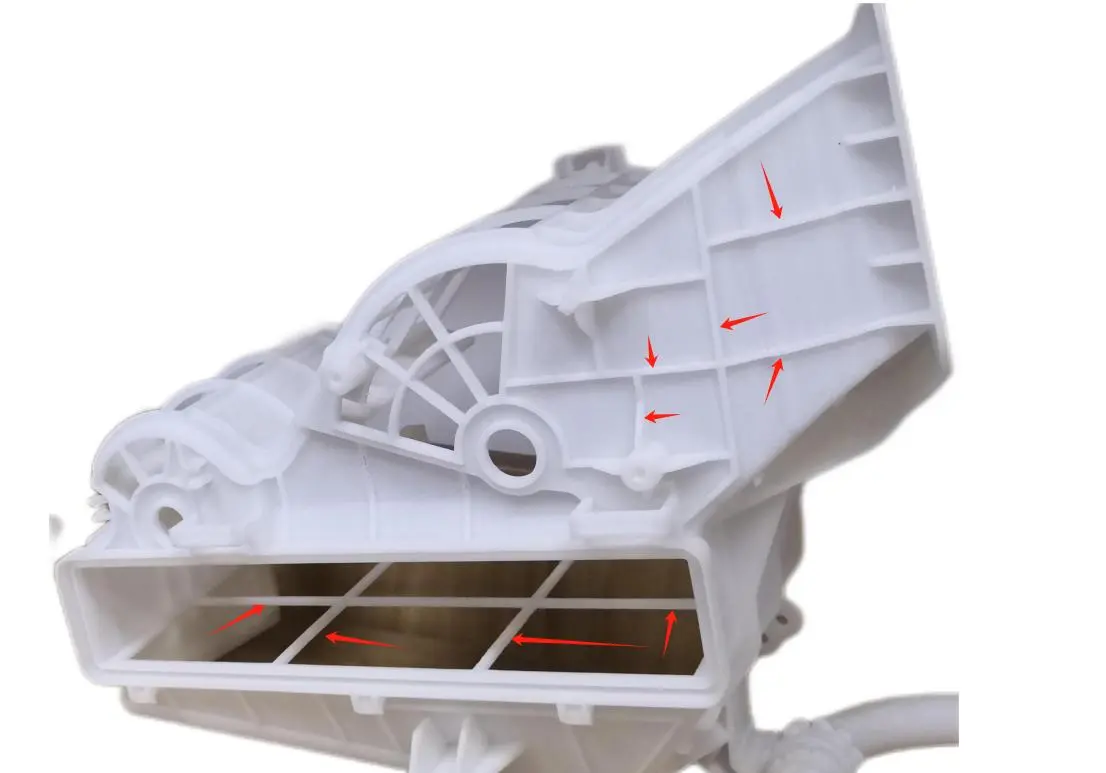
As a rule of thumb, increasing the density of a part can make it stronger. However, there is a downside – increased part density does mean increased part material. This will have a bearing on the parts print time, overall weight and cost. It may be more effective in many cases to design in features to a part that will act as reinforcements in particular areas of the component. These type of features are commonly referred to as ‘reinforcement features’ and there are 2 common forms of these features.
Firstly there are ‘ribs’, essentially long vertical walls of material that can be added to the part to reinforce the surface area. The placement of these type of feature is critical – typically they would be added to areas of the part where there is a large surface area, such as the flat areas and openings. Secondly there are ‘gussets’, these are typically used to add strength between 2 existing features on a part.
These features work by taking some of the bending loads away from other areas of the part, thus stopping the part from flexing or failing under load.
Professional Tip: Place the ribs between the surface and the opening to prevent the part from bending.
5. CHOOSE THE RIGHT MATERIAL
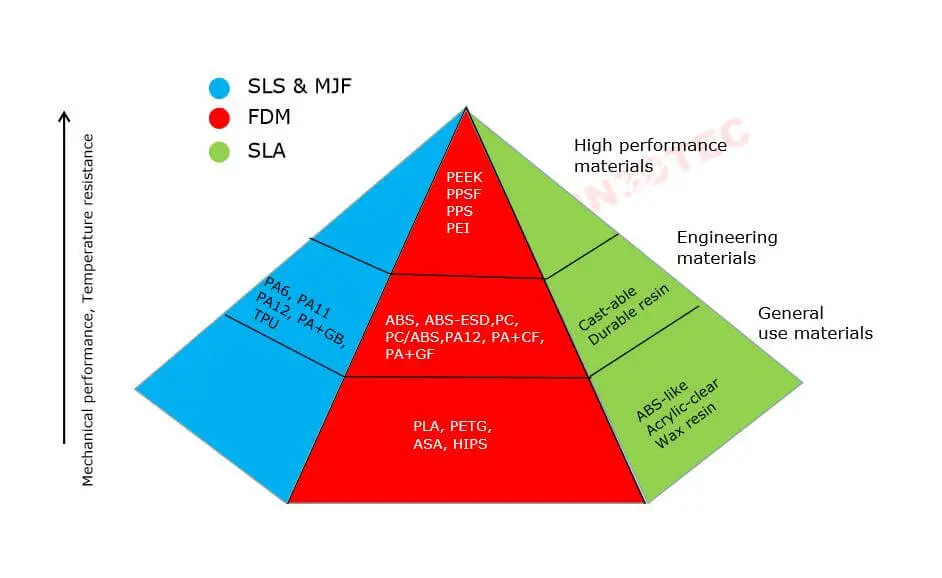
The material that you choose for functional parts is also important to making them last. While prints made with PLA are easy to make strong parts with, other materials such as PETG, ABS and nylon are stronger. Parts that will be under stress, subject to impact, or need to be flexible require special consideration of the appropriate material to use for the part.
Professional Tip: For high stress, lightweight parts, carbon fiber reinforced filaments can be the best option.
Read more: Material Select Guide for 3D Printing
CONCLUSION
Part design and build assessment and recommendations for optimal part manufacture and selection of appropriate materials for increased part performance.