English
 Deutsch
 Español
 Français
 Italiano
 日本語
日本語 Русский
 中文
中文
ESD Resin and Flame-Retardant Resin: A Guide for Engineers
- Published August 31 2026 - Updated August 31 2026
Understanding ESD and Flame-Retardant Resin for Functional Parts
ESD resin and flame-retardant resin are two different categories of engineering resin. Both are built to solve a completely different problem. ESD materials help control electrostatic charge, the other reduces flammability and limit flame propagation under specific test conditions.
Formlabs offers materials for both ESD Resin and Flame Retardant Resin.This guide explains how they work,differ,so you can recognize which category your application actually needs.
WHAT IS ESD RESIN?
ESD stands for electrostatic discharge. It occurs when static electricity builds up on a surface and suddenly releases, often as a small spark. That spark can silently damage sensitive electronic components without anyone noticing at the time.
ESD resin is the category of material built to manage this risk. Materials sit somewhere on a scale between conductive and insulative. A conductor allows charge to move quickly, while an insulator can let charge build up with nowhere to go. ESD resin is designed to fall into a zone called “static-dissipative”. That means it drains charge away in a controlled manner instead of letting it build up or release all at once.
This is why ESD-rated fixtures, trays, and housings show up constantly in electronics manufacturing.
Formlabs ESD Resin
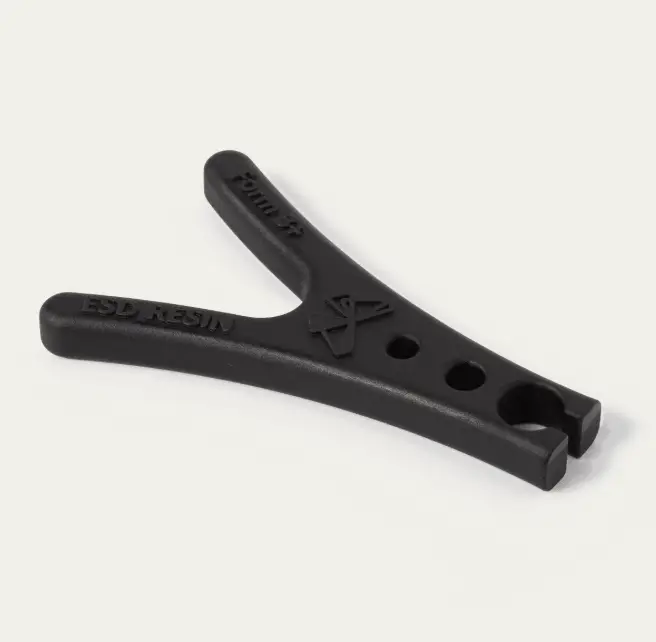
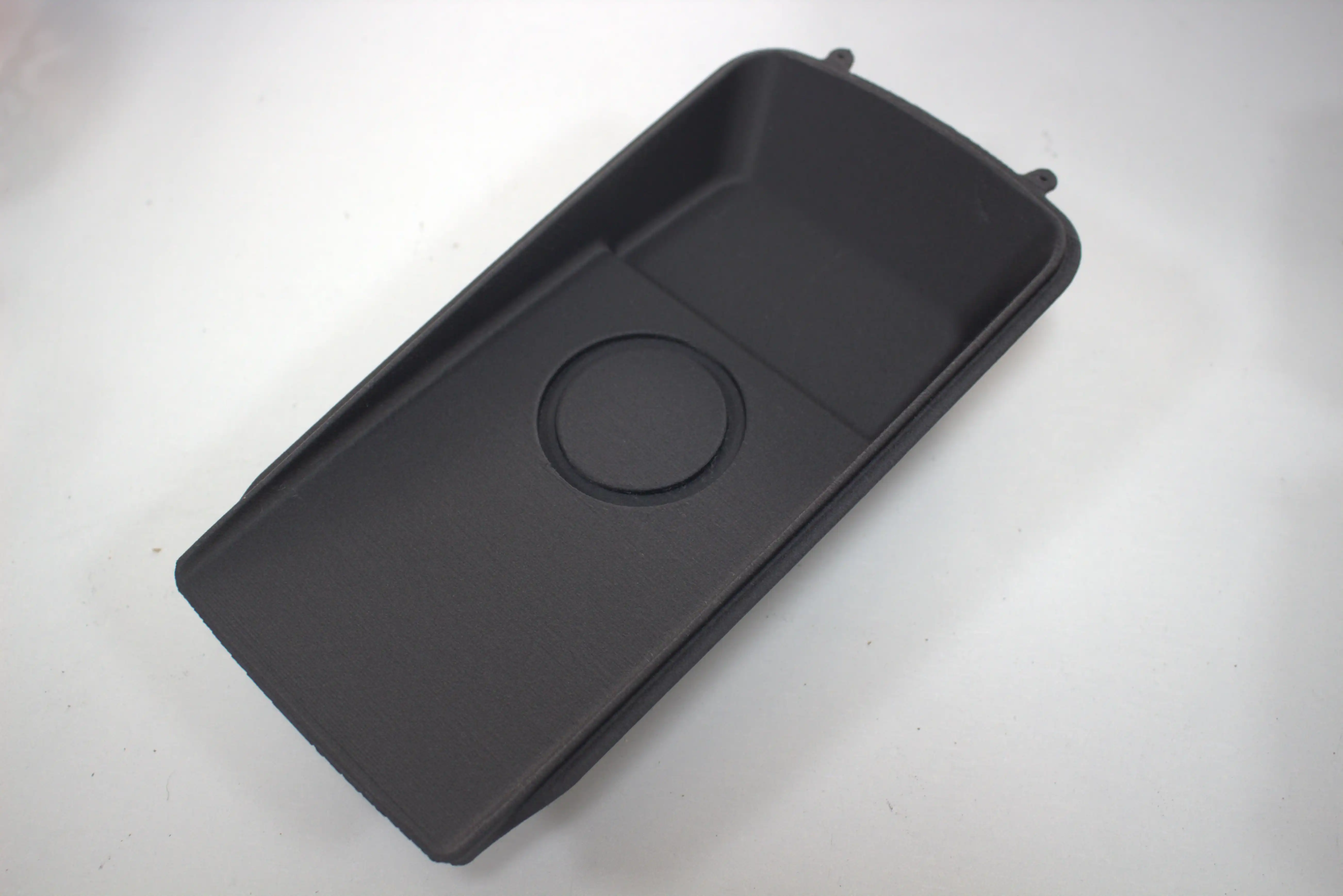
Formlabs ESD Resin 3D printed fixture
A black 3D printed fixture made with Formlabs ESD Resin for static-dissipative applications.
Image Source: Formlabs ESD Resin product materials
Formlabs ESD Resin combines static-dissipative properties with mechanical performance suitable for functional parts. Its surface can also help reduce dust and particle attraction, which can be useful for trays and fixtures handled frequently on a production line. Formlabs positions it as a cost-effective alternative to machined or injection-molded ESD-safe tooling, particularly for low-volume applications.
Application:
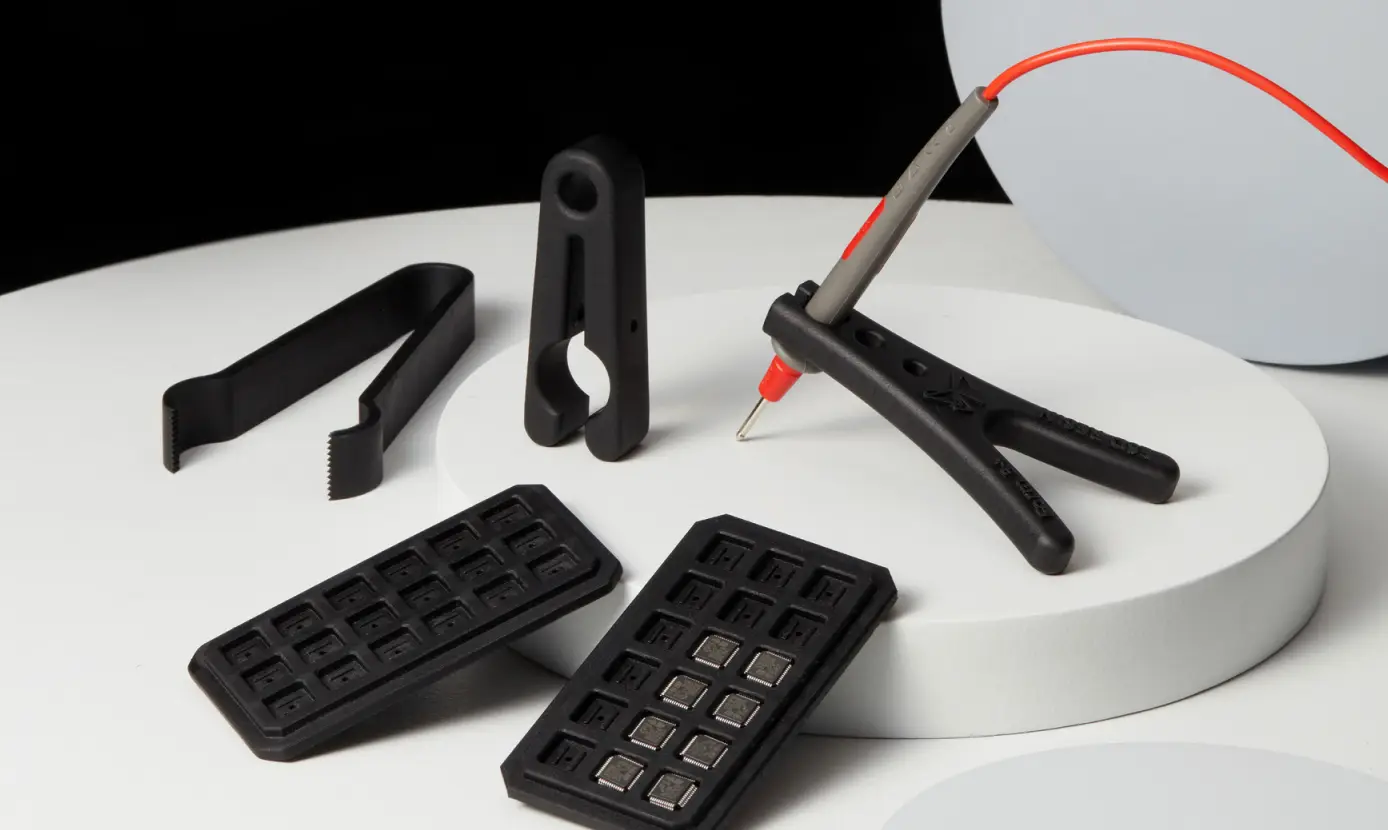
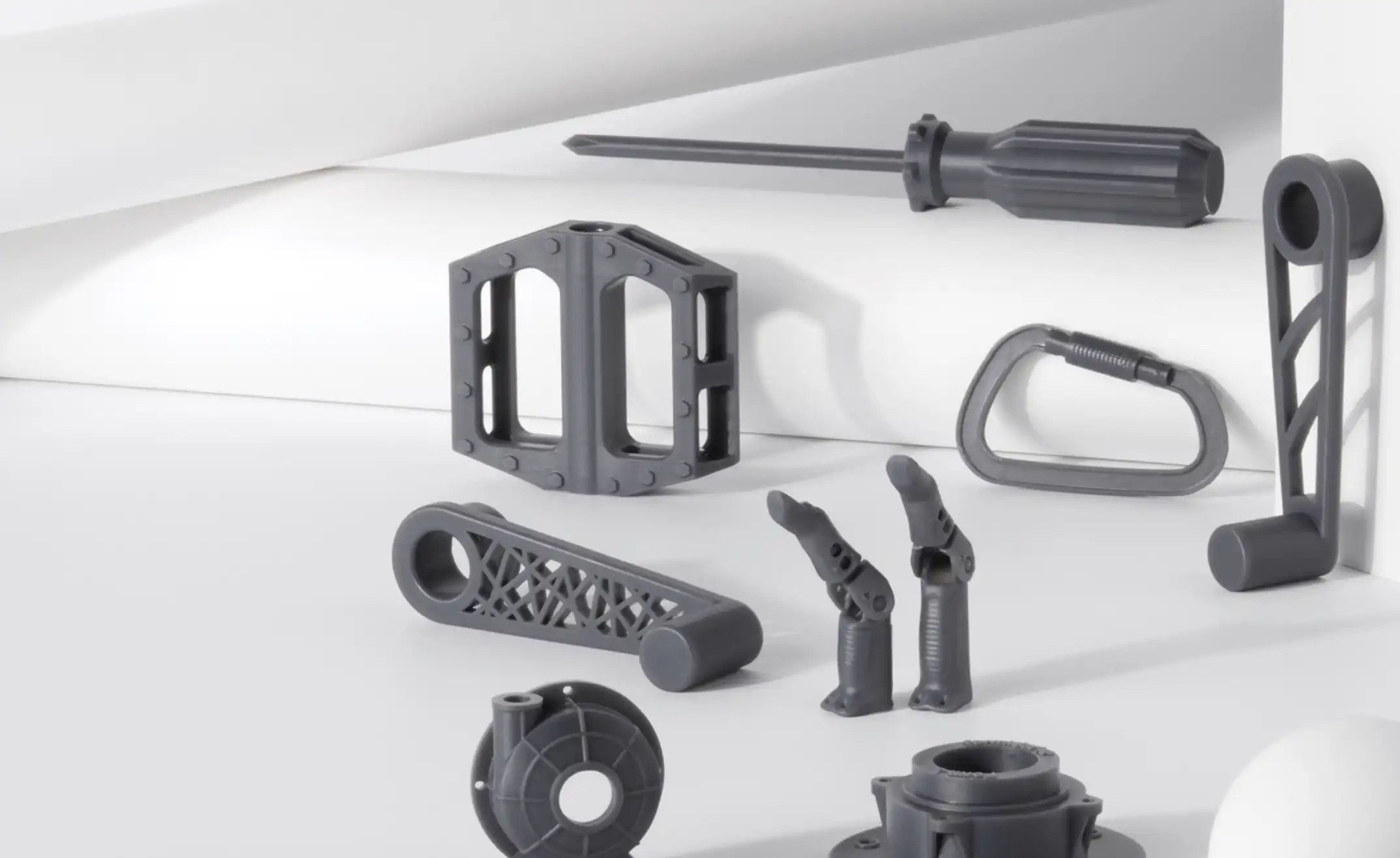
Formlabs ESD Resin for anti-static trays and fixtures
Formlabs ESD Resin used for anti-static trays, fixtures, and manufacturing applications.
Image Source: Formlabs ESD Resin Technical Data Sheet
- Anti-static tooling, including trays, carriers, and fixtures
- Electronics housings where static buildup is a concern
- Manufacturing jigs and fixtures for repeated handling
WHAT IS FLAME-RETARDANT RESIN?
Flame-retardant resin is the category of material that can reduce flammability and limit flame propagation under specific conditions. Materials in this category are usually rated under standards like UL 94, and they turn up wherever fire safety compliance actually matters, like aerospace, rail, automotive, and protective electronics housings.
There are two common ways a resin pulls this off. Different flame-retardant materials achieve this through different mechanisms. Some form a char layer at the surface that helps shield the underlying material from the flame. Others release chemicals that interrupt the burning reaction itself. Either way, the part is designed to slow or limit flame propagation instead of continuing to burn as readily.
Formlabs Flame Retardant Resin
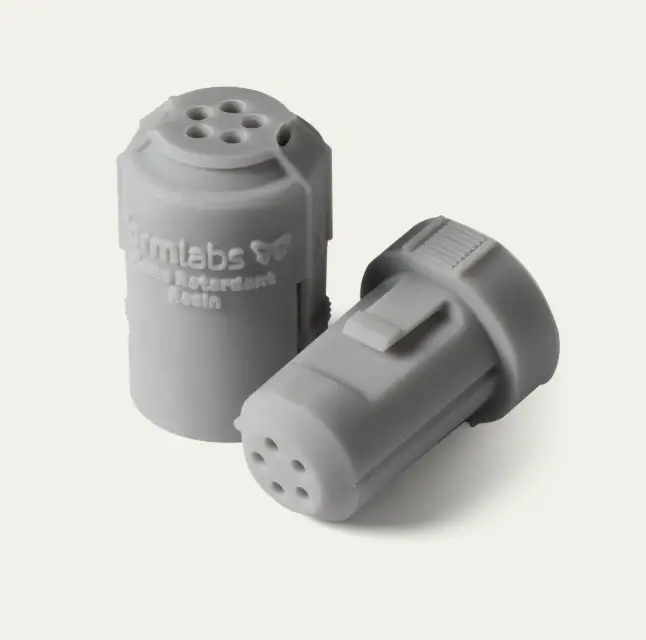
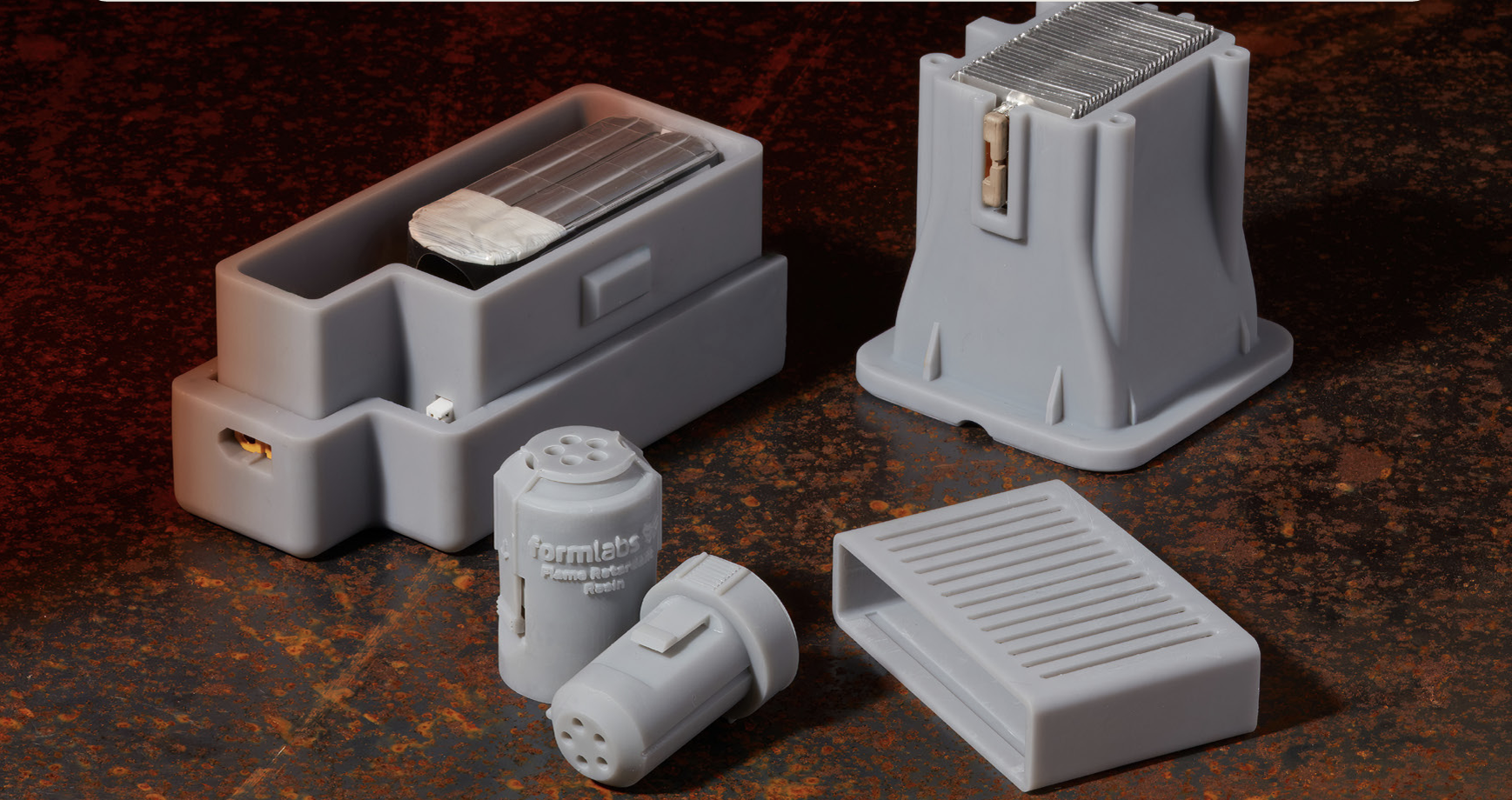
Formlabs Flame Retardant Resin 3D printed part
A gray 3D printed part made with Formlabs Flame Retardant Resin.
Image Source: Formlabs Flame Retardant Resin product materials
Formlabs Flame Retardant Resin trades away some flexibility for a tested flammability rating. Wall thickness matters directly: the same resin drops from a V-0 to a V-1 rating between 3 mm and 2.5 mm, so the rating depends on the printed geometry as well as the material itself. Post-curing raises heat resistance further, at some cost to elongation at break.
Application:
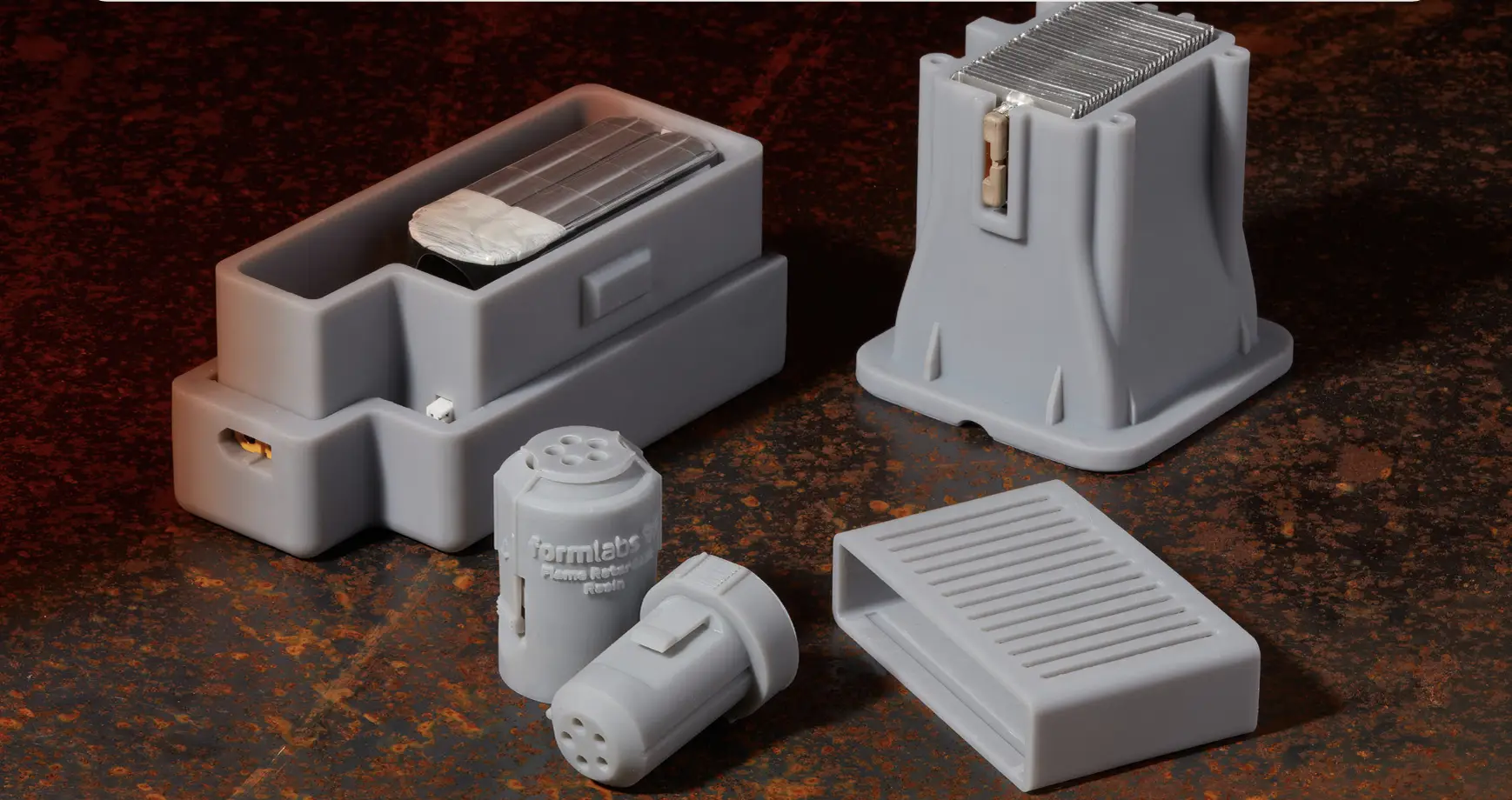
Formlabs Flame Retardant Resin applications
Formlabs Flame Retardant Resin used for functional components where flame-retardant performance is required.
Image Source: Formlabs Flame Retardant Resin Technical Data Sheet
- Industrial jigs and fixtures near heat or ignition sources
- Aerospace, automotive, and rail components where flammability requirements apply
- Functional prototypes requiring flame-retardant performance
- Electronics housings where flammability requirements apply
FORMLABS ESD RESIN AND FLAME RETARDANT RESIN: TECHNICAL SPECS
Here’s a quick look at the key technical specifications of both materials:
| Property / Test | Formlabs ESD Resin | Formlabs Flame Retardant Resin |
| Primary Function | Static-dissipative | Flame-retardant |
| Surface Resistivity | 10⁵–10⁸ Ω/sq¹(post-cured at 70°C) | — |
| Test Standard | ANSI/ESD STM11.11 | — |
| UL 94 | — | V-0 @ 3 mm; V-1 @ 2.5 mm; HB @ 1.5 mm |
| FAR 25.853 | — | Pass @ 2.5 mm |
| Tensile Strength | 44.2 MPa¹ | 24 MPa green; 38 MPa / 41 MPa post-cured² |
| HDT @ 1.8 MPa | 54.2°C¹ | 45°C green; 71°C / 83°C post-cured² |
Sources: Formlabs ESD Resin Technical Data Sheet and product page; Formlabs Flame Retardant Resin Technical Data Sheet.
¹ ESD Resin values are reported for parts post-cured at 70°C.
² Flame Retardant Resin values vary with post-curing conditions.
UL 94 ratings are dependent on specimen thickness and specific test conditions. FAR 25.853 results are based on the tested specimen thickness and conditions.
WHY 3D PRINT ESD AND FLAME RETARDANT PARTS INSTEAD OF MACHINING OR MOLDING?
Most parts made from these two resins share one thing in common: they're low-volume and revised often, not built for long production runs. That's exactly the kind of work small-batch manufacturing is built for, and it's where 3D printing has a real edge over machining or molding.
Formlabs has documented real cases proving it. One company switched an ESD-safe fixture from machined aluminum to ESD Resin and cut cost per part from around $500 down to $40–50, with lead time dropping from two weeks to a single day.
IN3DTEC runs CNC machining and injection molding alongside 3D printing, so the practical rule is simple: use these resins when you need a certified, functional part fast and in small batches. Once volume or geometry outgrows what SLA printing handles well, that's the point to switch to machining or molding.
Interested in using Formlabs ESD Resin or Flame Retardant Resin for your project?
IN3DTEC now offers 3D printing with both materials. Contact our team to discuss your idea, or get an instant quote through our online platform.